

Space Junk ‘Minefield’ Discovered in Crowded Geostationary Orbit: Tiny Debris Threatens the World’s Costliest Satellites
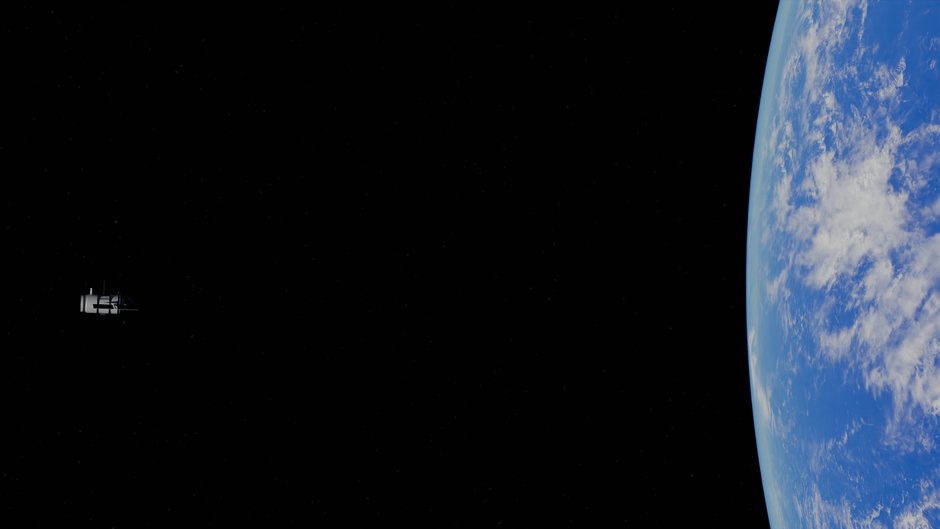
Featured image: [Artist’s concept of debris in geostationary orbit; credit: ESA]
A new survey of the geostationary belt has revealed dozens of previously undetected pieces of space junk lurking in one of the most valuable orbital real estate zones on Earth, and researchers warn the situation will only worsen.
Using a blind-stacking technique applied to archival data from the Isaac Newton Telescope in La Palma, a team from the University of Warwick discovered 25 debris tracks that had been missed by conventional surveys. Eighty percent of the tracks came from objects not previously cataloged.
“This debris in geosynchronous orbit is a potential minefield,” said Stuart Eves, study co-author and consultant at SJE Space. “No one in their right mind would enter a terrestrial minefield without a mine detector. Similarly, no one in their right mind should launch a satellite to GEO without an adequate debris survey.”
Why GEO Is Different
Geostationary orbit, approximately 36,000 kilometers (22,000 miles) above the equator, is home to many of the world’s most expensive satellites: telecommunications platforms, broadcast relays, weather monitors, and defense assets. These satellites can cost hundreds of millions to billions of dollars and are designed for missions lasting 15 years or longer.
Unlike low Earth orbit, where atmospheric drag gradually pulls debris down to burn up within years or decades, GEO has no natural cleanup mechanism. At 36,000 kilometers altitude, there is no atmosphere to speak of. Any debris generated there stays there indefinitely.
“Debris in the neighborhood of the geostationary belt is particularly concerning,” said James Blake of the University of Warwick. “It is very far away, well above the Earth’s atmosphere, so small objects tend to be incredibly faint and difficult to detect, and any debris that is generated will stick around indefinitely.”
The Blind Stacking Technique
The newly detected fragments are small, roughly 5 centimeters (2 inches) in size, too faint for conventional surveys to spot. The Warwick team used a method called blind stacking, which tests many potential paths in an image sequence where hidden targets might be moving, then stacks the images to bring those targets above the noise floor.
“The blind stacking technique is a very powerful method for improving the sensitivity limit of astronomical datasets,” said Ben Cooke of the University of Warwick. “It involves testing many potential paths in an image sequence along which hidden targets might be moving and stacking the images to help bring those targets above the noise floor.”
The Danger of Small Objects
At GEO altitude, relative velocities between objects can reach several kilometers per second. A 5-centimeter fragment traveling at those speeds carries kinetic energy comparable to a small bomb. For large GEO satellites with solar arrays spanning 30 meters (100 feet) or more, the collision cross-section is enormous.
“Pieces of space junk can be moving very quickly relative to one another, as much as several kilometers every second,” Blake said. “The energies involved are really high, and even small debris can cause a lot of damage to very expensive satellites, so small things really matter.”
A Problem That Compounds
The discovery is particularly concerning because of a well-understood dynamic in orbital debris: fragments beget more fragments. A collision between a piece of debris and an active satellite generates a spray of new debris, which in turn increases the collision risk for every other object in that orbital band. In GEO, where debris never decays, this cascade can build up over decades with no natural relief valve.
The researchers plan to extend their analysis to images from other telescopes worldwide to build a fuller picture of the contamination scale. The study was published in the Journal of Astronautical Sciences in June 2026.