

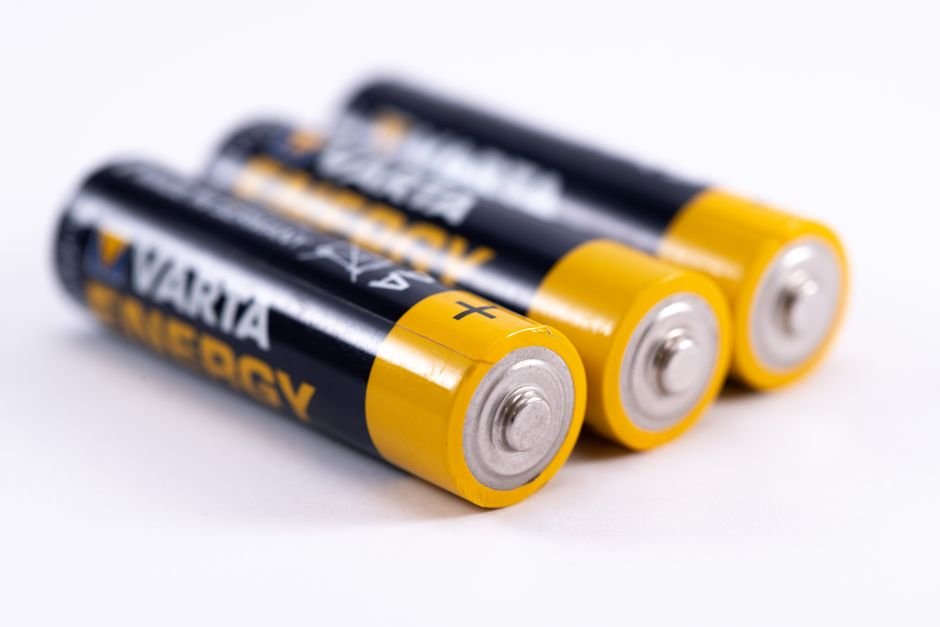
For the past decade, the lithium-ion battery has been the undisputed king of energy storage, powering everything from smartphones to electric vehicles to grid-scale storage farms. But lithium is expensive, geopolitically concentrated, and subject to volatile pricing. Its successor may be built from one of the most abundant and cheapest elements on Earth: sodium.
In April 2026, CATL, the world’s largest battery producer, announced it would begin mass-producing sodium-ion batteries by the end of the year, with deals already signed with a car manufacturer and an energy-storage provider. The announcement signals that sodium-ion technology has crossed the threshold from laboratory curiosity to industrial reality.
The numbers that matter
The economic argument for sodium-ion is simple. Sodium carbonate, the industrial precursor, costs $200 to $280 per tonne. Battery-grade lithium carbonate costs $20,000 to $25,000 per tonne, roughly 100 times more. Sodium is more than 1,000 times more abundant in the Earth’s crust than lithium, and up to 60,000 times more abundant in the ocean.
“It’s an almost inexhaustible resource,” said Zhang Yizhi, a CATL spokesperson.
CATL’s first-generation sodium-ion cells achieve an energy density of 175 Wh per kilogram, with a pipelined target of 200 Wh/kg. That is below the 300+ Wh/kg of advanced lithium nickel-manganese-cobalt (NMC) cells, but comparable to lithium iron phosphate (LFP) cells, which currently dominate the stationary storage market and entry-level electric vehicles.
Where sodium-ion has clear advantages beyond cost is safety and environmental tolerance. The cells are significantly less flammable than lithium-ion, especially NMC chemistries, and function at temperatures as low as -40°C, a regime where lithium batteries struggle.
How they work
CATL’s sodium-ion chemistry uses a Prussian white cathode, a sodium, nitrogen, iron, and carbon compound related to the pigment Prussian blue, paired with a carbon-based anode. The anode uses cheap aluminum current collectors instead of copper, further reducing material costs. The entire cell avoids the scarce and toxic heavy metals, nickel, manganese, cobalt, that are essential to high-performance lithium-ion batteries.
BYD, the world’s largest electric vehicle maker by sales, is also investing heavily in sodium-ion. Chinese manufacturers are already producing motorcycles and small cars powered by sodium batteries. In the United States, the start-up Alsym (Malden, Massachusetts) is developing its own sodium battery technology.
Market outlook and debate
Whether sodium-ion can undercut lithium on price at scale is a matter of active debate. CATL expects cost parity with LFP by the end of 2026. Wood Mackenzie, the Edinburgh-based consultancy, predicts parity will not arrive until 2035. BloombergNEF analyst Evelina Stoikou noted: “Because it’s a new technology, and it’s not widely deployed, estimations have a very wide error margin.”
Auke Hoekstra, an energy analyst at Eindhoven University of Technology who is known for optimistic projections, said: “I honestly did not expect it to go that fast, and I am usually the guy who is seen as an optimist.”
The most likely early applications are low-cost electric cars, especially in China and emerging markets where range requirements are moderate, and large-scale stationary grid storage, where energy density matters less than cost per kilowatt-hour. The LFP precedent is instructive: LFP stores about two-thirds the energy of advanced NMC but now dominates the stationary storage market because it is cheaper, safer, and lasts longer.
The recycling paradox
One unexpected finding: sodium-ion batteries may be so cheap that recycling them would be loss-making without government subsidy. Yun Zhao, a researcher at Imperial College London, calculated that given the low material value of a spent sodium-ion cell, the economics of recycling do not work on their own. This could create a waste management challenge analogous to the current problem with solar panel disposal, unless recycling infrastructure is designed from the outset.
What it means
The electrification of transport and the expansion of renewable energy both depend on cheap, abundant battery storage. Lithium-ion batteries have delivered staggering cost reductions, more than 90% since 2010, but the underlying material constraints have not gone away. Sodium-ion offers a path to a battery chemistry that is not constrained by scarce resources, volatile commodity markets, or concentrated supply chains.
If CATL’s manufacturing ramp succeeds, 2026 will be remembered as the year the battery industry’s sodium future began.
Source
1. Castelvecchi, D. (2026). Beyond lithium: how sodium-ion batteries could change the world. Nature, 655, 562-564. https://doi.org/10.1038/d41586-026-02150-y