

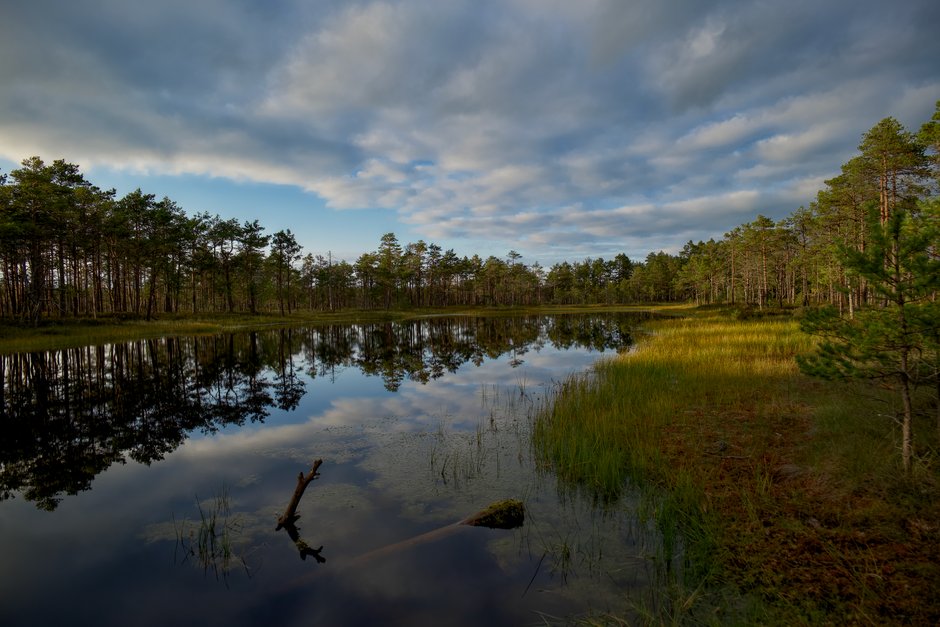
A new global analysis reveals a blind spot in climate accounting: the millions of ponds, farm dams, and small reservoirs that dot agricultural landscapes worldwide. Though they cover only 6% of the Earth’s inland water surface area, these small water bodies (SWBs) contribute 28% of global inland water methane emissions and 15% of carbon dioxide emissions, and those numbers are rising fast under the combined pressure of warming and human activity.
The research, led by Xuliang Zhuang and colleagues from the Chinese Academy of Sciences and published in PNAS, represents the first comprehensive global assessment of greenhouse gas emissions from water bodies smaller than 1 km². Using machine learning trained on 470 field observations and upscaled to 3.28 million water bodies worldwide, the team quantified emissions under present conditions and projected them through 2100 under three climate scenarios.
A disproportionate burden
The numbers underscore a striking ecological inequality. SWBs emit 148% more methane per unit area than larger lakes and reservoirs. Methane ebullition, the release of gas bubbles from sediments, accounts for 56% of total SWB methane output, making it the dominant emission pathway. Currently, these small water bodies release 84.5 Tg of CO₂ and 11.0 Tg of CH₄ per year.
Agricultural catchments are the primary driver of these outsized emissions. Fertilizer runoff enriches SWBs with nitrogen and phosphorus, fueling eutrophication that supercharges microbial methane and CO₂ production. The study found that methane flux in agricultural catchments is five times higher than in forested catchments.
Warming compounds the effect. Higher temperatures accelerate microbial metabolic rates in sediments, increasing both diffusive and bubble-phase methane release. The result is a positive climate feedback loop largely neglected in current climate models: as temperatures rise, SWBs release more greenhouse gases, which in turn drives further warming.
Projections under climate scenarios
The study modeled future emissions under three Shared Socioeconomic Pathway (SSP) scenarios. Under SSP5-8.5, the high-emissions, fossil-fuel-driven pathway, SWB CO₂ emissions would increase by 30% and CH₄ by 14% by 2100. Under SSP1-2.6, the sustainable development pathway with aggressive nutrient management, the increases are cut roughly in half: 12% for CO₂ and 4% for CH₄.
The difference between the two scenarios highlights a critical policy lever. Sustainable nutrient management, reducing fertilizer runoff, protecting riparian buffers, and restoring wetlands, can substantially curb the emission growth from small water bodies without requiring the complete elimination of agricultural ponds or farm dams.
A companion Commentary in the same issue of PNAS, authored by Marcia N. Macedo of Columbia University and the Woodwell Climate Research Center, places the findings in context. “Small but mighty,” she writes, describing how these inconspicuous water bodies have been systematically overlooked in both carbon budgets and climate mitigation strategies.
Limitations and caveats
The study’s spatial upscaling relies on machine learning trained on 470 field observations, a robust but geographically uneven dataset. The authors note that field sampling is heavily concentrated in temperate regions of North America, Europe, and East Asia, with relatively few observations from tropical regions, which may have different emission dynamics. The projections under SSP scenarios assume continued relationships between land use, climate, and emissions that could change with novel agricultural practices or ecosystem regime shifts.
The study also does not fully account for the carbon burial capacity of small water bodies, the organic carbon that settles in pond sediments and remains stored long-term. While SWBs are a net source of greenhouse gases on a global scale, the balance between emission and burial varies considerably by latitude, depth, and management history.
What’s next
The findings have direct implications for national greenhouse gas inventories, which currently do not treat small water bodies as a distinct emission category. The Intergovernmental Panel on Climate Change (IPCC) guidelines for national inventories could be updated to include SWB-specific emission factors, a move that would change the accounting for agricultural landscapes in nearly every country.
For now, the message is clear: the ponds in farmers’ fields are not passive features of the landscape. They are active, and increasingly potent, amplifiers of climate change, shaped by human hands.
Sources
1. Zhuang, X., Liu, X., Xu, S., Wang, X., Shah, A. A., Wang, L., Wu, S., Jiang, C., Ouyang, Z., & Piao, S. (2026). Human amplification of climate-induced greenhouse gas emissions from global small water bodies. Proceedings of the National Academy of Sciences, 123(22), e2537678123. https://doi.org/10.1073/pnas.2537678123
2. Macedo, M. N. (2026). Small but mighty: The outsized role of small water bodies in the global carbon cycle. Proceedings of the National Academy of Sciences, 123(28), e2614198123. https://doi.org/10.1073/pnas.2614198123