

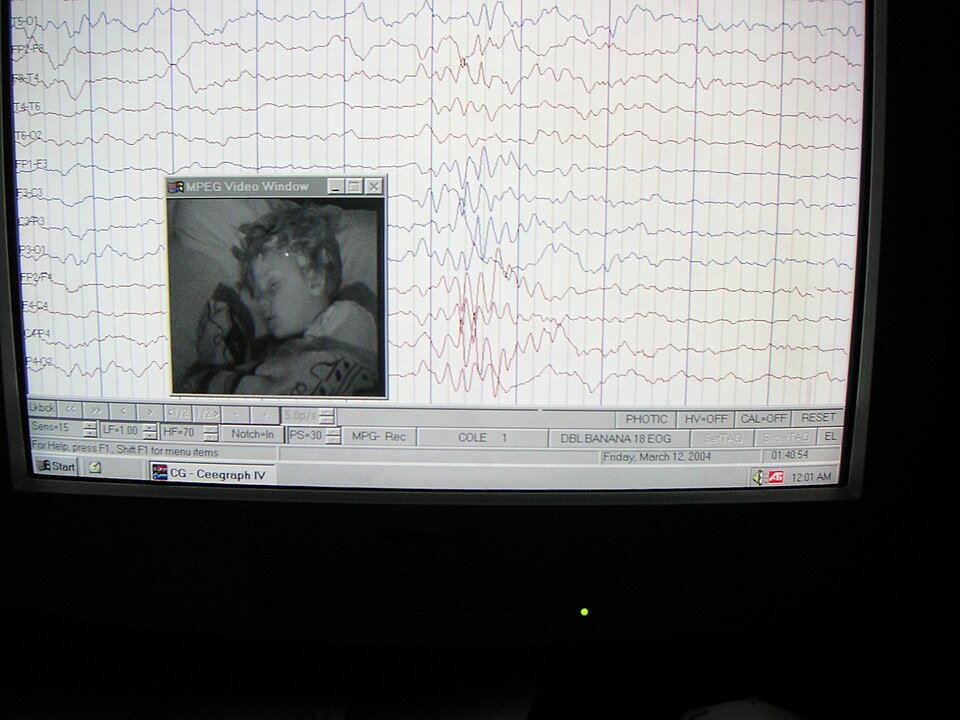
Sleep spindles enhance latent working memory representations
Lead
Working memory allows the brain to hold onto information for seconds to minutes, but exactly how it does so has long puzzled neuroscientists. A new preprint from researchers at the University of Oxford and the University of Birmingham suggests that sleep spindles, brief bursts of brain activity that occur during non-REM (NREM) sleep, may prime cortical circuits to access these short-term memories more effectively after waking. The study, posted on bioRxiv, is among the first to link sleep spindle dynamics to the neural readout of so-called “activity-silent” working memory.
What they found
The research team, led by Sophia Wilhelm, Elkan Akyurek, and Bernhard Staresina, recruited 30 participants who performed a visual working memory task before and after a daytime nap. During the task, participants briefly viewed a set of oriented grating stimuli and were later asked to recall them. After the nap, the researchers introduced brief visual “impulses” (flashes designed to perturb cortical networks) and used multivariate decoding of high-density EEG recordings to determine whether the brain’s response to those impulses carried information about the specific items held in memory.
Participants who had longer sleep spindles during NREM sleep showed two clear advantages in the post-nap session: they performed better on the working memory task itself, and the impulse-evoked EEG signals contained higher-fidelity decoded representations of the memorized items. These effects held even after controlling for each participant’s pre-sleep working memory ability, suggesting that the spindle-related benefit was not simply a reflection of baseline performance differences.
Crucially, the relationship was specific to sleep spindles. The researchers found no corresponding effects for slow-oscillation duration or other NREM oscillatory metrics. That specificity points to a unique role for spindles, which are known to originate in the thalamus and propagate to the cortex, in shaping how the brain stores and retrieves short-term information.
The study builds on earlier work showing that working memory representations can persist in “activity-silent” states, maintained not by continuous neural firing but by transient changes in synaptic strength. These latent states can be “pinged” back into measurable neural activity by brief perturbations. The new findings suggest that sleep spindles may strengthen or reorganize the synaptic traces underlying those latent representations, making them more accessible when the brain needs them.
Why it matters
For decades, the dominant model of working memory held that sustained neural firing in prefrontal and parietal regions was the primary mechanism keeping information online. The discovery of activity-silent memory challenged that view, showing that information can persist in synaptic weight configurations without detectable spiking activity. But it has been unclear what natural processes shape those latent states.
These results point to sleep spindles as one such process. If spindle activity during NREM sleep enhances the fidelity of activity-silent working memory representations, then the quality of a nap or night’s sleep may directly influence how well we can access recently learned information the next day. The findings also add to a growing body of evidence linking sleep spindles to synaptic plasticity. Spindles are already associated with memory consolidation during sleep, but this work extends that picture by showing they may also tune cortical circuits for the short-term maintenance of information after waking.
Limits
As a preprint, this work has not yet undergone peer review. The sample size of 30 participants is moderate, and the study relied on a daytime nap rather than a full night of sleep, so it remains unclear whether the effects generalize to overnight sleep. The visual working memory task used oriented gratings, a well-controlled but relatively simple stimulus; whether spindle-related enhancements extend to more complex or ecologically valid working memory content is an open question. Finally, while the statistical controls for pre-sleep ability strengthen the case, the correlational design cannot establish causation. Experimental manipulations that enhance or suppress spindle activity would be needed to confirm a direct causal role.
Bottom line
Longer sleep spindles during NREM sleep predict better working memory performance after waking and higher-fidelity neural readouts of activity-silent memory representations. The findings suggest that sleep-dependent synaptic recalibration, mediated by spindles, may optimize cortical circuits for short-term information processing, beyond the traditionally recognized role of sleep in long-term memory consolidation.
Source
Wilhelm, S., Akyurek, E., & Staresina, B. (2026). Sleep spindles enhance latent working memory representations. bioRxiv. https://doi.org/10.64898/2026.06.26.734777
Funded by the European Research Council (Grant 101001121).