

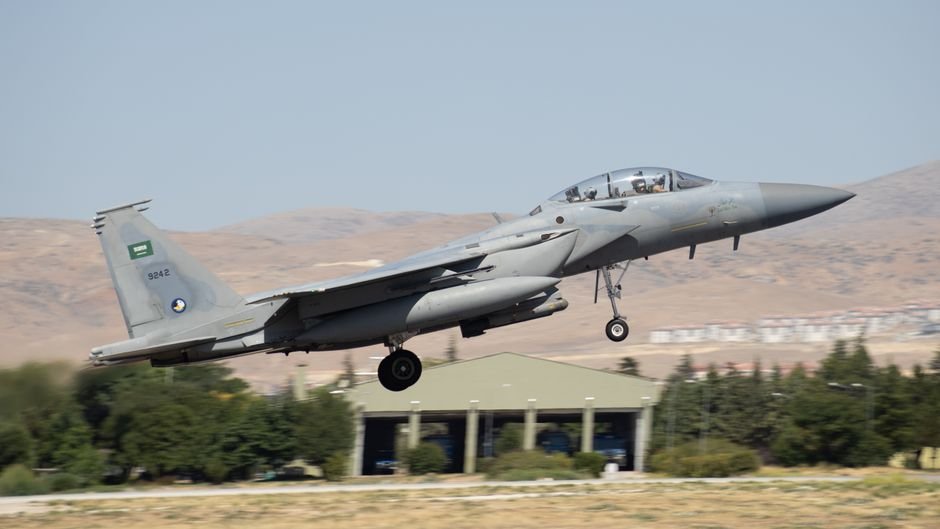
Saudi Arabia said it intercepted multiple drones launched by Iran-backed militias from Iraqi territory on Monday, as a coordinated wave of attacks struck across the region.
The Saudi defense ministry said the drones targeted petroleum facilities in the Eastern Province and the capital Riyadh. Jordan’s Royal Jordanian Air Force separately shot down two drones heading toward the kingdom, with no casualties or damage reported. In Iraq, Iranian-backed groups also launched drones that were intercepted or crashed.
Yemen’s Houthi rebels, who have fought a Saudi-led coalition since 2015, claimed separate drone strikes on Saudi oil infrastructure. The Houthis — also armed and funded by Iran — have intensified attacks in recent weeks amid the wider regional conflict sparked by the US-Israeli war on Iran.
The timing matters. The attacks come as President Trump has signaled a possible thaw with Iran, telling reporters on Monday that “there is a good chance that something could happen” in US-Iran talks. Iran has denied that direct talks are taking place but has not ruled out indirect communication.
Analysts say the drone salvos may represent a test of US resolve at a moment of strategic uncertainty. With American attention split between the war on Iran, the conflict in Ukraine, and growing competition with China in the Indo-Pacific, Gulf states are watching for signs that Washington’s security guarantees are weakening.
Saudi Arabia said it “reserves the right to respond” to the attacks. The kingdom has not specified what form a response might take, but it has grown increasingly assertive in its own defense. Saudi air defenses have improved significantly since the 2019 Abqaiq-Khurais attacks, which temporarily knocked out half of Saudi oil production.
Nevertheless, the ability of Iran-linked groups to launch coordinated drone strikes from multiple directions — Iraq, Yemen, and potentially Syria — demonstrates a persistent vulnerability. The drones are cheap to produce and hard to defend against in volume, precisely the kind of asymmetric threat that the Pentagon’s own internal reviews have identified as the most challenging to counter.
The attacks also put Iraq in an uncomfortable position. Iraqi territory is being used as a launchpad for strikes against its Gulf neighbors, and the Iraqi government has limited control over the Iran-aligned militias that operate across the country.