

The outgoing head of the U.S. Space Force delivered a stark warning in his final public address: if conflict reaches orbit, no country will be able to stay out of the crossfire.
Gen. Chance Saltzman, speaking at the Global Air and Space Chiefs Conference on July 15, made the case that space is fundamentally different from every other warfighting domain. Unlike ground, sea, or air campaigns, where combatants can maneuver away from a battle zone, orbital mechanics leaves no room for retreat.
“If a conflict extends into space, none of us will be able to avoid the war zone,” Saltzman said. “Orbital mechanics will put all of our space capabilities into the space war zone.”
His reasoning is grounded in the physics of Earth orbit. Satellites occupy specific inclination bands that are limited in number, and every spacecraft in those bands follows predictable, intersecting paths. A single destruction event, whether kinetic or directed energy, can generate a debris cloud that threatens every satellite sharing that orbital regime regardless of ownership or national allegiance.
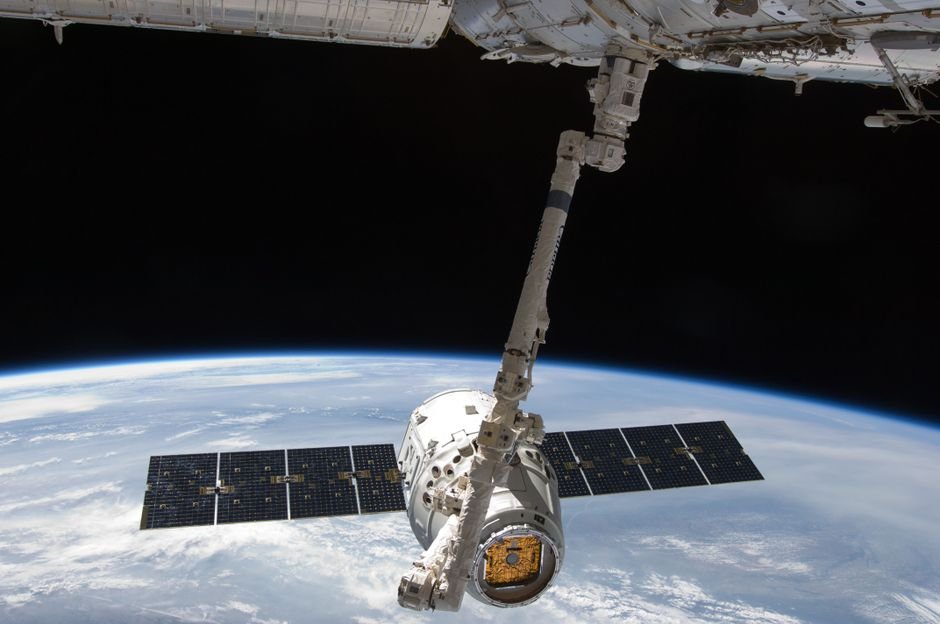
Russia’s 2022 anti-satellite missile test already demonstrated the mechanism, producing a debris field that has forced the International Space Station to dodge multiple times and remains in orbit years later. A full-scale conflict would multiply that effect across multiple orbital shells.
“We will share the consequences,” Saltzman said. “Therefore, we should share the responsibility for a safe, secure and stable space domain.”
Saltzman’s tenure saw the Space Force transform from a bureaucratic reorganization into what he described as a fully “combat-credible” service. At the 41st Space Symposium in April 2026, he stated that space-based effects had already played a critical role in U.S. military operations in Iran, marking the first public acknowledgment of space combat in an active conflict.
Deterrence, he argued, must become a universal goal rather than a national one. The same orbital physics that makes space war inescapable also means that every nation benefits from preventing it: the debris cascade that would follow a single satellite kill does not respect borders.
Saltzman is set to retire in August 2026 after four years as the second Chief of Space Operations. His nominated successor, Lt. Gen. Douglas A. Schiess, defended the service’s $71 billion budget request during his confirmation hearing, calling it “exactly what we need” to deter China’s growing military space capabilities.
The speech crystallized a paradox at the heart of space security: the very property that makes orbit so vulnerable to disruption, its seamless interconnection, is also the strongest argument for international cooperation in preventing conflict. In space, the only escape from the war zone is to ensure it never opens.
Clark – 1ban.news