

Russian satellites can jam GPS at continental scale, tests confirm
Date: June 9, 2026
For the first time, researchers have definitively traced widespread GPS interference across Europe, Greenland, and Canada to Russian military satellites orbiting more than 1,200 kilometers above Earth. The findings, published in a peer-reviewed paper on June 3 and confirmed by multiple independent teams, reveal a space-based jamming capability at continental scale that has been operating undetected for years.
The source
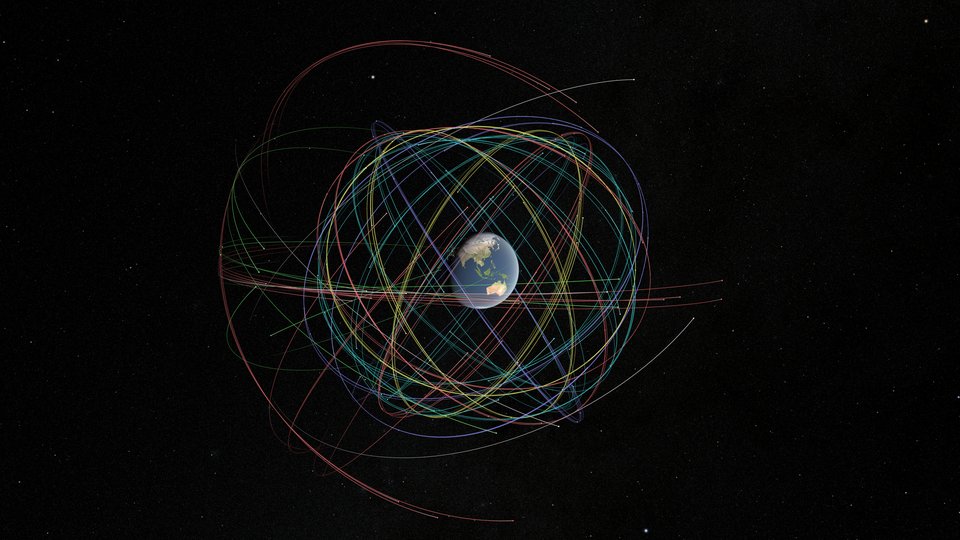
The culprit is Russia’s EKS (Edinaya Kosmicheskaya Sistema) constellation, also known as Tundra or Kupol — Russia’s next-generation missile early-warning satellite network. These satellites fly in highly elliptical Molniya orbits inclined at 63.8 degrees, designed for persistent coverage of the Northern Hemisphere.
A team from the University of Texas at Austin’s Radionavigation Laboratory, working with Stanford University and GMV, analyzed data from the International GNSS Service (IGS) terrestrial reference stations spanning January 2019 to April 2026. They identified 75 days with at least one widespread GNSS interference event overlapping with GPS L1 frequency. By mapping the shape of the affected area on Earth — a distinct quasi-hyperboloid surface — and cross-referencing it against satellite orbital paths, only one satellite family matched: the EKS constellation.
The primary satellite identified is Kosmos 2546 (EKS-4/Tundra 14L), launched in May 2020. Its orbit aligned perfectly with the interference pattern.
How the jamming works
The interference is centered at 1577.5 MHz, approximately 2 MHz above the GPS L1 frequency of 1575.42 MHz. The slight offset may be deliberate, making attribution harder while still disrupting GPS receivers.
The signals come in brief bursts lasting 3 to 10 seconds — too short for most users to notice, but clearly detectable by sensitive ground reference stations. Despite the short duration, they cause up to a 10 dB degradation in carrier-to-noise ratio across wide areas simultaneously. The same constellation has been affecting China’s BeiDou navigation system in an almost identical manner since June 2020.
Most GPS jamming worldwide comes from ground-based sources: vehicles, ships, or aircraft. Active space-based human-made GPS jamming is extremely rare and represents a significant escalation in electronic warfare capability.
Why it matters for aviation and infrastructure
GPS provides more than just navigation. It supplies precision timing signals that synchronize power grids, financial networks, and telecommunications infrastructure. Space-based jamming could affect all of these simultaneously across an entire continent.
The implications for aviation are especially serious. Previous ground-based GPS jamming in the Baltic region, originating from Kaliningrad, has already forced airport closures and flight diversions. Space-based interference extends that threat to a far wider area with no warning.
“It is a wake-up call for all of us,” said Todd Humphreys of UT Austin’s Radionavigation Lab, who co-authored the study.
Dana Goward, president of the Resilient Navigation and Timing Foundation, noted in a companion opinion piece for SpaceNews that jamming and spoofing are no longer exceptional events — they have become “background conditions.” Goward has been advocating for resilient PNT (Positioning, Navigation, and Timing) backups for years.
A long investigation
The discovery was the result of a two-year investigation. In September 2024, Goward published an opinion piece warning about the risk of space-based GPS jamming. That article prompted a UK researcher to contact him with evidence of unexplained interference. The trail led to UT Austin and Stanford, who spent months analyzing IGS reference station data before publishing their paper.
The New York Times broke the story on June 5, with Ars Technica and SpaceNews following up on June 8.
The research paper, “Chasing Lightning: Detecting, Characterizing, and Identifying a Powerful Space-Based GNSS Interference Source” by Clements, Kriezis, and Humphreys, is available on arXiv (2606.03673).
*Sources: Ars Technica, SpaceNews, New York Times, arXiv:2606.03673*