

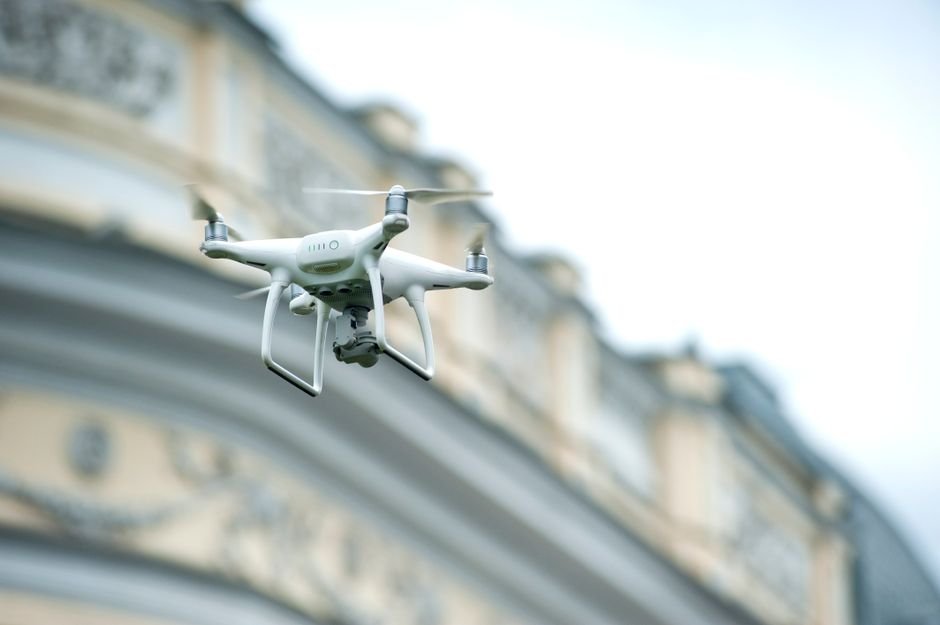
LONDON. For 18 months, Russia ran a drone surveillance campaign against Europe’s most sensitive military sites: nuclear weapons bases, power plants, and submarine ports. The drones came from ships. The ships were part of Moscow’s shadow fleet, the same tankers that already evade Western sanctions on Russian oil. And the Kremlin got away with it, over and over again.
A report published Thursday by the International Institute for Strategic Studies documents 144 separate drone incursions across Europe between early 2025 and mid-2026. The IISS, a London-based think tank that governments actually listen to, says the campaign was orchestrated by the GRU, Russia’s main military intelligence agency. The drones were launched from Russian shadow fleet vessels operating in the North Sea and the Baltic. In some cases, swarms of up to 20 drones at once flew over American air bases in the British counties of Suffolk and Norfolk.
The message was not subtle. Moscow was watching NATO’s nuclear infrastructure up close. It was testing how the alliance would respond. And for a year and a half, the answer came back: not very well.
The most striking target was RAF Lakenheath in Suffolk, a base that hosts US F-15 and F-35 fighters. In the months before American nuclear weapons were deployed there in July 2025, unusual drones flew low over the base. The flights were recorded in late November 2024. By the time the weapons arrived, the Kremlin already knew what the base looked like from the air, probably down to the guard rotations and the fence lines.
The same pattern repeated at RAF Fairford in Gloucestershire and at two other American air bases in England. Across the whole of the UK, there have been 187 drone sightings near military establishments since the start of 2025. The British government did not make a great show of stopping them.
One police helicopter tried to track drones flying into the country. It pulled back for safety reasons. Someone suggested firing an anti-drone laser. That idea was discussed but never carried out. The report is dry about this. It does not need to be dramatic. The facts speak for themselves.
The drones were not limited to Britain. In November 2025, drones flew over Kleine-Brogel Air Base in Belgium on three consecutive nights. Kleine-Brogel is one of six NATO bases in Europe that host American B61 nuclear gravity bombs. The first drones were small, probably testing the radio frequencies of the base’s defenses. Then larger drones arrived. The base’s anti-drone jammer failed. A helicopter was scrambled, but the drones left on their own schedule, not anyone else’s.
The same month, guards at Volkel Air Base in the Netherlands, another NATO nuclear storage site, shot at ten suspicious drones. No wreckage was recovered. In December, two Dutch F-35s were scrambled to intercept a drone. They did not catch it.
In France, drones buzzed Ile Longue, the naval base that hosts the country’s submarine-launched nuclear ballistic missile fleet, which carries about 240 of France’s 290 warheads. The incursions happened during a supermoon. The French navy said sensitive infrastructure was not threatened. That is what navies always say. The drones were intercepted with electronic jamming, but they had already done their work.
There is strong evidence that the drones were piloted from specific shadow fleet vessels. The IISS identified two Russian private military contractors operating aboard these ships. One vessel, the Seasons 1 tanker, was in the North Sea near Essex during the Lakenheath incursions. Another, the Hav Dolphin cargo vessel, was sailing toward Hull at the same time. The Hav Dolphin was later linked to drone sightings at a submarine base in northern Germany in May 2025. A third vessel, the Maltese-flagged Vezhen, was spotted about 50 kilometers northwest of Dublin in December 2025, the same evening drones flew over an Irish naval vessel after a visit by Ukraine’s President Volodymyr Zelenskyy.
The ships are part of Russia’s wider shadow fleet, a sprawling network of aging, poorly insured tankers and cargo vessels used to circumvent oil price caps and sanctions. The IISS report makes an unsparing observation: the identification of military contractors on these ships confirms the militarization of the shadow fleet not as a theory but as a fact of operations.
Several drone models appear to have been used. None have been positively identified. But the Orlan-10, a Russian reconnaissance drone with a about 480-kilometer range and 12-hour flight endurance, fits the profile. It can be launched from a ship, fly to a target, loiter, and return. It does not need a runway. It does not need a permission slip.
Russia has denied the accusations. The Kremlin said nothing when the IISS report was released. Its standard playbook is to call such claims unfounded and move on.
NATO has responded by increasing monitoring. That is the official phrase. It means more radar watches, more patrols, more sharing of intelligence between member states. Three individuals linked to Russian military intelligence were tracked to locations near the East Anglian air bases. They were watched and no more. The alliance has not shot down a single drone involved in the campaign. It has not publicly named and shamed the shadow fleet ships. It has not imposed new sanctions. It has not done the things that would make this stop, only the things that make it slightly harder to continue.
The IISS report makes for grim reading, but it is essential. Charlie Edwards, a senior IISS fellow, said every government his team spoke to welcomed the report’s publication. That tells you something. Governments usually do not thank researchers for exposing their vulnerabilities.
This is the new normal of European security. A hostile power launches drones from unregistered ships in international waters, flies them over nuclear weapons sites, films everything, and goes home. The targets are American and European. The ships are Russian. The weapons on the ground are ultimately meant to deter a nuclear attack. But the drones are not nuclear. They are cheap, disposable, and deniable. That is the point.
The Cold War was about missiles and silos and counting warheads. This war is about a drone that costs a few thousand dollars, launched from a rusting tanker that no one wants to inspect, flying over a billion-dollar air base while the police helicopter turns back. Moscow has learned that it does not need to break through NATO’s defenses. It only needs to show that it can look over the wall whenever it wants.