

Vera C. Rubin Observatory Begins the Largest Cosmic Time-Lapse in History
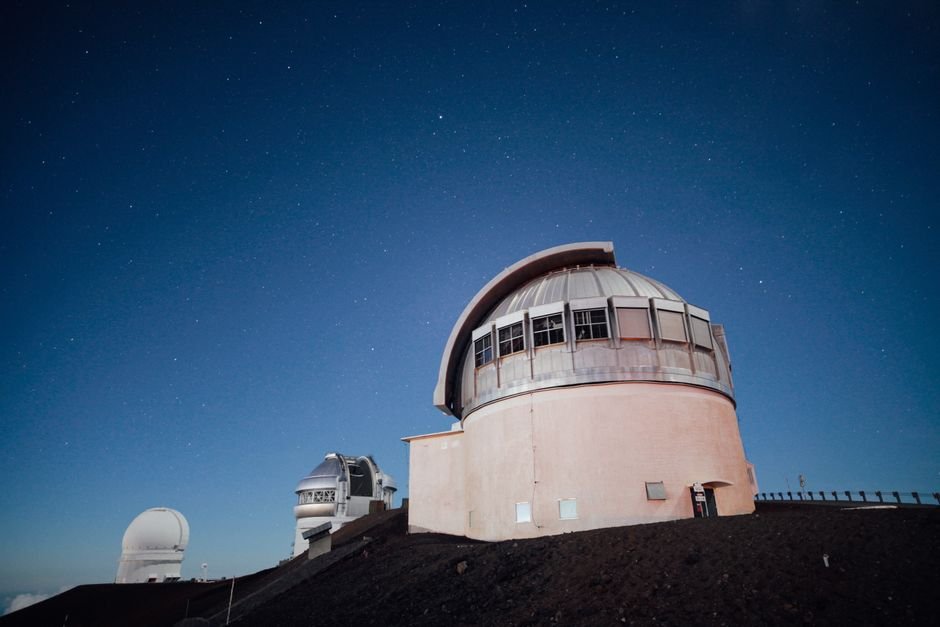
Featured image: The Vera C. Rubin Observatory at Cerro Pachon, Chile, under the Milky Way; credit: Rubin Observatory/NOIRLab/NSF/AURA
The Vera C. Rubin Observatory in northern Chile has officially begun the Legacy Survey of Space and Time (LSST), a 10-year project that will image the entire visible southern sky every three nights using the world’s largest digital camera. The survey, which started June 30, will produce a 3.2-gigapixel cosmic time-lapse movie of unprecedented depth and scale.
“This moment marks a new era in astronomy, not just in terms of the data volume and quality that LSST ushers in, but also in how research in astronomy gets done,” said Arun Kannawadi Jayaraman of Duke University.
The observatory’s 8.4-meter Simonyi Survey Telescope at Cerro Pachon (8,684 feet above sea level) carries a 3,200-megapixel camera built at the SLAC National Accelerator Laboratory. Each exposure captures 9.6 square degrees of sky, roughly 45 times the area of the full moon. Over 10 years, every patch of accessible sky will be observed approximately 800 times, generating 10 to 20 terabytes of data per night and up to 10 million time-domain alerts sent globally within 60 seconds.
“The LSST delivers an astronomical movie rather than individual snapshots, observing the same regions of sky repeatedly over years,” the observatory’s survey head Željko Ivezić said. “It’s an amazing feeling. I have been working for over two decades on it. It reminded me of the birth of my child.”
Six color filters spanning the ultraviolet through near-infrared (u, g, r, i, z, y) give the survey a detailed view of each object’s spectral energy distribution. A robotic auto-changer swaps filters in less than two minutes, keeping the observing cadence tight enough to catch fast-changing events.
Five science pillars
The LSST is organized around five core science areas. Dark energy and dark matter are the primary drivers: by measuring weak gravitational lensing across billions of galaxies, Rubin will map the 3D distribution of dark matter and, within 5 to 7 years, may distinguish between dark energy as a real phenomenon and a misunderstanding of gravity. This result could be the most fundamental legacy of the survey.
For planetary defense, Rubin is expected to detect tens of thousands of new near-Earth asteroids, including potentially hazardous objects, and dozens of interstellar visitors, up from only three detected to date. The survey will also hunt for the hypothesized Planet Nine in the outer solar system.
Time-domain astronomy will receive an unprecedented boost: the nightly alert stream will capture supernovae, gamma-ray bursts, tidal disruption events, and entirely new types of cosmic explosions that no one has predicted. Dedicated AI-powered “broker” platforms will classify and distribute the firehose of data to scientists and citizen astronomers worldwide.
The survey will map the Milky Way’s structure and stellar populations in exquisite detail, detecting faint tidal streams and low-surface-brightness features that hold clues to the galaxy’s formation history. Deep drilling fields will provide ultra-deep observations in selected regions, and a target-of-opportunity mode will enable rapid follow-up of multimessenger events such as neutron star mergers and gravitational wave sources.
Data challenges ahead
The observatory faces significant operational challenges. More than 15,000 satellites already streak astronomical images, and the growing megaconstellation population threatens survey data quality. Ground-based astronomers have warned that if satellite numbers exceed 100,000, ground-based optical astronomy could become severely compromised.
Nevertheless, the community is preparing. Multiple machine-learning broker platforms are in place to separate real astrophysical transients from satellite artifacts and detector noise. “If you talk to 50 different astronomers, you would get 50 different answers about what they are looking forward to,” said Caltech astronomer Mike Brown, reflecting the breadth of science the LSST will unlock.
The $800 million observatory is jointly funded by the U.S. National Science Foundation and the Department of Energy. First conceived around 2003 and ranked the top-priority ground-based facility in the 2010 Astrophysics Decadal Survey, Rubin is the culmination of more than two decades of development.
Draft for 1ban.news – Space Desk