

Every major technology gets cheaper with scale. Solar panels dropped by a factor of 100 over four decades. Computer memory fell even faster. But few industries have matched the trajectory of rocketry: the cost of lifting one kilogram into orbit has fallen 96 percent since 1960, and a new analysis suggests the decline is nowhere near finished.
The study, published in PNAS Nexus, draws on a dataset of 4,405 launches spanning 330 rocket configurations from 13 countries, the most comprehensive tabulation of launch costs ever assembled. The lead author, Alessio Terzi of the European Commission’s Joint Research Centre, and his colleagues found that every doubling in cumulative payload mass delivered a 21.2 percent reduction in cost per kilogram.
That learning rate is faster than solar panels, the benchmark technology for industrial cost decline. It means that each new satellite launched not only serves its own purpose but also drags down the price for the next one.
Two accelerations shaped the curve
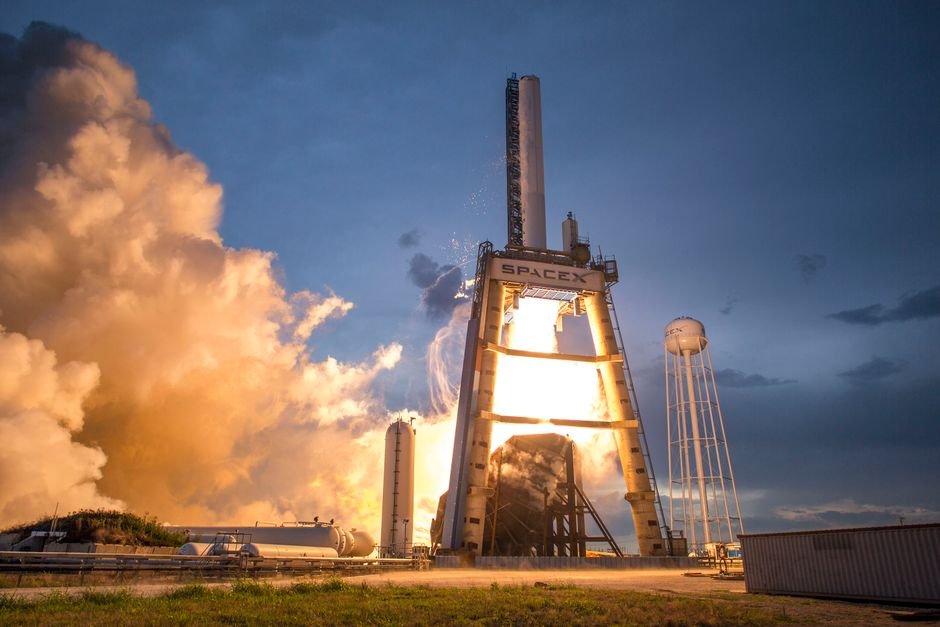
The cost trajectory, Terzi said, shows two clear inflection points. The first followed the end of the Cold War, when the launch industry shifted from government-prestige programs toward commercial imperatives. The second, sharper acceleration tracks directly with the introduction of SpaceX’s Falcon 9 and the arrival of orbital reusability at scale.
If the trend continues, the study projects costs of $1,600 per kilogram by the end of this decade and roughly $300 per kilogram by 2040. At that price, many applications that are currently marginal, asteroid mining, orbital manufacturing, large-scale space solar power, begin to look economically viable.
Three things that could break the curve
The authors are careful to flag the risks that could stall or reverse the trend. The most visible is space debris. A cascading Kessler syndrome event, where a collision generates shrapnel that triggers further collisions, could render entire orbital bands too dangerous to use. At relative speeds of 27,000 kilometers per hour (about 17,000 miles per hour), even a small fragment carries devastating kinetic energy.
Market concentration is a subtler threat. Terzi noted that SpaceX currently carries roughly three-quarters of the world’s payload mass to orbit. A single company with that much pricing power could raise prices without losing customers, slowing the volume-driven learning that has driven costs down.
Geopolitical fragmentation could push in the same direction. As nations grow uneasy about depending on a single American company for access to space, they may invest in independent launch capability, a rational security decision that would restore the inefficient, redundant Cold War dynamics that kept launch costs high in the first place.
Terzi described the industry as being at a structural break point, where historical data becomes an unreliable guide to the future. The six-decade record, however, leaves little doubt about the direction of travel: space has never been cheaper, and the floor is lower than anyone predicted a generation ago.