

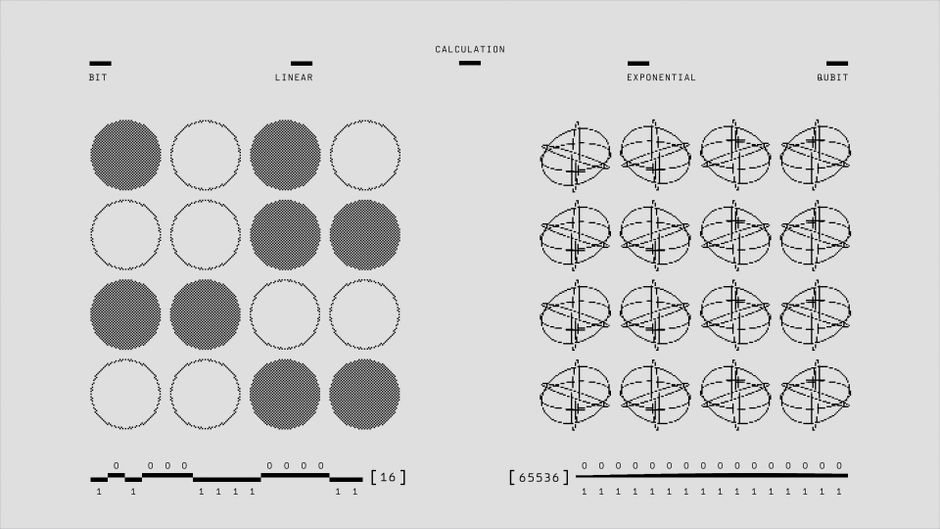
Quantum technology is seeing some of its most active development in decades, but a comprehensive survey of the field by Semiconductor Engineering finds that meaningful commercial quantum computers remain years, and in some cases decades, away from general-purpose use.
The assessment, drawn from interviews with Quantum Economic Development Consortium (QED-C) leadership and industry experts, paints a picture of “maximum creativity meets maximum chaos.” No common approach to qubit design, error correction, or software has emerged, and the industry remains at a stage comparable to semiconductor manufacturing in the 1970s and 1980s, R&D-scale, vertically integrated, with no foundry ecosystem even a tenth the scale of TSMC.
Multiple qubit modalities, no winner
Several qubit technologies are competing in parallel: superconducting circuits operating at approximately 0.04 Kelvin (requiring dilution refrigerators), spin-based qubits built on standard semiconductor fabrication processes, trapped ions, neutral atoms, and photonic systems. IBM recently demonstrated 128 superconducting qubits entangled with fidelity above 0.5, the threshold considered necessary for useful computation. Neutral atom experiments have loaded over 10,000 controllable atoms, though not yet at useful fidelity.
The extreme cooling requirements mean quantum computers will almost certainly remain in data centers for the foreseeable future. “We’re unlikely to go through a phase where every enterprise has its own quantum computer in a closet somewhere,” said Celia Merzbacher, executive director of QED-C. Most organizations will access quantum capability through a quantum-as-a-service model.
Error correction is the bottleneck
A critical gap remains between physical qubits and logical qubits, the latter requiring multiple physical qubits with redundancy, analogous to error-correcting code in classical computing. Surface codes dominate current research but do not scale well. Running Shor’s algorithm, the best-known application of quantum computing, which would break current public-key cryptography, against 256-bit encryption keys may require millions of physical qubits.
Timeline estimates vary widely
In a QED-C member survey, approximately 50% of respondents expect a commercial quantum offering within three to five years, while about 33% expect more than five years. Some physicists report their estimates have shifted from “10+ years” to “three to five years” over the last two years.
Quantum computers are not expected to replace classical systems. The prevailing view is that they will act as accelerators, QPUs alongside CPUs and GPUs, for specific high-value problems: drug discovery, materials science, optimization, and factoring. Quantum networking (unhackable communications via entanglement) and quantum sensing (navigation, biomedical imaging, defense) are advancing in parallel but face their own fundamental challenges.
Sources: Where Does Quantum Computing Stand? (Semiconductor Engineering, Jul 9, 2026)