

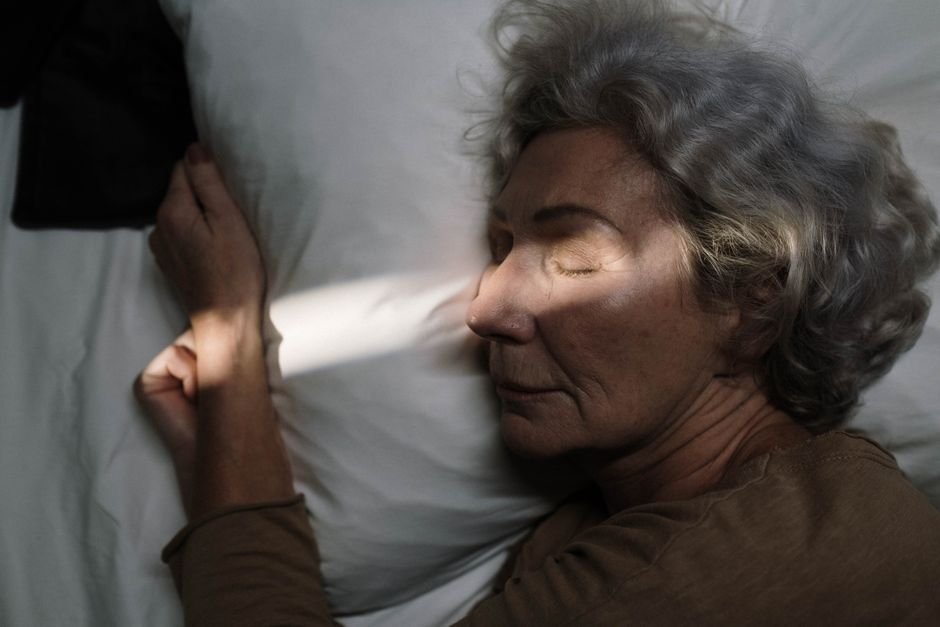
Poor sleep and accelerated aging go hand in hand across every stage of adult life, according to the largest and most comprehensive review of the question to date. But whether bad sleep actually causes aging to speed up is a much murkier question, and the new evidence suggests the answer may be “not necessarily.”
A team led by Ethan T. Whitman at Duke University, collaborating with researchers at King’s College London, UC San Francisco, and the University of Minnesota, analyzed data from more than 64,000 adults across five independent datasets. Their preprint, posted July 6 on medRxiv, tested the widely held claim that poor sleep drives biological aging.
The correlation, they report, is unmistakable. People who sleep poorly show faster biological aging whether they are young adults, middle-aged, or in late adulthood. The pattern holds across multiple types of aging biomarkers, from DNA methylation-based epigenetic clocks to composite physiological measures, and across different tissue systems. The link also remains strong even after accounting for chronic disease burden, suggesting it is not simply a byproduct of already being sick.
But the story changes when the researchers drilled deeper.
In twin-based analyses that control for shared genetics and early-life environment, the correlation between poor sleep and accelerated aging weakened considerably. This suggests that common genetic predispositions or childhood circumstances, not poor sleep itself, may explain much of the association.
The team then turned to Mendelian randomization, a technique that uses genetic variants as stand-ins for randomized assignment to test causal effects. Here the evidence was mixed. Some analyses hinted at a possible causal pathway, but results were inconsistent across datasets and aging biomarkers.
“Poor sleep is robustly correlated with accelerated aging, but the claim that poor sleep causes aging to accelerate is not consistently supported by the existing data,” the authors write in their significance statement.
The study draws on five major longitudinal cohorts: MIDUS, UK Biobank, the Alzheimer’s Disease Neuroimaging Initiative (ADNI), the Human Connectome Project (HCP), and the E-Risk Study. This breadth allows the researchers to assess consistency across populations and measurement methods, a major strength of the work.
Senior authors include Terrie E. Moffitt, Avshalom Caspi, and Ahmad R. Hariri, all of Duke University, who note that several co-authors are inventors of the DunedinPACE and DunedinPACNI epigenetic aging measures used in the analyses.
The findings do not mean sleep is unimportant for health. Poor sleep is well established as a risk factor for cardiovascular disease, diabetes, cognitive decline, and mortality. Rather, the study raises a more precise question: If improving sleep slows aging, that effect may work through pathways other than a direct causal link, or may require specific genetic and environmental contexts to operate.
“Slowing aging by improving sleep warrants further research,” the authors emphasize, “as causal claims are not consistently supported by the existing data.”
The preprint, published under a CC-BY 4.0 license, has not yet been peer reviewed.
Source: Whitman ET, Prather AA, Mutz J, et al. Poor sleep is robustly correlated with accelerated aging but the evidence for causation is mixed. medRxiv [Preprint]. July 6, 2026. doi:10.64898/2026.07.02.26357135. PMID: 42465890.