

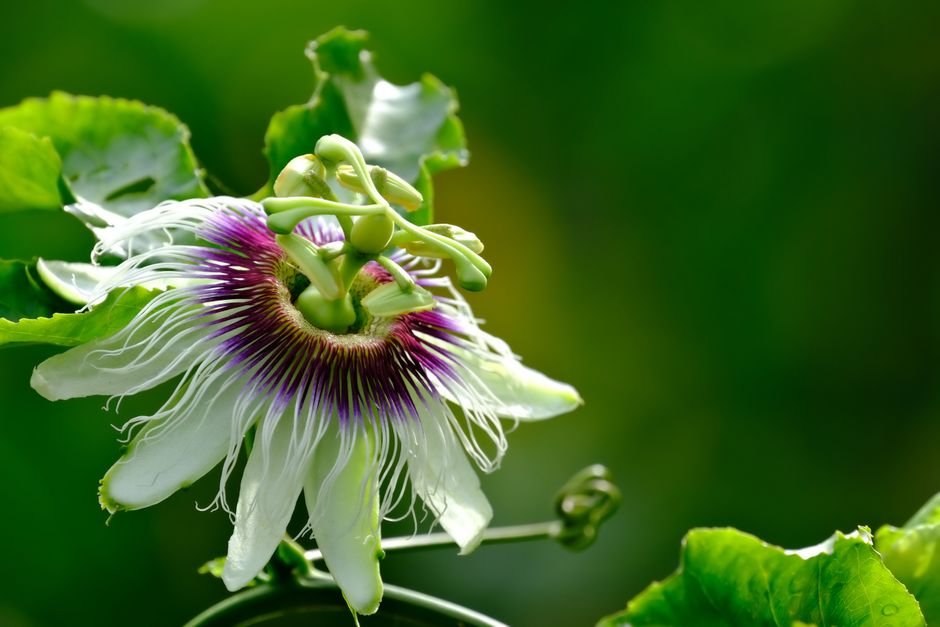
Lead. For centuries, the climbing vine Passiflora incarnata — better known as passionflower — has been brewed into teas, pressed into tinctures, and packed into capsules aimed at quieting a restless mind. Traditional herbal medicine systems across Europe and the Americas have long turned to it for insomnia, anxiety, and nervous tension. Modern research has largely attributed these calming effects to GABAergic activity, meaning the plant boosts signaling at the brain’s primary inhibitory neurotransmitter system, much like benzodiazepine drugs do. But a new study published in the Journal of Ethnopharmacology suggests that explanation has been far too narrow. German researchers have now shown that a standardized passionflower extract hits multiple sleep-related receptor targets beyond GABA, including the same adenosine receptors that caffeine blocks and serotonin receptors linked to sleep architecture. The findings open a richer, more complex picture of how this ancient herbal remedy may influence the brain at a molecular level.
The multi-target pharmacology of passionflower. The study, led by Kurt Appel and colleagues at VivaCell Biotechnology GmbH and Cesra Arzneimittel GmbH in Germany, used a carefully standardized extract of Passiflora incarnata aerial parts (herb and flowering tops) with a known fingerprint of active compounds. They then ran a suite of in vitro binding and functional assays across a panel of receptors and transporters that are well-established players in sleep-wake regulation.
The headline result: the extract inhibited radioligand binding at adenosine A1 receptors with an IC50 of 26.5 micrograms per milliliter and at adenosine A2A receptors with an IC50 of 18.1 micrograms per milliliter. These are the same receptor subtypes where caffeine exerts its stimulant effects by acting as an antagonist. If passionflower components occupy these receptors in the opposite direction — as agonists or positive allosteric modulators — that could produce sedation through a completely different gateway than GABA.
The extract also showed activity at serotonin 5-HT2A receptors, binding with an IC50 of 31.0 micrograms per milliliter. This is notable because 5-HT2A receptors are intimately involved in the regulation of slow-wave sleep and REM sleep. Many atypical antipsychotics and certain antidepressants that alter sleep architecture work at least in part through this receptor. The compound spiperone, a 5-HT2A antagonist, is used experimentally to probe sleep changes, and the fact that passionflower extract interacts at the same binding site suggests a potential pathway for influencing sleep depth and continuity.
In functional reuptake assays using rat cortical synaptosomes, the extract inhibited the reuptake of dopamine, norepinephrine, and serotonin with IC50 values of 33.7, 9.0, and 21.2 micrograms per milliliter, respectively. This triple monoamine reuptake inhibition profile is unusual for a sleep-promoting botanical. Typically, drugs that boost monoamine signaling are activating or alerting, but passionflower’s net effect in humans has consistently been reported as calming. The researchers suggest the adenosine and serotonin receptor effects may dominate over the monoamine reuptake activity, or that the reuptake inhibition serves a modulatory role rather than a purely activating one — perhaps fine-tuning mood and anxiety in ways that complement the sedative actions.
The extract did not show meaningful activity at melatonin MT1 receptors or orexin OX1 receptors, both of which are validated drug targets for insomnia medications. Melatonin agonists like ramelteon and orexin antagonists like suvorexant work through those pathways, but passionflower appears to operate through a distinct pharmacological signature.
Why it matters. This study is the first to demonstrate that Passiflora incarnata engages adenosine and serotonin receptor systems directly. For years the working hypothesis has been that passionflower’s sedative effects are mediated primarily through GABA-A receptor modulation, via interactions with benzodiazepine binding sites or by increasing GABA levels. The new data suggest a much more distributed mechanism — one that is arguably better suited to the complex, multifaceted nature of insomnia itself.
Sleep disorders rarely stem from a single neurotransmitter deficit. Insomnia patients commonly present with overlapping features of hyperarousal, anxiety, mood disturbance, and circadian disruption. A single-target drug like a benzodiazepine receptor agonist addresses only one dimension and often brings tolerance, dependence, and next-day sedation. A multi-target botanical that simultaneously nudges adenosine receptors (the brain’s sleep-pressure sensors), serotonin receptors (sleep architecture regulators), and monoamine transporters (mood and arousal modulators) might produce a broader, more balanced effect with fewer compensatory adaptations.
For the herbal medicine community, the study also provides a welcome dose of mechanistic rigor. Standardized extracts with documented receptor-level activity move passionflower beyond folk reputation and toward evidence-based phytotherapy. The data give clinicians a pharmacological rationale for recommending it, and they give researchers clear molecular endpoints to optimize in future formulations.
Limits. This is an in vitro study conducted on isolated receptors, membrane preparations, and rat brain tissue. Binding to a receptor in a test tube does not guarantee that the same interaction occurs in a living human brain, where metabolism, blood-brain barrier penetration, protein binding, and active metabolites all shape the final pharmacological effect. The extract concentrations that showed activity in the assays (roughly 9 to 34 micrograms per milliliter) may or may not be achievable in human brain tissue after oral dosing. Passionflower is typically consumed as a tea or tincture, and the bioavailability of its active constituents — including flavonoids like apigenin and chrysin, as well as alkaloids and maltol derivatives — remains incompletely characterized.
The study also did not identify which specific compounds within the complex extract are responsible for the observed receptor activities. Passionflower contains dozens of bioactive molecules, and the effects could arise from a single constituent, a combination, or even from synergistic interactions that are lost when individual compounds are isolated. Functional assays (agonist vs. antagonist mode) were not fully reported for all targets, so it is not yet clear whether the extract activates or blocks the adenosine and serotonin receptors it binds to. Direction matters enormously for predicting whether the net effect in humans would be sedative or stimulatory.
Finally, this is a single study from one research group using one specific extract formulation. Replication by independent laboratories and with different standardized extracts will be essential before broad conclusions can be drawn.
Bottom line. Passionflower’s reputation as a sleep aid has long outpaced its mechanistic evidence. This study makes a significant dent in that gap by showing that a standardized Passiflora incarnata extract interacts with adenosine A1, A2A, and serotonin 5-HT2A receptors, and inhibits reuptake of three monoamine neurotransmitters — a multi-target profile that is new to the literature. The findings do not prove passionflower works for insomnia in humans, but they give scientists a much clearer set of hypotheses to test in future clinical work. For anyone who has sipped a cup of passionflower tea and wondered what is actually happening inside their head, the answer now looks a lot more interesting than a simple GABA boost.
Source: Appel K, Schwarzensteiner I, Zimmermann C, Tober C, Günnewich N. A Passiflora incarnata extract exerts multi-target effects on selected sleep-related receptors. J Ethnopharmacol. 2026;122198. DOI: 10.1016/j.jep.2026.122198. PMID: 42462921.