

SpaceX launches orbital repair robot on veteran Falcon 9’s final ride to geosynchronous orbit
A Falcon 9 rocket roared off Cape Canaveral’s SLC-40 on Tuesday evening, carrying a spacecraft designed to do something no commercial mission has attempted at this scale: grab aging satellites in geosynchronous orbit and give them a new lease on life.
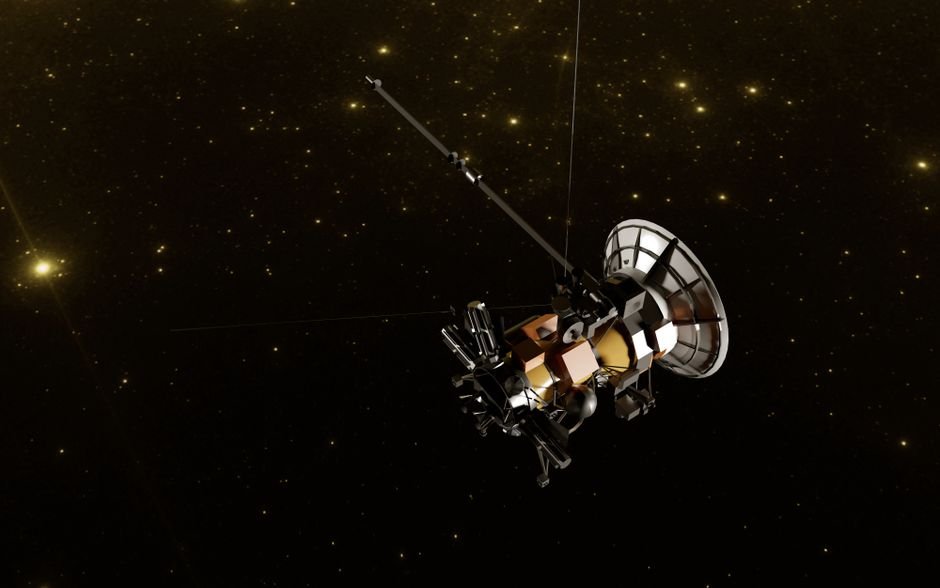
The payload is Northrop Grumman’s Mission Robotic Vehicle (MRV), a spacecraft equipped with a pair of robotic arms developed over two decades by the U.S. Naval Research Laboratory and DARPA. Stowed inside are three Mission Extension Pods (MEPs), essentially jetpacks that can be bolted onto client satellites to provide up to eight additional years of maneuvering fuel.
This was also the final flight of booster B1069, a veteran that launched 27 Starlink batches alongside notable missions including NASA’s CRS-24, Eutelsat’s Hotbird 13F, and SES-18 and 19. SpaceX expended the booster due to the high performance demands of a direct injection into geosynchronous transfer orbit.
A robot designed to work with any satellite
The robotic arms at the heart of the MRV trace their lineage back to the early 2000s, when the Naval Research Laboratory began studying autonomous rendezvous and docking between uncrewed spacecraft. The core challenge was universal: how do you design a robot that can grapple any satellite, none of which were built to be serviced?
The breakthrough came when engineers realized that every satellite reaches space on a rocket. By targeting the launch vehicle interface plane, the structural ring or explosive bolt holes that attach a spacecraft to its booster, the team found they could safely grapple almost any spacecraft without touching delicate instruments.
“The SUMO mandate was daunting,” said Glen Henshaw, Ph.D., NRL Lead Space Roboticist, referring to an early program. “DARPA challenged us to design a robot that could dock with any satellite in space.”
The program evolved through multiple DARPA-led phases, FREND, Phoenix, and finally the Robotic Servicing of Geosynchronous Satellites (RSGS) payload, before Northrop Grumman’s SpaceLogistics subsidiary was selected in 2019 to integrate the technology onto the MRV.
What the mission will do
After launch, the MRV will spend about a year transiting to geosynchronous orbit, 35,786 kilometers (22,236 miles) above Earth. Once there, it will begin its primary mission: rendezvousing with client satellites and installing MEP jetpacks.
The first customers are already lined up. Optus of Australia and SES of Luxembourg have booked servicing slots. For satellites running low on station-keeping fuel, an MEP can extend operational life by up to eight years, potentially avoiding the need for expensive replacement launches.
Beyond installing jetpacks, the MRV’s robotic arms are capable of inspection, relocation, repairs, and even upgrades of orbiting spacecraft. After initial checkouts, the RSGS program will be turned over to the U.S. Space Force for its Servicing, Mobility, and Logistics portfolio.
The mission marks a fundamental shift in how the satellite industry thinks about its assets in geosynchronous orbit. Instead of planning for retirement, operators can now plan for refueling.