

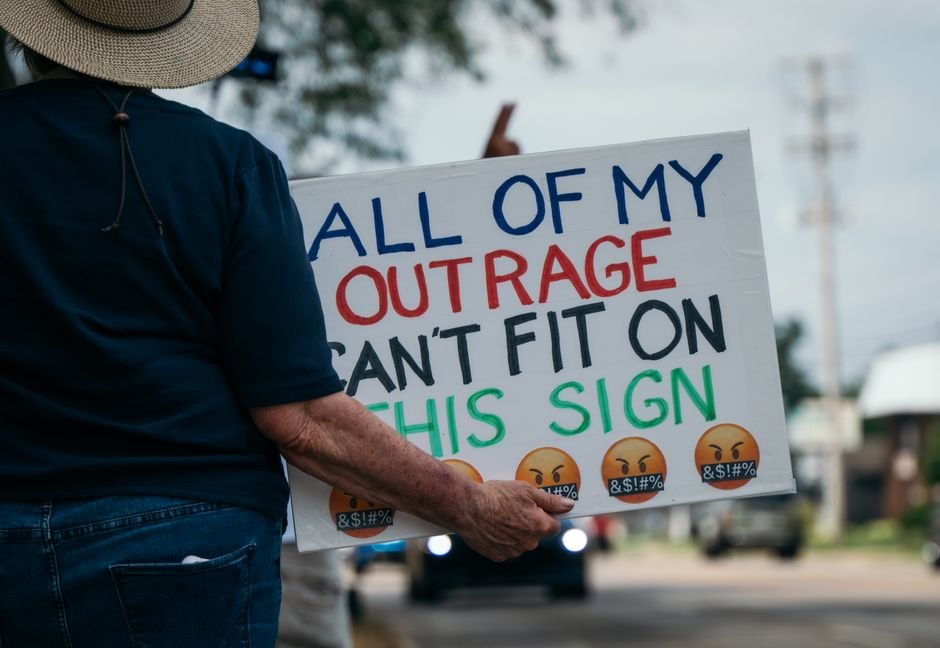
The U.S. research community has responded to what it sees as an existential threat to the federal science enterprise with a record-breaking show of opposition. More than 340,000 comments were submitted to the White House Office of Management and Budget by the July 13 deadline, including a 47-page response from the Association of American Universities, the longest in the organization’s 126-year history.
At stake is a 412-page OMB proposal, released May 29, that would restructure the federal research grant system in ways that scientists say would fundamentally undermine how science is funded in the United States. The proposal would allow political appointees to review and override agency decisions on what science to fund, permit arbitrary termination of active grants, and prohibit research collaborations with China and many other countries.
What the proposal would do
The provisions go beyond any previous administration’s attempts to reshape federal research funding. Under the proposed rules:
- Political appointees at OMB and throughout agencies would be empowered to review individual grant decisions and block funding for research they deem objectionable.
- Active grants could be terminated without cause, with no grace period for ongoing studies.
- International collaborations, particularly with China, but also with a broad set of other nations, would be prohibited or severely restricted.
- The regulations would take effect immediately upon finalization, with no phase-in period.
The Association of American Universities, which represents 71 of the leading U.S. and Canadian research universities, argued in its 47-page comment that OMB lacks the legal authority to define which categories of scientific research may be federally funded, to restrict international scholarly collaborations that Congress has authorized, or to make receipt of federal funds contingent on “contested positions about civil rights law, scientific inquiry, and arbitrary and political decisions about what is in the national interest.”
The human cost, in their own words
Individual commenters were blunt.
“If I didn’t know better, I would think you guys were Chinese agents trying to destroy the American technological advantage,” wrote retired scientist Joseph Savina.
“As a practicing physicist in the defense industry, I can confidently say that passing this rule will guarantee European and Chinese scientific and military dominance for generations,” wrote Jonathan Rameau.
But the most detailed warnings came from researchers running clinical trials. Vision researcher Cynthia Toth of Duke University explained that clinician-scientists in her field pool cases across an international network, small patient populations that require global collaboration to achieve statistically meaningful sample sizes. “As written, these provisions will set back the advancement of medical knowledge and health care in the U.S.,” she wrote.
She warned that the abrupt grant termination provisions would have “a devastating impact” on recruiting children for clinical trials and could endanger patients if studies are halted with little notice.
A direct threat to clinical research
The clinical trials issue is not theoretical. Many drug and device trials are funded through federal grants from the National Institutes of Health, with multi-year timelines and institutional review board approvals tied to specific funding periods. Abrupt termination would leave patients mid-treatment with no clear pathway for continuation. The proposal includes no mechanism for transitioning patients to alternative care when a grant is terminated for political reasons.
The provisions also target research on diversity, equity, and inclusion, described in the proposal as “woke” initiatives, explicitly singling out programs that OMB political appointees deem ideologically objectionable.
Supporters see it differently
The proposal has its defenders. Sen. Jim Banks (R-IN) submitted a comment arguing that “taxpayer dollars have supported unlawful activities” and that “OMB has clear legal authority to deny federal funding in support of these projects.” Mike Gonzalez of the Heritage Foundation, whose Project 2025 framework underpins many of the administration’s science policy actions, wrote: “This notice will shut down millions in federal spending on leftist mischief throughout the country. So of course they don’t like it.”
What happens next
OMB officials have said they intend to finalize the rules by October 1, 2026. The agency had posted only 52,000 of the 340,000-plus comments as of press time, making the overall sentiment of the public record difficult to fully assess.
The next front is Congress. Science advocates hope to insert language into appropriations bills that would block OMB from implementing the rules, a strategy that worked in previous administrations’ attempts to reshape grant policy through executive action. But with lawmakers not expected to complete appropriations work until after the November elections, the timeline is unfavorable.
The AAU requested at least a one-year implementation delay if the rules go forward, arguing that immediate implementation would cause chaos across the research system. OMB has not responded to the request.
For the scientific community, the message of the 340,000 comments is unmistakable: researchers understand exactly what is at stake, and they are not going quietly.
Source
1. Mervis, J. (2026, July 14). U.S. researchers outraged at proposed changes to federal grants. Science (AAAS). https://www.science.org/content/article/u-s-researchers-outraged-proposed-changes-federal-grants
2. Association of American Universities. (2026, July 13). Comment on OMB Proposed Rule [47-page submission].