

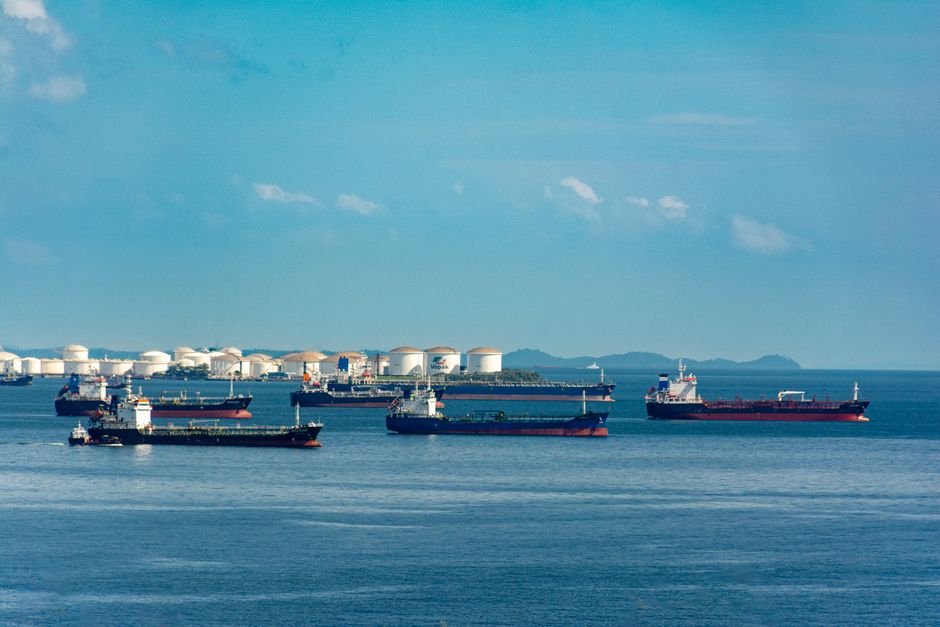
A quarter-century-old tanker outside the world’s insurance system is emptying its cargo into the Arabian Sea, and the oil has reached Oman’s shore. The Caroline Bezengi, carrying about 800,000 barrels of Russian crude under international sanctions, ran aground off Oman on June 30. Satellite measurement puts its slick at more than 2,000 square kilometers (about 770 square miles), oil is coming ashore along a 40-kilometer (25-mile) stretch around Ras Madraka and Masirah Island, and every agency that could have stopped it says the conditions make the job harder by the day.
The ship is a casualty of two wars at once. It loaded its cargo in April at Novorossiysk, the Russian Black Sea port that has been a target of Ukraine’s campaign against Moscow’s ‘shadow fleet,’ the aging, poorly maintained tankers Russia uses to dodge sanctions on its oil exports. It passed through the Suez Canal at the end of May and reported difficulties on June 8 off the Yemeni coast, where Houthi militants aligned with Iran have been attacking shipping in the wider Middle East war. Maritime security sources said initial assessments indicated a blast on board. No one has claimed it. The ship’s listed owner, a Shanghai-based management firm, could not be reached.
A slick with an owner but no payer
The response effort is stuck in the same two wars. The IOPC Funds, the intergovernmental agency that pays for tanker spill cleanups, told Reuters it would not help with the cleanup, classifying the leak as war damage rather than an accident. The vessel has no recognized Western insurer, which is the point of the shadow fleet, and the web of war and sanctions rules has left the cleanup without a clear payer.
The slick is spreading near a marine nature reserve on Masirah Island that shelters Arabian Sea humpback whales and Socotra cormorants. The monsoon, which peaks in July and August, has been holding salvage crews back and pushing the oil outward. Greenpeace’s campaigns lead for the Middle East, Hanen Keskes, clocked the acceleration: roughly 45 square kilometers (17 square miles) at the end of July, 150 (58) at the start of August, then 600 (232) within two days. Oman put the slick at roughly 400 square kilometers (154 square miles) as of Monday, a figure environmental agencies say is far too low. The UN’s shipping agency says the monsoon has kept salvage crews off the vessel, and that contingency planning is in place. Oman says it has deployed booms.
The worst case is a familiar name
The tanker specialists are not optimistic. John Amos, the chief executive of the satellite-tracking nonprofit SkyTruth, said the vessel would continue to break up under the steady onslaught of wind and waves and to lose its entire cargo, and that the worst case was a release of between 151 and 189 million liters (40 to 50 million gallons), a scale that would rival the Exxon Valdez disaster of 1989, which poured about 42 million liters (11 million gallons) into Prince William Sound. The Caroline Bezengi is comparable in size and capacity to the Sanchi, the tanker that struck a cargo ship near China in 2018 in what became the world’s worst tanker disaster in decades.
The response required is not exotic: stabilize the hull, transfer the remaining crude to another vessel, then deal with what has already leaked. Amos said the longer the wait, the more damaged and decrepit the tanker gets and the more complicated, difficult and potentially dangerous the salvage becomes. Every week of monsoon season works against that calculation.
A spill the system was built to ignore
There is a bleak logic to the whole affair. The shadow fleet exists so that Russian oil can move without Western insurers, without Western oversight, and without Western accountability. The Caroline Bezengi was a vessel no recognized insurer would touch, carrying cargo the sanctions regime was designed to disrupt, sailing through waters where two wars are being fought. When it broke down, the international machinery that exists to pay for spills found a reason not to pay, because the leak happened in a war zone and the ship was never part of the system anyway.
The oil does not care about the legal reasoning. It is arriving on the beaches of a country that did not start either war, that has no claim on the cargo, and that will live with the consequences for decades. The whales and cormorants of Masirah do not know what a shadow fleet is. The water is turning black around them anyway, and the governments that built the sanctions system, and the wars that made the shipping lanes dangerous, have not yet found a mechanism that will pay for the mess. Oman is left with booms, a monsoon, and a wreck that will keep leaking until someone decides the cleanup is worth more than the politics.
Sources: Japan Today (Reuters), Reuters, NBC News, The Daily Star