

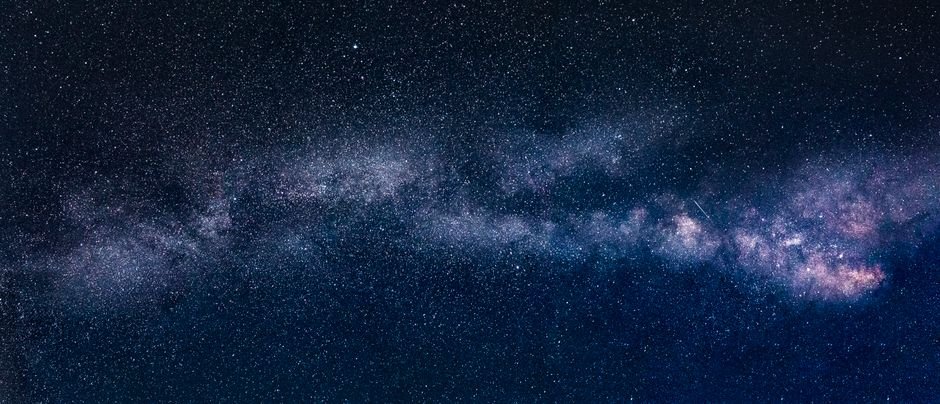
Astronomers have measured the ages of more than 150,000 ancient stars scattered across the Milky Way and found that the oldest among them is exactly as old as the standard model of cosmology predicts. The result quietly undermines one of the leading classes of explanations for the Hubble tension, the long-running mismatch between how fast the universe is measured to expand today versus how fast it should be expanding based on the early cosmos.
The study, led by Indranil Banik of the University of Portsmouth and accepted for publication in the Monthly Notices of the Royal Astronomical Society, used high-resolution spectroscopy from China’s LAMOST telescope and precise distances from the European Space Agency’s Gaia satellite to determine the ages of 247,103 Milky Way stars with unprecedented care. After applying strict quality filters to remove unreliable measurements, the team settled on a final sample of 155,600 stars whose ages could be trusted.
“This is by far the largest and most carefully vetted sample of old stars ever used for this kind of analysis,” Banik said.
The team focused on stars nearing the end of their normal lives, when age estimates are most reliable because the stars are changing rapidly enough to pin down their evolutionary state. They required candidate old stars to be metal-poor and enriched in alpha elements, both signatures of formation in the early universe, and cross-checked ages derived from spectroscopic data against independent ages calculated from Gaia data alone.
The result: the oldest star in the sample has an age of 13.73 billion years, with uncertainties of about 0.2 billion years in either direction. That figure implies the universe itself is about 13.8 billion years old, accounting for the roughly 200 million years it took for the first long-lived stars to form after the Big Bang. The number is a near-perfect match to the age derived independently from the cosmic microwave background by the Planck satellite.
That agreement matters because the Hubble tension, a roughly 5-sigma discrepancy between measurements of the expansion rate from nearby objects and from the CMB, has driven cosmologists to propose a wide range of modifications to the standard model. A major class of these proposals invokes “early dark energy” or other new physics that operated in the universe’s first few hundred thousand years, changing how the cosmos evolved before recombination. Such models can bring the early-universe expansion rate into agreement with local measurements, but they carry a built-in cost: they make the universe younger.
“How young?” Banik said. “About 12.9 billion years, give or take 0.2 billion.”
That is where the old stars come in. If the universe were only 12.9 billion years old, a star measured at 13.73 billion years would be older than the cosmos itself, an impossibility. The stellar ages therefore rule out any solution to the Hubble tension that relies solely on pre-recombination physics.
The researchers tested the robustness of their result by varying their quality cuts, including changes to the metallicity ceiling that defines which stars qualify as truly ancient. Even under the most aggressive adjustments, the oldest star never dipped below 13.3 billion years, still comfortably above the 12.9 billion years required by early-universe Hubble-tension models. At the high end, relaxing the cuts raised the oldest star age to 14.0 billion years.
“The gap is about 0.8 billion years,” Banik said. “Stellar modeling uncertainties of that size are very hard to justify, especially for the most metal-poor stars in our sample, whose evolution is relatively simple.”
The result does not resolve the Hubble tension itself. Local measurements from supernovae and Cepheid variables still disagree with the CMB-based expansion rate by a margin that has only grown more significant as measurements have improved. What the study does is shrink the list of possible explanations, ruling out a whole family of early-universe fixes and pointing instead toward something else: either systematic errors in local distance measurements, or late-universe physics that alters the expansion rate after recombination.
“Early-universe solutions have been a popular avenue for theorists,” Banik said. “This result suggests that if the answer lies in new physics, it is probably physics that kicks in later in cosmic history, not during the first few hundred thousand years.”
Separately, the result also weighs in on the S8 tension, a related disagreement between CMB-based predictions for how clumpy the universe should be and weaker clumping observed by galaxy surveys. A younger universe would also have had less time for structure to grow, potentially explaining the missing clumpiness. By affirming the standard cosmic age, the stellar ages suggest that the S8 tension, too, will require a different explanation.
The sample itself is now available for other researchers to mine, and Banik’s team expects that further refinements in stellar modeling and larger samples from upcoming surveys will tighten the age constraints even more. For now, however, the oldest stars in the Galaxy have delivered a clear verdict: the universe is not as young as some cosmologists had hoped.