

Nvidia has spent the last decade building the data-center AI market into a $5 trillion business. Now it is coming for your desk.
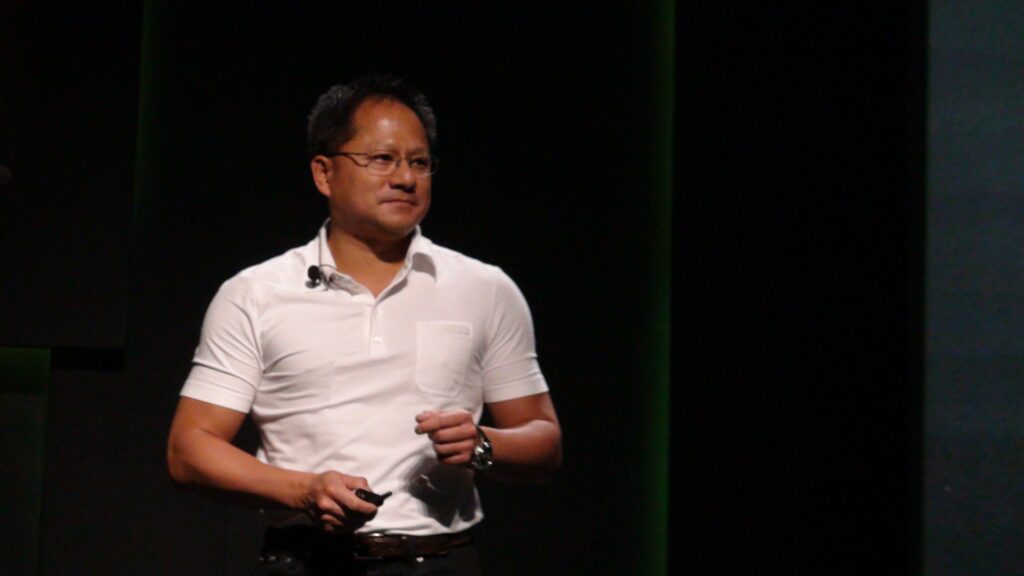
At Computex 2026 in Taipei on Monday, CEO Jensen Huang unveiled the RTX Spark superchip — Nvidia’s first processor designed specifically for AI workloads on personal computers. The chip will power a new line of Windows laptops and desktops from Lenovo, HP, Dell, Microsoft Surface, Asus, and MSI, available this autumn.
\”This reinvention of the computer is as big of a deal as the reinvention of the phone into what we now know as the smartphone,\” Huang said during the keynote, as reported by the BBC.
From datacenter to desktop. Nvidia has dominated AI hardware through its GPUs, which power the vast majority of AI training and inference in cloud data centers. But the company has had limited presence in the consumer PC CPU market, which is dominated by Intel and AMD on the x86 side and Apple with its M-series chips. The RTX Spark changes that.
The chip is an Arm-based superchip that integrates CPU, GPU, and AI acceleration into a single package — the same architectural philosophy as Apple’s M-series, but built on Nvidia’s own GPU and AI cores. Nvidia describes it as \”a new superchip for the era of personal AI agents — offering a new class of computer that moves from tool to teammate.\”
The announcement was accompanied by Microsoft’s Satya Nadella, who appeared via video to position Windows as the operating system for on-device AI. \”Our goal is to deliver unmetered intelligence to every home and every desk with Windows,\” Nadella said. \”RTX Spark marks a real breakthrough towards that vision.\”
The competitive landscape. The RTX Spark enters a PC processor market that is already in the middle of a transformation. Apple’s M-series chips proved that vertically integrated silicon — CPU, GPU, and neural engine on a single die — can deliver both performance and battery life advantages over traditional disaggregated designs. Intel and AMD have responded with their own AI-accelerated chips (Intel’s Lunar Lake and AMD’s Ryzen AI), and Qualcomm has been pushing its Snapdragon X series for Windows on Arm.
Nvidia’s entry adds a fourth major competitor to the Windows-on-Arm ecosystem and brings the company’s unmatched AI software stack — CUDA, TensorRT, and the Nvidia AI Enterprise platform — directly to the desktop. Forrester analyst Charlie Dai described the move as a \”paradigm shift\” from \”component supplier to architecture owner in the PC market.\”
\”It will directly challenge Intel, AMD, and Qualcomm and raise competitive pressure on performance, efficiency, and AI integration,\” Dai said.
Who will buy it. CCS Insight analyst Ian Fogg noted the RTX Spark \”is likely to come with a significant price tag\” and Nvidia would be targeting \”those looking for workstation-class performance.\” The chip is aimed squarely at developers, AI researchers, and power users who need local AI inference capabilities — running large language models, AI agents like OpenClaw, and creative tools — without sending data to the cloud.
Nvidia confirmed partnerships with Adobe for optimized versions of Premiere and Photoshop on Spark laptops. More than 30 laptop models and 10 desktop designs are in development across eight OEMs. Nvidia claims the chip offers the \”most efficient PC architecture ever built\” and that RTX Spark laptops will deliver up to 2× faster AI performance per watt compared to discrete GPU setups — a critical advantage for running local AI agents that need to stay on and inference without draining the battery.
The geopolitics of AI on the desktop. The RTX Spark launch also comes the day after the US Commerce Department tightened export controls on advanced AI chips to Chinese firms abroad — closing a loophole that allowed Chinese-owned companies to buy Nvidia chips through overseas subsidiaries. While Spark is a consumer chip, it still packs enough AI capability that its distribution will be subject to export scrutiny.
The announcement positions Nvidia directly against Apple’s M-series at the high end of the Windows PC market, Intel and AMD in the mainstream, and Qualcomm in the emerging Windows-on-Arm segment. It also deepens Nvidia’s dependence on Taiwan Semiconductor Manufacturing Company (TSMC) for production — a geopolitical vulnerability that the company’s data-center business already manages and that the PC business will inherit.
Sources: BBC News (Peter Hoskins & Laura Cress, Jun 1, 2026); Reuters (Jun 1, 2026); Nvidia official announcement (Jun 1, 2026)