

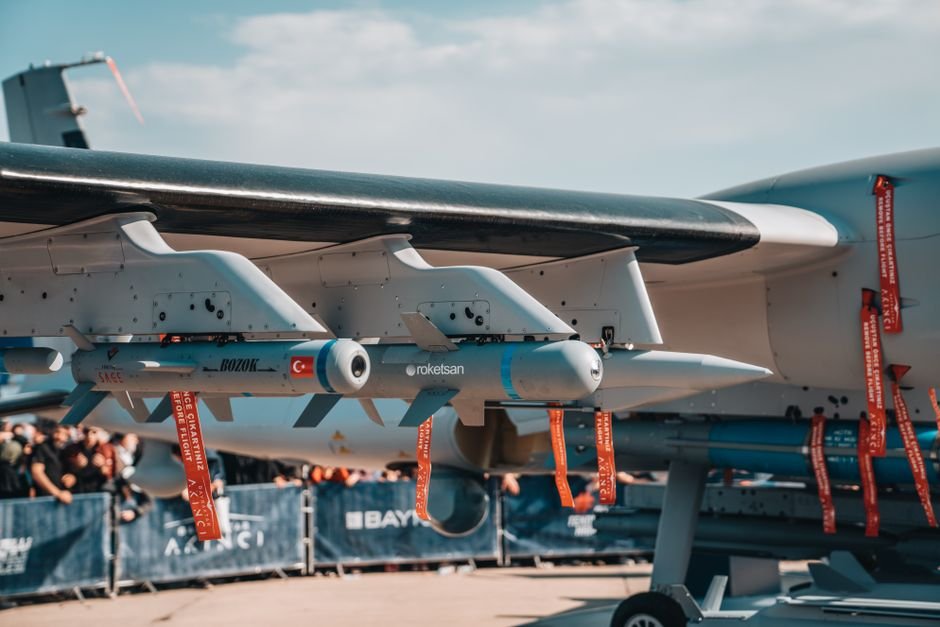
ANKARA. Twelve NATO allies, led by Britain, have announced a £37 billion ($50 billion) project to develop a new long-range missile system called Deep Precision Strike, capable of hitting targets up to 2,012 km (1,250 miles) away with pinpoint accuracy.
The announcement, made at the NATO summit in Ankara, is being billed as one of the alliance’s most ambitious weapons programs. UK Prime Minister Sir Keir Starmer called it a message to Russia that “NATO is stronger, more European and ready to defend our citizens.”
But even measured purely in defense terms, the project raises uncomfortable questions.
What the money buys
The £37 billion covers a 10-year development program. The missile, expected to reach operational readiness in the 2030s, will be able to strike high-value military targets deep behind enemy lines. Foreign Secretary Yvette Cooper described it as a capability to “hit the logistical engines that drive armies.”
The UK has already committed £300 billion to defense by 2030 under its Defence Investment Plan. The new missile project sits on top of that.
The participating countries, a dozen of NATO’s 32 members, will share development costs and production. But the price tag is large enough to invite scrutiny, even from allies who accept the need for higher defense spending.
Is this the right priority?
The question, even for those who take Russia’s threat seriously, is whether a missile system that will not exist for a decade is the best use of money right now.
NATO faces immediate needs. Ukraine is begging for anti-ballistic missile defense systems after Russia killed more than 20 people in Kyiv last week. European air defenses are thin. Stockpiles of artillery shells and munitions, drained by transfers to Ukraine and by years of underinvestment, have not been replenished. The US is threatening to pull troops from Europe.
A 10-year missile program does nothing about any of this.
The Kremlin has not been knocked off course by its fuel crisis or its battlefield losses. Putin, filmed in military fatigues this week, promised to take more territory. NATO’s response is a weapon that will be ready after his current term ends.
Design by committee
There is also the question of whether a 12-nation development program can deliver on time and on budget. Multi-national weapons projects have a poor track record. The Eurofighter Typhoon, the A400M transport plane, the F-35 itself, all ran years late and billions over budget.
Deep Precision Strike relies on 12 allies agreeing on specifications, sharing technology, and coordinating production. None of these things are easy in peacetime. Under the pressure of an active war on NATO’s eastern flank, the challenges multiply.
The political calculation
For Starmer, hosting the announcement at what is likely his final NATO summit as prime minister, the project is a legacy play. It signals that Britain is serious about European defense, that it can lead, and that it is investing for the long term.
But legacy is not the same as strategy. A missile that arrives in the 2030s does not deter Russia in 2026. It does not protect Kyiv tonight. It does not fill the gaps in allied arsenals that the last three years of war have exposed.
The money is real. The question is whether the priorities are right.