

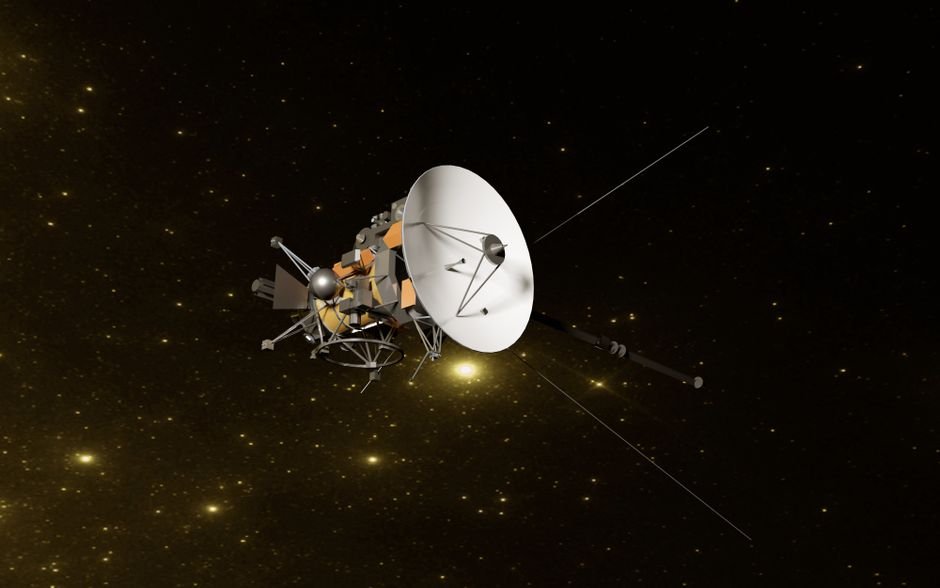
NASA has awarded Advanced Space a contract for CAPSTONE 02, a two-spacecraft demonstration mission in lunar orbit targeted for launch in 2027. The mission will test rendezvous and proximity operations in cislunar space, where a spacecraft moves under the combined gravitational influence of Earth and the Moon in trajectories known as three-body orbits, in support of the Artemis program and the planned Moon Base.
The mission will fly two identical small spacecraft of about 400 kilograms (882 pounds) each, built by Terran Orbital Systems. Operators will conduct a series of rendezvous and proximity operations and formation-flying maneuvers in lunar orbit to understand how the spacecraft’s trajectories behave under the pull of both Earth and Moon gravity. Each spacecraft can switch between chaser and target roles, testing a broad range of operational scenarios.
For navigation, the spacecraft will use ground tracking measurements, optical sensors, and celestial bodies to help one spacecraft locate and rendezvous with another. NASA says the mission will apply navigation strategies similar to those planned for Orion’s approach to a lunar lander in deep space, building confidence in the techniques needed to transfer crews between Orion and landers at the Moon.
CAPSTONE 02 will also serve as an operational testbed for three NASA-developed navigation software suites, which will collect data during the mission’s low-energy transfer trajectory, taking the spacecraft from Earth to beyond the Moon before settling into lunar orbit. The spacecraft will carry an optical imaging payload from Lawrence Livermore National Laboratory, and the mission will further mature the Cislunar Autonomous Positioning System software first demonstrated on CAPSTONE, a method of determining a spacecraft’s position relative to other spacecraft without relying on Earth-based tracking. The mission will also continue characterizing the radiation environment at the Moon and demonstrate autonomous navigation and cislunar communication capabilities.
The original CAPSTONE mission, launched in 2022, was the first U.S. commercial mission to the Moon and the first spacecraft to operate in a near rectilinear halo orbit, a nearly stable orbit that results from the interactive pull of Earth and Moon gravity. It validated communications, networking, and autonomous navigation techniques and operated for about four years before the mission concluded in June 2026.
Sources
1. Space.com, “NASA is sending 2 probes to the moon to test complex ‘three-body orbits'”: https://www.space.com/space-exploration/launches-spacecraft/nasa-is-sending-2-probes-to-the-moon-to-test-complex-three-body-orbits
2. NASA, “NASA Announces New Spacecraft Technology Demonstration Mission at Moon”: https://www.nasa.gov/directorates/armd/nasa-announces-new-spacecraft-technology-demonstration-mission-at-moon/