

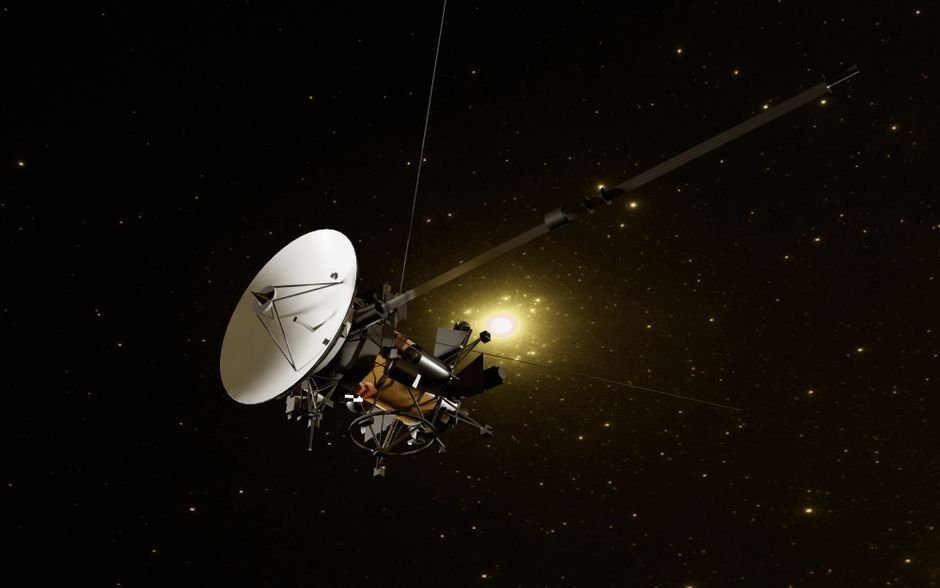
NASA’s next step in solar sail technology is its largest yet, and it is being built to serve as an early warning sentinel for space weather.
The Space Storm Solar Sail Sentinel (S5) will feature a sail measuring 1,653 square meters, roughly the area of an Olympic swimming pool, made of aluminum-coated plastic just 2.5 microns thick, thinner than a human hair. Once deployed, the sail will use the gentle but constant pressure of sunlight photons to navigate into a unique sub-L1 halo orbit between Earth and the Sun, where it will carry a magnetometer to monitor solar storms and coronal mass ejections before they reach Earth.
How it works
Solar sails operate on a principle as old as sailing itself, adapted to space. Photons from the Sun carry momentum, an infinitesimally small amount per photon, but multiplied across a sail large enough, it produces continuous, fuel-free thrust. By angling the sail relative to the Sun, the spacecraft can change its orbit without burning a single gram of propellant.
This capability is uniquely suited to the mission’s objective. Solar storms travel from the Sun to Earth in one to three days. The earlier they are detected, the more time operators have to protect power grids, communications satellites, aircraft, and spacecraft from disruptive electromagnetic effects. A spacecraft positioned sunward of Earth, at the L1 Lagrange point or in a sub-L1 halo orbit like the one S5 will demonstrate, can see storms coming before they hit.
“The reason space weather matters is that the damage is real,” said NASA officials in the mission description. Solar storms can overload power grids, disrupt radio communications, and affect both aircraft and spacecraft.
The largest sail ever flown
All four quadrants of S5’s sail were completed by January 2026, built by Applied Aerospace under NASA’s Small Business Innovation Research (SBIR) program. A full-scale prototype of one quadrant (400 m²) was deployed in 2022 at NASA’s Marshall Space Flight Center, validating the boom and sail deployment mechanisms. The final sail is more than four times that area.
The sail itself is supported by lightweight composite booms, a technology NASA has been maturing through its Advanced Composite Solar Sail System program. A smaller solar sail demonstration using this boom technology has been visible from Earth in orbit since 2024.
Launch and mission
S5 will launch in November 2029 as a secondary payload on NOAA’s SOLAR-A mission, the next generation of NOAA’s operational space weather satellites. The primary objective is to demonstrate that a solar sail spacecraft can reliably navigate and maintain position in a sub-L1 halo orbit, a non-Keplerian orbit that is not naturally stable and requires continuous station-keeping. If successful, the same architecture could be used for future operational space weather sentinels that never run out of fuel.
The magnetometer carried by S5 will be provided by NOAA. Proving that a sensitive magnetic-field instrument can operate from a solar sail platform, with its large reflective surface and potential for charging and vibration effects, is a secondary but essential validation for future science missions.
Partners and funding
NASA’s Marshall Space Flight Center manages the mission, funded through the Space Technology Mission Directorate (STMD). NOAA provides the magnetometer and the launch opportunity. Applied Aerospace manufactures the sail membrane, and Opterus contributes technology development through the SBIR program.
What it means
Solar sails have been a staple of science fiction for decades, but their real-world deployment has been slow and incremental. The Japanese Space Agency (JAXA) flew the first interplanetary solar sail, IKAROS, in 2010, a 196 m² sail that proved photon propulsion worked in deep space. NASA’s own NanoSail-D (2011) and the Advanced Composite Solar Sail System (2024) demonstrated progressively larger sails in low Earth orbit.
S5 represents a step change, from proof-of-concept demonstrations to a sail large enough and capable enough to serve a practical operational purpose. If it works, the descendants of this sail could patrol the space between Earth and the Sun indefinitely, providing continuous early warning for the solar storms that threaten our increasingly space-dependent civilization.
Source
1. NASA. (2026). Space Storm Solar Sail Sentinel (S5). https://www.nasa.gov/space-storm-solar-sail-sentinel-s5/