

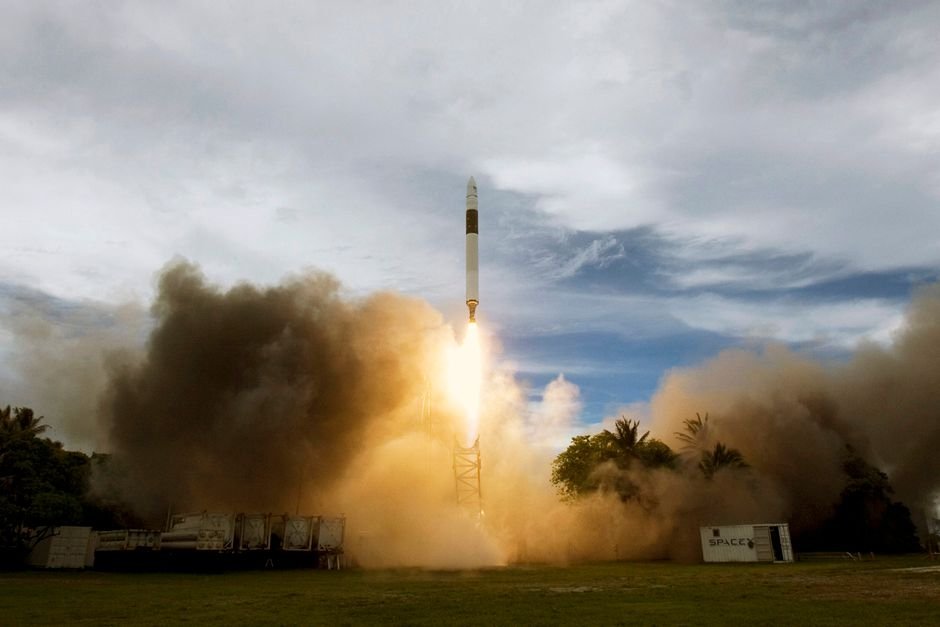
NASA’s next flagship orbital observatory, the Nancy Grace Roman Space Telescope, is poised to reshape humanity’s understanding of exoplanets, dark matter, and dark energy when it launches on August 30, 2026, aboard a SpaceX Falcon Heavy rocket from Kennedy Space Center’s Launch Complex 39A.
The telescope arrived at Kennedy Space Center on June 21, 2026, after completing testing at NASA’s Goddard Space Flight Center in Greenbelt, Maryland. It traveled aboard NASA’s Pegasus barge and is now undergoing final preparations including solar panel testing, thermal blanket insulation, and fueling with approximately 1,100 liters (290 gallons) of hydrazine propellant. Remarkably, the mission is running eight months ahead of its original schedule.
Roman carries a 2.4-meter (7.9-foot) mirror, the same size as the Hubble Space Telescope. But its 300-megapixel Wide Field Instrument captures a patch of sky 100 times larger per exposure than Hubble. Where Hubble required multiple pointings to image a region, Roman can do it in a single shot. The telescope also carries a coronagraph for directly blocking starlight to photograph planets orbiting other stars, a capability 100 times more powerful than any existing facility.
The mission’s primary goals span three major areas of astrophysics. Roman will survey over 1 billion galaxies to map how dark energy is driving the accelerating expansion of the universe, the biggest open question in cosmology today. It will discover roughly 100,000 transiting exoplanets and hunt for free-floating rogue planets through gravitational microlensing, providing the first statistical census of planetary systems across the Milky Way. It will also repeatedly survey the same sky regions, detecting supernovae, variable stars, and tidal disruption events to build the deepest time-lapse movie of the cosmos ever made.
The expected discoveries are staggering. Scientists predict Roman will identify 60,000 to 200,000 exoplanet candidates, thousands of planets through microlensing, and at least dozens of worlds in the habitable zone of their stars. It could discover hundreds of rogue planets as small as Mars that drift through the galaxy without a parent star. It may capture the first direct image of a ringed exoplanet. The telescope could find up to 1,000 new moons of Jupiter and 200 of Saturn. It is expected to detect some 80,000 Type Ia supernovae, critical for measuring cosmic distances. It may even confirm the first exomoon.
Roman will travel to the Sun-Earth Lagrange Point 2 (L2), approximately 1.5 million kilometers (930,000 miles) from Earth, where it will share space with the James Webb Space Telescope. After launch, the spacecraft will undergo roughly 90 days of commissioning, with science operations beginning in early 2027. The primary mission is designed for five years, but fuel reserves and instrument margins suggest it could operate for a decade or more.
The U.S. astronomical community ranked Roman as the highest-priority large space mission of the 2010 decadal survey. The telescope was originally called WFIRST (Wide Field Infrared Survey Telescope) before NASA renamed it in 2020 to honor Nancy Grace Roman, the agency’s first chief of astronomy. Known as the mother of the Hubble Space Telescope, Roman shepherded early NASA space telescopes through development and organized astronomers around the concept of a large space observatory decades before Hubble launched. Roman is the first NASA space telescope named after a woman.
Roman’s combination of wide-field surveying power and direct imaging capability will also serve as a technology pathfinder for the future Habitable Worlds Observatory, a mission concept designed specifically to image Earth-like planets around nearby stars and search for signs of life.
The August 30 launch window marks the beginning of a new era in space-based astronomy, one that promises to deliver discoveries at a rate and scale that even the revolutionary Hubble and Webb telescopes could not match.