The most common type of planet in the Milky Way may be hiding a secret beneath its hazy outer layers.
Sub-Neptunes, worlds slightly smaller than Neptune but lacking a solid surface in the familiar sense, account for roughly 3,300 of the more than 6,300 confirmed exoplanets. Yet they remain among the least understood planetary bodies in the galaxy. Our own solar system has no analog to serve as a reference, and their thick, cloudy atmospheres frustrate even the most powerful telescopes.
A new study led by researchers at the University of Chicago suggests the problem may be more fundamental than previously appreciated: the water that scientists know should exist on these worlds may simply be invisible to current observation techniques.
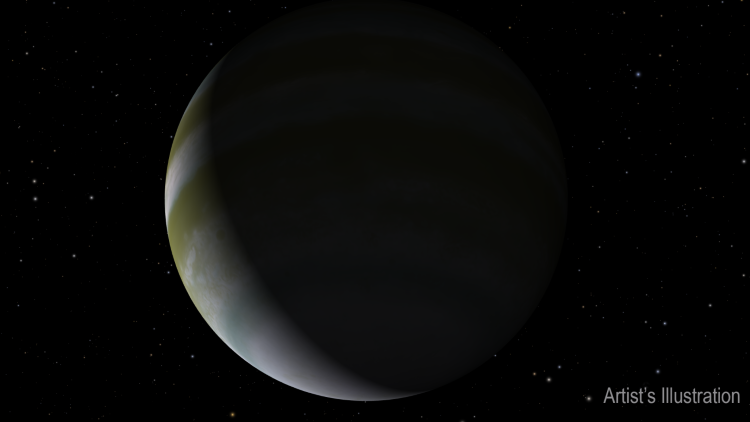
The team focused on TOI-270 d, a sub-Neptune discovered in 2019 about 73 light-years away in the constellation Pictor. The planet is roughly twice Earth’s radius and carries about 4.2 times Earth’s mass, completing an orbit around its red dwarf star every 11.4 days. TOI-270 d and its two sister planets all orbit within the inner edge of the star’s habitable zone.
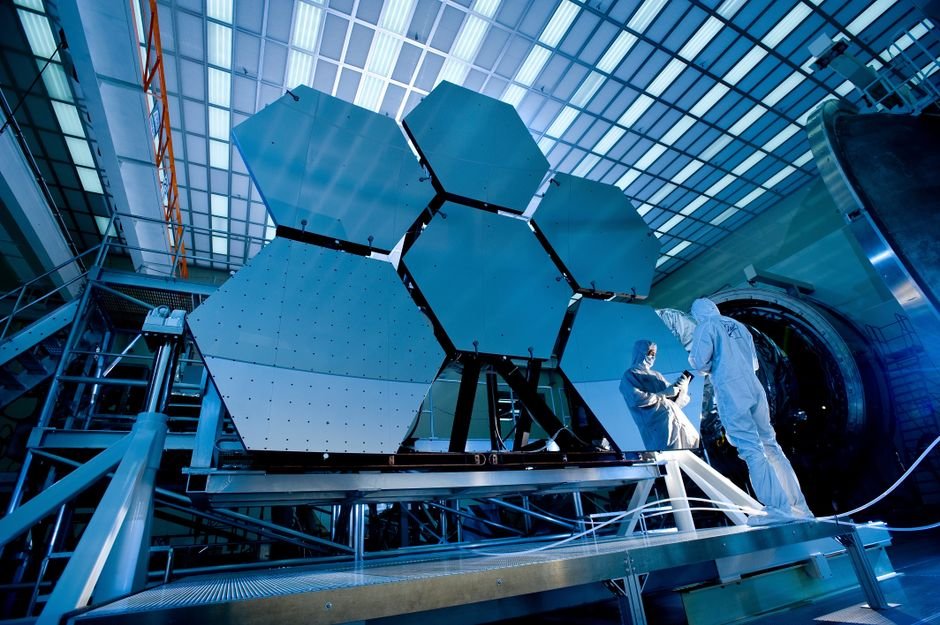
Earlier observations by the James Webb Space Telescope detected carbon dioxide, methane, and molecular hydrogen in the planet’s atmosphere. The combination of those gases normally indicates the presence of water, but Webb’s instruments could not determine its state or quantity. Whether the water existed as vapor, liquid, or high-pressure ice, and whether it mixed freely with hydrogen or remained separate, was unknown.
The research team, led by postdoctoral researcher Caroline Piaulet-Ghorayeb, built computer models that simulated both the atmospheric chemistry and the interior structure of TOI-270 d simultaneously. The simulations revealed that the temperature at the planet’s surface, roughly 537 degrees Celsius (1,000 degrees Fahrenheit), and the ratio of water to hydrogen in the planet’s overall composition together determine how the two substances behave.
In TOI-270 d’s case, the model showed that water is more abundant than hydrogen in the planet’s total makeup. At the simulated temperatures, that excess water likely condenses and sinks below the hydrogen-rich upper atmosphere. The hydrogen layer then acts as a shielding barrier, preventing any electromagnetic signal from the deeper water from reaching telescopes in space. Even Webb, with its infrared sensitivity tuned to probe exoplanet atmospheres during transits, would see only the hydrogen and trace gases above.
The finding challenges a longstanding assumption that sub-Neptune interiors are well-mixed, with water and hydrogen distributed evenly throughout the atmosphere and below. The study proposes instead that many of these worlds have a separated interior structure, with distinct layers that do not exchange material readily.
If the results hold for the broader population, it would mean that current estimates of water content on sub-Neptunes could be systematically low. The implications extend beyond planetary science: water is central to the search for habitable environments beyond Earth, and understanding how much of it exists on the galaxy’s most common planet type affects models of planetary formation and the potential distribution of life.
The authors note that future telescopes will be essential for testing the layered-interior hypothesis. NASA’s Nancy Grace Roman Space Telescope, scheduled for launch on August 30, 2026, carries a coronagraph designed to directly image exoplanets, which could reveal details about the distribution of atmospheric components. On the ground, the European Southern Observatory’s Extremely Large Telescope, under construction in Chile’s Atacama Desert, is expected to begin scientific operations around December 2030 with the capability to study exoplanet atmospheres at higher resolution than current observatories.
Images: