

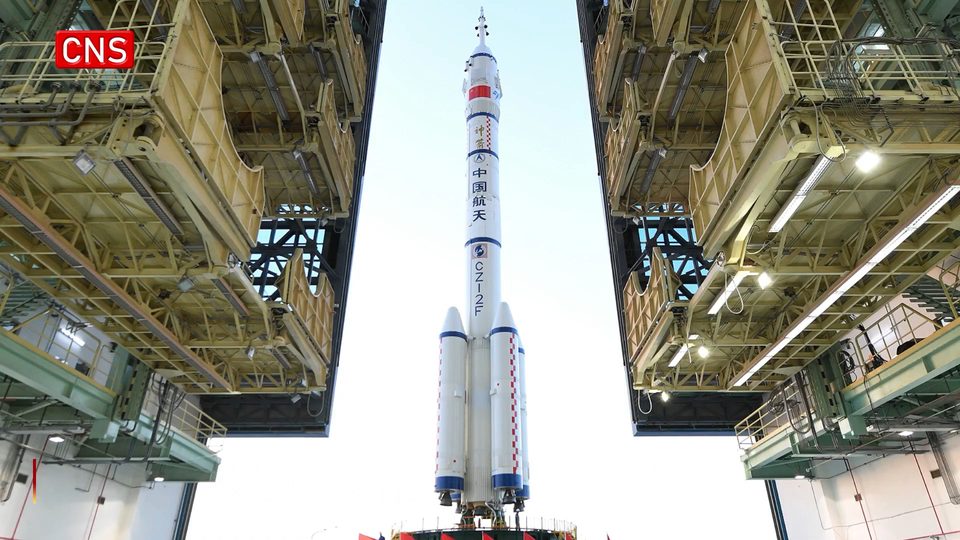
China Surprise-Launches Reusable Long March 12B Rocket, Debuts with Qianfan Constellation Satellites
China conducted the surprise maiden launch of its new reusable Long March 12B rocket on Monday, delivering operational broadband satellites to orbit with no advance warning — a move that underscores the rapid acceleration of China’s commercial space capabilities.
The rocket lifted off at 4:40 a.m. Eastern (08:40 UTC, 16:40 Beijing time) on June 1 from the Dongfeng Commercial Aerospace Innovation Test Zone at the Jiuquan Satellite Launch Center in the Gobi Desert. The China Aerospace Science and Technology Corporation (CASC) announced launch success within an hour, revealing that the debut flight carried operational payloads for the Shanghai-led Qianfan (Thousand Sails) broadband megaconstellation.
CASC did not immediately confirm the exact number of satellites deployed, but if the mission followed the typical batch size of 18, the launch brings the Qianfan constellation to approximately 180 satellites in orbit. Each Qianfan satellite is believed to weigh around 300 kg (660 lb), using a flat-pack design with a single solar array to maximize packing density inside the rocket fairing. The satellites use krypton-fueled hall-effect thrusters for orbital maneuvering, generating 20 millinewtons of thrust with a specific impulse of 1,385 seconds.
The Long March 12B is now China’s most capable single-core rocket, able to lift up to 20,000 kg (44,100 lb) into low Earth orbit in expendable configuration and up to 12,000 kg (26,500 lb) in reusable mode. Standing approximately 72 m (236 ft) tall with a diameter of 4.37 m (14.3 ft) and a launch mass exceeding 437,000 kg (963,000 lb), the two-stage rocket is designed for first-stage reusability with grid fins and landing legs. Comparable vehicles include the Falcon 9, Angara A5, and Ariane 6.
Surprise Launch Raises Eyebrows
Perhaps the most striking aspect of the launch was its stealth. No airspace or maritime notices were issued ahead of liftoff — standard practice for rocket launches to warn aircraft and vessels of hazards in the flight path. The first indications that a launch had taken place appeared on Chinese social media, catching many space watchers off guard. A similar unannounced launch occurred in October 2025 with a Long March 2D.
Andrew Jones, SpaceNews correspondent covering China’s space sector, noted on X: “Well, this was wild. The first Long March 12B rocket lifted off at 0840 UTC today from Dongfeng test zone at Jiuquan. No warning, and carrying Qianfan constellation satellites straight off the bat. Successfully reached orbit, but no recovery test today.”
Despite the rocket’s reusable design, the debut flight did not attempt a first-stage recovery. CASC confirmed that grid fins and mock-up landing legs were present on the first stage, but no booster recovery trials were performed — rather, the flight was used to understand aerodynamic effects during ascent. Recovery tests are expected on later missions, likely after a downrange landing site is established.
China’s Reusable Rocket Race Heats Up
The Long March 12B’s debut marks China’s 35th orbital launch attempt of 2026, continuing what has been an extraordinarily busy year for the country’s space program. The rocket is manufactured by CASC Commercial Rocket Co., Ltd., a subsidiary of the state-owned space giant. Design work reportedly began just twenty months ago in September 2024, with the vehicle undergoing a successful static-fire test in January 2026.
The launch comes amid a surge in Chinese reusable rocket development. Multiple commercial and state-backed reusable launch vehicles are nearing their debuts, positioning China to challenge SpaceX’s dominance in low-cost, rapid-turnaround launch services. While the Long March 12B is kerosene-fueled (like the Falcon 9), a methane-liquid oxygen variant called the Long March 12A flew earlier this year, expanding China’s propulsion diversity.
Qianfan Constellation: A Rising Competitor in Broadband
The Qianfan (Thousand Sails) megaconstellation, also known as SpaceSail, is operated by Shanghai Spacesail Technologies Co., Ltd. The constellation aims to provide space-based internet connectivity services in China and abroad, with agreements in place with Brazil, Malaysia, Kazakhstan, and Türkiye, as well as via airline partnerships.
According to deployment plans outlined in December 2025, the constellation should reach 324 satellites launched in 2026, with another 324 in 2027, ramping up to 4,000 in 2028-2029, and ultimately 15,000 total satellites approved to operate. Today’s launch allows Qianfan to retake its lead from the rival GuoWang constellation (168 satellites), after falling behind late last year.
The successful debut of the Long March 12B represents a significant step forward for China’s space ambitions, providing a domestically built, reusable heavy-lift capability that can support the rapid deployment of massive satellite constellations — and potentially compete on the global launch market.
Sources: SpaceNews (Andrew Jones), China-in-Space (Jack C.), CASC, Wikipedia
Published: June 1, 2026 16:47 UTC (June 2, 2026 01:47 JST)