

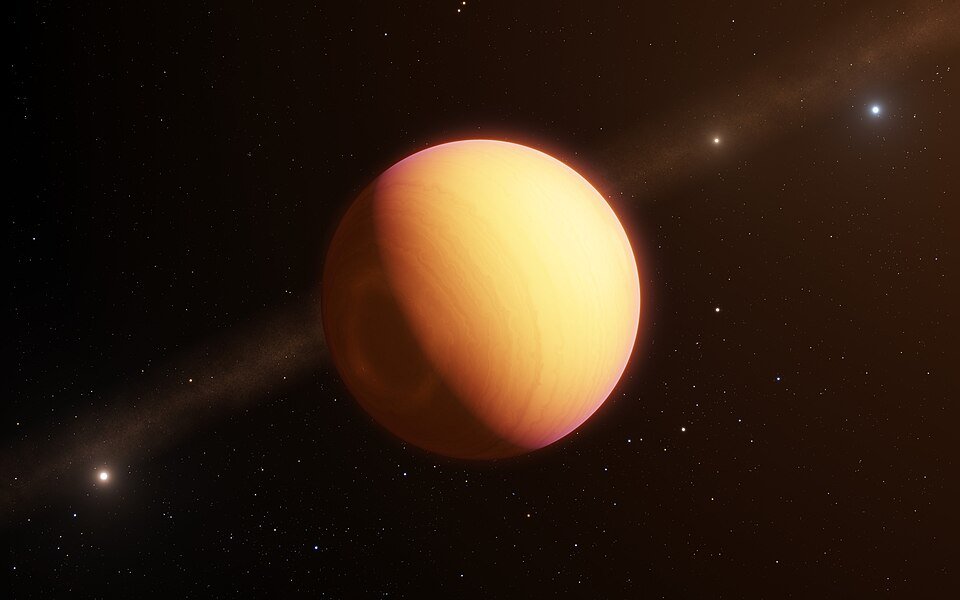
A new mission concept could give astronomers the tool they have dreamed of for decades: a space-based observatory capable of directly detecting signs of life on rocky exoplanets. But rather than a single giant telescope, the design calls for a swarm of smaller spacecraft flying in precise formation hundreds of meters apart.
The Large Interferometer For Exoplanets (LIFE) mission, detailed in a new report from the W.M. Keck Institute for Space Studies, would use a technique called nulling interferometry to capture the thermal infrared glow of exoplanets. By combining light from multiple telescopes flying in formation, LIFE could analyze the atmospheres of dozens of potentially habitable worlds for the chemical signatures of life.
“The mid-infrared is a gold mine of potential spectral biosignatures, including ozone, methane, water, carbon dioxide, and even phosphine,” the report notes.
Why a swarm?
Detecting Earth-like planets around Sun-like stars is one of the hardest challenges in observational astronomy. A planet is drowned out by the glare of its host star: in visible light, an Earth analog is roughly 10 billion times fainter than its star.
One approach, pursued by NASA’s planned Habitable Worlds Observatory (HWO), uses a coronagraph: a device inside the telescope that blocks starlight, allowing it to see planets in reflected visible and ultraviolet light.
LIFE takes a complementary approach. By working in the mid-infrared (four to 18.5 micrometers), where the contrast between star and planet drops to roughly one million to one, the observatory can detect the planet’s own thermal emission. And by using four collector spacecraft flying tens to hundreds of meters apart, the system can cancel out the star’s light through destructive interference while boosting the planet’s faint heat signal.
A second chance at a canceled dream
Nulling interferometry in space is not a new idea. Both NASA and ESA attempted similar concepts earlier this century: NASA’s Terrestrial Planet Finder-Interferometer (TPF-I) and ESA’s Darwin mission were both canceled, in 2011 and 2007 respectively, primarily because the technology was not yet mature enough.
The intervening two decades have changed the picture dramatically. Breakthroughs in astrophotonics have shrunk what once required a bench-sized optical instrument to the form factor of a microchip. Commercial launch cost reductions make it feasible to deploy multiple spacecraft in a single launch. And formation-flying technology, long a distant dream, is now being demonstrated with CubeSat missions like SunRISE and the SEIRIOS concept.
“According to the new report, our engineering skills have recently caught up with our imagination,” the study authors write.
LIFE by the numbers
The current reference design envisions four collector spacecraft, each with a two-meter aperture, flying in a double Bracewell nulling interferometer configuration around a central beam-combiner spacecraft. The separation between collectors ranges from 10 to 600 meters, adjustable to optimize for different target stars.
Over a five-to-six-year mission, LIFE could detect approximately 550 exoplanets between 0.5 and 6 Earth radii. Of those, an estimated 25 to 45 would be rocky planets in the habitable zone. Upgrading the collectors to 3.5-meter apertures would boost the yield to roughly 770 total exoplanets, including 60 to 80 rocky habitable-zone worlds.
For each target, the spacecraft would measure the planet’s temperature, radius, orbital parameters, and (critically) the composition of its atmosphere through spectroscopy. Key biosignature targets include ozone, methane, water vapor, carbon dioxide, and phosphine.
The HWO partnership
LIFE is not intended to replace NASA’s Habitable Worlds Observatory, the next-generation flagship mission recommended by the Astro2020 Decadal Survey. Instead, the two observatories are designed as complementary tools: HWO covers reflected light at visible and ultraviolet wavelengths, while LIFE captures thermal emission in the mid-infrared.
Combining data from both missions is critical for avoiding false positives. A biosignature candidate detected by one instrument could be caused by abiotic processes; seeing it in two independent wavelength regimes dramatically increases confidence.
The Keck Institute report recommends LIFE be developed as an international collaboration to share costs and expertise. Both LIFE and HWO target launch in the 2040s.
Why JWST is not enough
Even the James Webb Space Telescope, the largest and most powerful observatory ever launched, cannot directly image an Earth-like planet around a Sun-like star. A single telescope large enough to do so in the mid-infrared would be too heavy to launch.
The 2025 controversy over potential biosignatures on the exoplanet K2-18b illustrates the problem. JWST detected possible dimethyl sulfide at roughly 3-sigma confidence in the planet’s atmosphere (a gas produced on Earth primarily by marine microbes). A subsequent NASA-led reanalysis found no conclusive evidence for the signal, highlighting the difficulty of interpreting such data at the edge of an instrument’s capabilities.
LIFE and HWO are designed specifically for this task, with spectroscopy optimized for biosignature detection rather than repurposed from general-purpose instruments.
“If the LIFE project is funded, hopefully HWO will be too,” the report concludes. “But even if not, we are finally getting to a point where we can build a system that can help us find the proof that we are not alone, and if that is not inspiring enough to fund these programs, it is unclear what would be.”