

When the James Webb Space Telescope opened its eyes on the early universe, it revealed a population of objects that had no precedent: small, intensely red galaxies that appeared in abundance roughly 600 million years after the Big Bang and then seemed to vanish by the time the universe reached two billion years of age.
Astronomers called them Little Red Dots, and their sudden disappearance has been one of JWST’s most persistent puzzles. A new study from the University of Texas at Austin offers an explanation: they did not vanish at all. They evolved into something familiar.
The Globular Cluster Connection
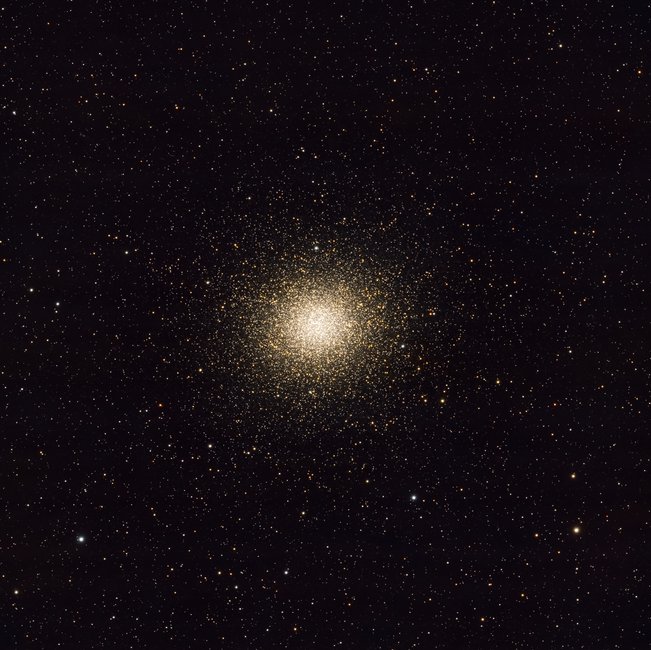
Globular clusters are dense, spherical collections of hundreds of thousands of ancient stars that orbit the outskirts of galaxies like the Milky Way. The leading hypothesis for their formation holds that they emerged in the early universe, but direct evidence has been elusive because the clusters astronomers see today have undergone billions of years of evolution.
John Chisholm and colleagues at UT Austin propose that the Little Red Dots observed by JWST are precisely these proto-globular clusters, caught in the act of formation. Each cluster, they argue, may have contained an extremely rare supermassive star, a theoretical object with 1,000 to 10,000 times the mass of the Sun.
“The Little Red Dots could be galaxies, they could involve black holes, or they could be something even more unexpected,” said Chisholm. “Our work shows that forming globular clusters with supermassive stars should be part of that conversation.”
Solving Two Mysteries at Once
Supermassive stars burn intensely bright but live fast, lasting only about a million years before exploding as supernovae. Those brief lifetimes coincide with the window when JWST sees Little Red Dots. And when supermassive stars die, they seed their surroundings with a distinctive chemical signature: enriched in helium, nitrogen, sodium and aluminum, but depleted in carbon, oxygen and magnesium.
That chemical pattern matches exactly what astronomers have long observed in globular clusters, a peculiar composition that has defied easy explanation.
“A supermassive star is precisely the kind of environment that could produce this combination,” said Mike Boylan-Kolchin, a co-author of the study.
If the hypothesis holds, it would connect two cosmic mysteries: the origin of the Little Red Dots and the formation of globular clusters. The Milky Way alone hosts at least 150 known globular clusters.
“These may not be just a strange new JWST population with no connection to the universe around us today,” Chisholm said. “Little Red Dots may persist past the early universe, evolving into something relatively familiar.”
The team’s findings are available as a preprint on arXiv.