

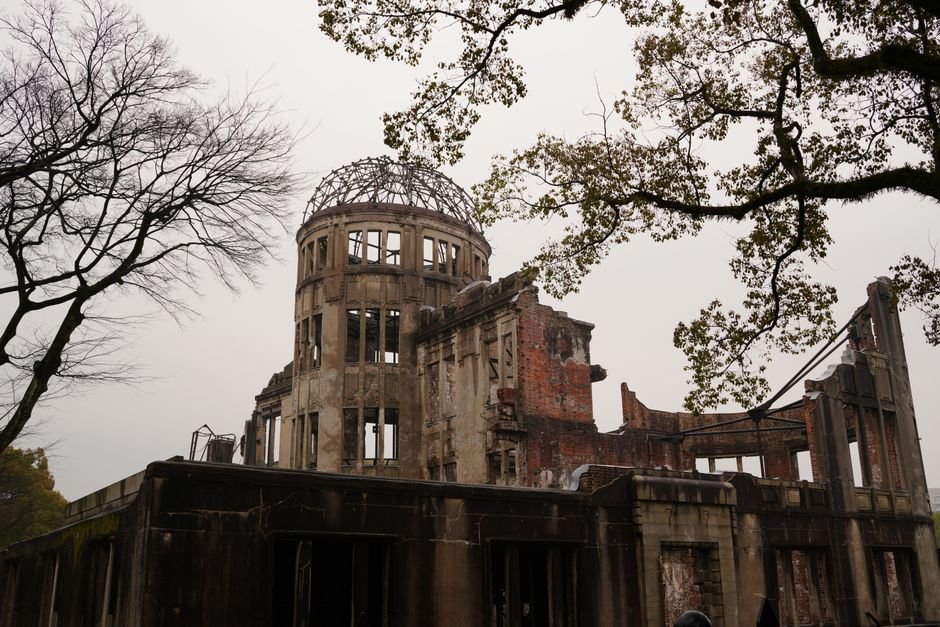
Japan is the only country in the world that has been bombed with atomic weapons, and its people have not forgotten what that means. A nationwide poll reported Sunday found that 76 percent of Japanese support keeping the three nonnuclear principles intact, the postwar pledges to produce no nuclear weapons, possess none, and allow none onto the islands. The same survey found 77 percent opposed to nuclear sharing, the arrangement under which American warheads would be stationed on Japanese soil for joint operation.
The numbers become a verdict when set against what the government in Tokyo is actually doing.
A government moving the other way
Prime Minister Sanae Takaichi’s cabinet has spent the past year pushing defense policy in the opposite direction from public opinion. In April the government lifted the decades-old ban on exporting lethal weapons, a break with the postwar export rules that had made Japan an outlier among major powers. Debate has been opened, quietly but insistently, on revising the nonnuclear principles themselves. Nuclear sharing has gone from unmentionable to a subject of official conversation within the ruling party.
Asked about the weapons export decision, 53 percent wanted the old export ban kept or the policy reexamined, and 36 percent said even allied countries should receive only nonlethal equipment. On nuclear sharing, more than three quarters of the country says no. The government’s answer has been to keep citing the security environment.
The war next door
Nine in ten respondents said they oppose American strikes on Iran and Venezuela. That is not a poll about abstract pacifism. It was taken while the United States is bombing Iran, while the Strait of Hormuz is a war zone, and while the Japanese government is publicly neither supporting nor criticizing the American campaign.
The survey asked directly how Tokyo should have handled the US attack on Iran: 44 percent said the government should have expressed concern, while 34 percent said the neutral response was appropriate. Even among those who accepted the official line, the discomfort is plain. Japan imports almost all of its oil through the very waters the war has made dangerous, and its government has chosen to stand by the ally doing the bombing while saying nothing about the bombs.
The nuclear question underneath
The poll was taken in June and July, months in which the word nuclear has moved from history to current events. Sixty-three percent of respondents said they see a real or fair chance that nuclear weapons will be used in a war within ten years. That figure has fallen nine points since 2024, which suggests some of the panic of the earlier period has worn off, but it remains a majority of the country expecting the worst. A third of Japanese say Japan itself could be drawn into a war.
Backing for the TPNW, the United Nations treaty outlawing nuclear weapons, which Tokyo has long boycotted to stay aligned with Washington, stands at 55 percent, down five points from a year earlier. Among opponents, 56 percent said membership would not actually eliminate nuclear weapons. The treaty’s first review conference comes in November, and the poll suggests the Japanese public has not abandoned the idea so much as lost faith that it would matter.
The contradiction at the heart of Japanese policy
Japan’s postwar security policy rests on a contradiction the government has never resolved: the country that renounces nuclear weapons depends for its survival on another country’s nuclear arsenal. American extended deterrence is the shield, and the nonnuclear principles are the price of public consent. The Takaichi government appears to believe the shield now needs to be visible, which means moving toward nuclear sharing, which means breaking the principles, which means asking the public to accept what 77 percent reject.
The poll does not say the government cannot do it. It says the government will be doing it against the declared will of the people in a country where the memory of Hiroshima and Nagasaki is not a debating point but a national identity. Eighty-six percent of respondents called Japan a peaceful nation. The survey, taken by the Kyodo-affiliated polling organization across 3,000 adults in June and July, suggests the re-education is not going well.