

Credit: NASA
Houston, TX — Two NASA astronauts are preparing for a spacewalk on June 30 to replace a malfunctioning wrist joint on the International Space Station’s Canadarm2 robotic arm, a repair that comes as independent safety advisers warn that budget pressures and aging hardware are eroding the station’s contingency margins to “alarming levels.”
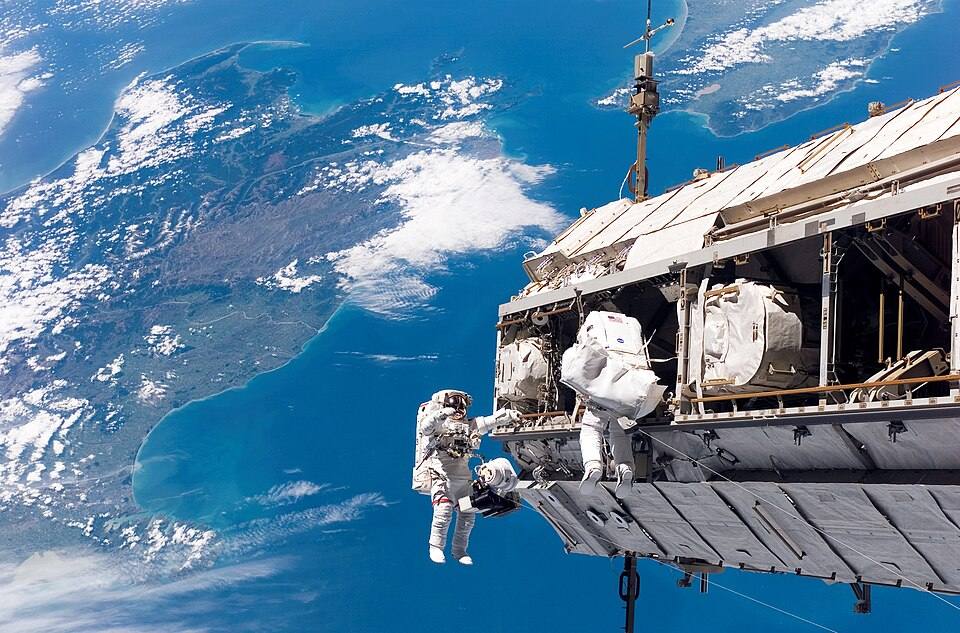
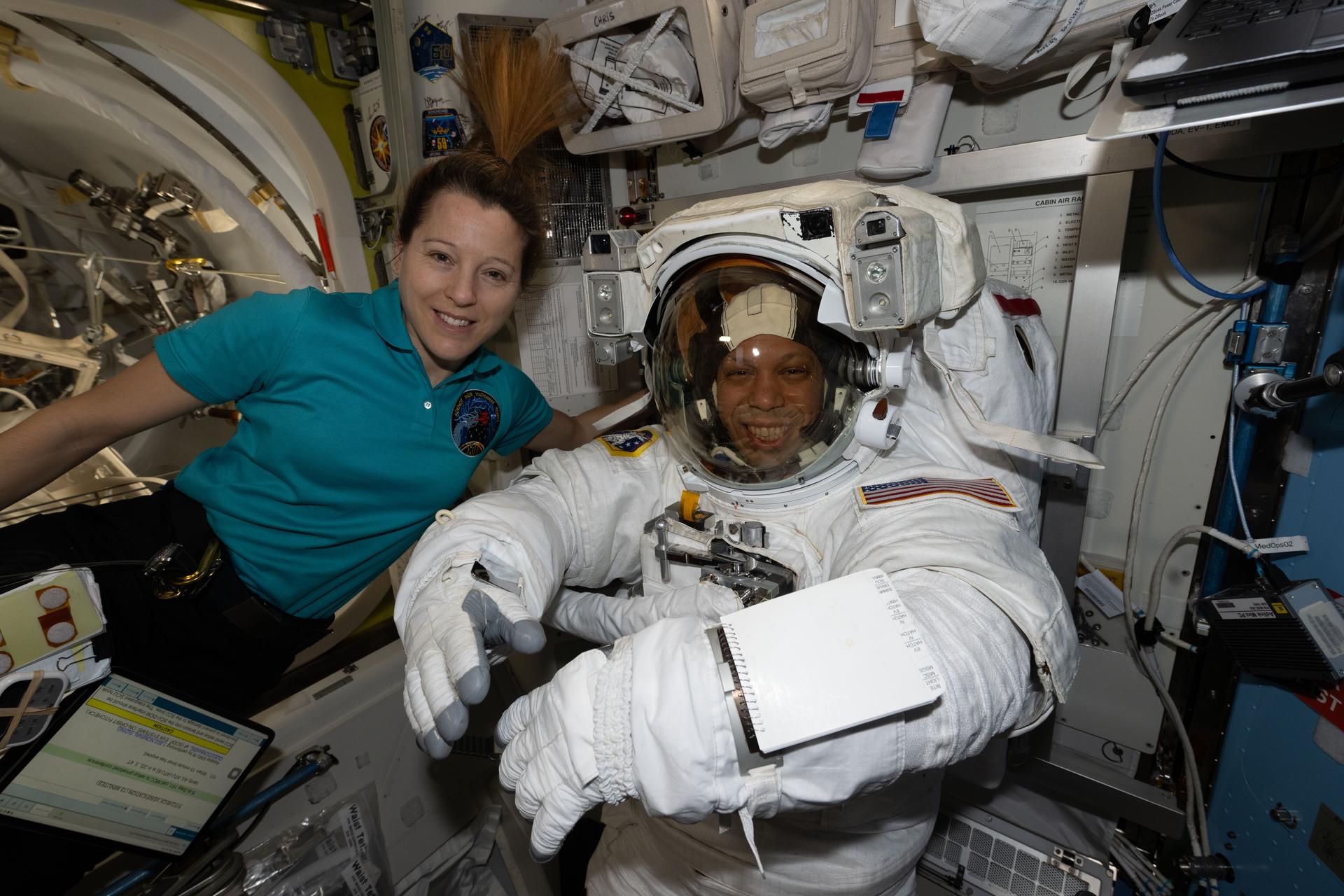
NASA astronauts Jessica Meir and Chris Williams are scheduled to exit the Quest airlock at 12:35 UTC (8:35 a.m. EDT) for a six-and-a-half-hour spacewalk — the 280th in support of ISS assembly and maintenance. Their task: replace the wrist joint on Canadarm2, the 17-meter (56-foot) robotic arm that has been a cornerstone of station operations since its installation in April 2001.
The joint malfunctioned on May 27 when it began drawing elevated electrical current and refused to move as expected. The arm has been idle since then, unable to perform its critical role of capturing cargo spacecraft such as Cygnus and HTV-X, conducting external inspections, and supporting future spacewalks.
“Systems like Canadarm2 were designed from the beginning with replaceable components and were planned with maintenance in mind, and this is no exception,” said Bill Spetch, NASA’s ISS operations and integration manager, during a pre-spacewalk briefing.
A spare wrist joint was already stored on station in an external container on the truss, and the repair crew has been rehearsing procedures using 3D interactive animations and computer-based robotics simulations. ESA astronaut Sophie Adenot and NASA flight engineer Jack Hathaway will support the spacewalkers from inside the station, managing suit checks and operating the arm controls.
The spacewalk comes amid deepening unease about the long-term health of the orbiting laboratory, which has been continuously crewed for more than 25 years. The Aerospace Safety Advisory Panel (ASAP), an independent body that reports to NASA and Congress, delivered a stark assessment during a June 22 meeting.
Susan Helms, the ASAP chair and a former NASA astronaut, warned that the management of critical spares and resupply items has become increasingly difficult for the aging station. “The temptation to reduce the ISS budget looms, but the panel would caution that such temptations should be disregarded,” Helms said. “As budgets decline, it is increasingly difficult for NASA to ensure the ISS risks remain manageable for day-to-day operations with enough contingency margins. The margin to do so is now reduced to alarming levels.”
The station is scheduled to continue operations through 2030, after which NASA plans to transition to commercially operated space stations. But with that retirement date approaching, budget pressures are mounting, and safety officials fear that the margin for error is shrinking faster than planned.
Spacesuit reliability under scrutiny
The ASAP also flagged concerns about the reliability of NASA’s Extravehicular Mobility Units (EMUs), the spacesuits worn during spacewalks. Supply chain issues have compounded the risk, the panel noted, with the inventory of operational suits on the station currently limited.
NASA’s Spetch offered a more optimistic assessment, stating that the station currently has four operational suits on board and that a fifth is scheduled to arrive this fall.
“We have four great suits on board right now,” Spetch said. “I think we’re in great shape.”
Still, the ASAP’s concerns echo a broader unease about the aging EMU fleet, which has been in service for decades and is only now being replaced by next-generation suits developed by Axiom Space for Artemis missions. For the near term, however, NASA will continue to rely on the existing suits for station operations.
Air leak incident and Crew Dragon safe haven
The spacewalk preparations unfolded against the backdrop of a separate safety incident that underscored the station’s fragility. On June 5, NASA ordered the station’s crew into the SpaceX Crew Dragon spacecraft while Russian cosmonauts prepared to attempt repairs on a persistent air leak in the Zvezda module’s PrK (transfer chamber).
The repairs were not ultimately performed after NASA assessed that the work posed an elevated risk to the module’s structural integrity. The crew — four Crew-12 members plus Chris Williams, who arrived on the Soyuz MS-28 — spent time inside the Crew Dragon as a precautionary measure. The spacecraft has a fifth seat permanently installed for most of its stay, providing additional evacuation capacity.
“The assessment was comprehensive and the actions taken were wholly appropriate,” Helms told the panel, referring to NASA’s handling of the incident.
The PrK leak has been described by safety officials as “one of the most significant safety risks” facing the ISS. Spetch said the PrK is currently not leaking; station pressure was intentionally reduced as part of the response, and NASA is collaborating with Roscosmos on a forward plan.
Three more spacewalks planned
The Canadarm2 repair is the first of four U.S.-led spacewalks planned for the coming months. Starting as soon as August, astronauts are scheduled to install new solar array components, repair electrical jumpers, and replace a communications antenna.
The ability to conduct these repairs speaks to the station’s design philosophy of maintainability. But with each passing year, the cumulative effects of thermal cycling, micrometeoroid impacts, and component fatigue become more pronounced.
As NASA and its international partners push toward the station’s planned retirement in 2030, the challenge will be maintaining not just the hardware, but the budget and supply chains needed to keep it safe. The ASAP’s warning is clear: the margin for error is shrinking, and the time to act is now.