

Israeli Strike Hits Tents in Gaza Humanitarian Zone, Killing Two and Wounding Dozens
An Israeli airstrike struck tents sheltering displaced families in the al-Mawasi area of Khan Younis on Monday, killing at least two people and setting several tents ablaze in a zone the Israeli military itself had designated as a humanitarian safe area.
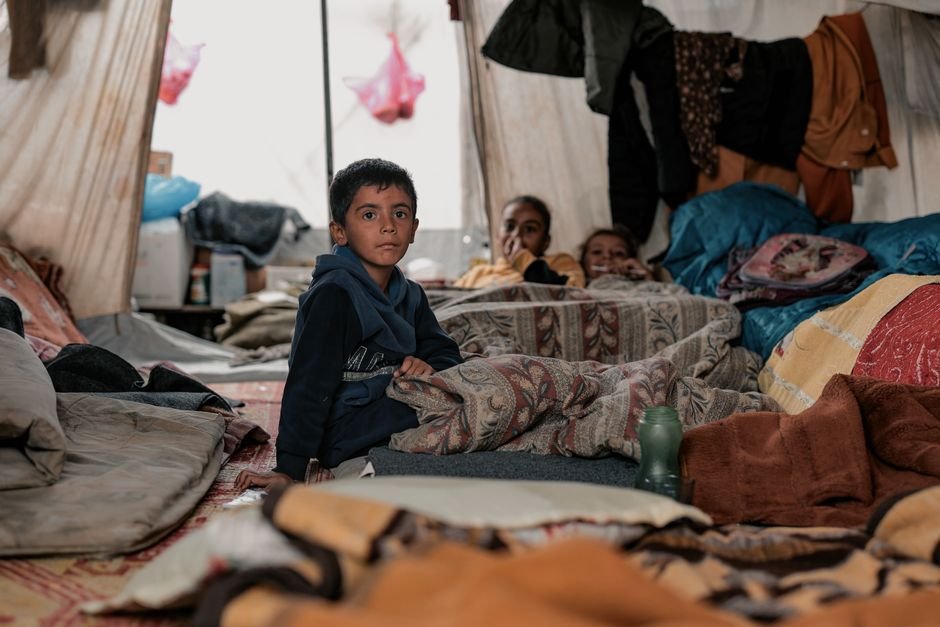
The strike hit the coastal Mawasi district, where tens of thousands of displaced Palestinians live in flimsy tent encampments after being driven from their homes across the Gaza Strip. Medical sources confirmed that at least two people were killed and 27 others wounded when an Israeli drone struck a beach tent, according to reports from the scene. Elsewhere in al-Mawasi, a separate Israeli strike killed a woman and her young daughter in their tent. Witnesses described scenes of panic as smoke and flames engulfed the temporary shelters, with rescue teams rushing to pull survivors from the wreckage.
The wounded were transferred to Nasser Medical Complex and the Kuwaiti and al-Mawasi field hospitals in Khan Younis, where medical staff already stretched thin by months of war worked to treat injuries ranging from minor wounds to critical trauma.
Monday’s attack was part of a broader wave of Israeli military operations across Gaza that killed at least eight people in a single day, including children. In Deir al-Balah, central Gaza, a drone strike targeting a civilian gathering killed three Palestinians including a child. Israeli forces also opened fire on civilians near the Bani Suheila roundabout east of Khan Younis, killing one Palestinian and wounding a young girl.
The al-Mawasi area has been designated by Israel as a humanitarian zone since December 2023, intended as a safe refuge for civilians fleeing active combat zones. But the designation has provided little protection. The zone has been struck repeatedly over the course of the conflict, including a major attack in July 2024 that killed at least 90 people and a strike in September 2024 that killed 19.
Just days before Monday’s attack, on June 24, an 11-year-old boy named Ahmed Al-Raqab was killed by an Israeli missile while playing outside his family’s tent in the same coastal stretch of al-Mawasi. His father, Sabri Al-Raqab, was filmed at Nasser Hospital cradling his son’s body and weeping. “He was carrying a watermelon. What was this child’s crime?” he said. “He picked up a watermelon and they fired at him. Is he a fighter? He’s not a fighter. He’s a child.”
The killings come weeks after the UN Independent International Commission of Inquiry released a report concluding that “Israeli authorities and security forces have deliberately targeted Palestinian children, resulting in genocide, crimes against humanity and war crimes in the Gaza Strip.” The UN inquiry found that over 20,000 children were killed and more than 44,000 injured during the first two years of the assault.
Despite a ceasefire that took effect in October 2025, the violence has not stopped. According to UNICEF, at least 265 children have been killed in Gaza since the ceasefire began, averaging one child per day over more than eight months. “During a period supposedly defined by restraint and protection, a child has been killed, on average, every single day for more than eight months,” UNICEF spokesperson James Elder said. “That is an absurd and devastating figure.”
Since the October 2025 truce, Israeli ceasefire violations have resulted in the deaths of 1,045 Palestinians and injuries to 3,380 others, the majority of them women and children, according to Gaza’s Ministry of Health. Since October 2023, more than 73,000 Palestinians have been killed and over 173,000 wounded, with approximately 90 percent of Gaza’s civilian infrastructure destroyed.
The Israeli military has stated that it targets Hamas operatives it alleges are embedded within civilian and humanitarian areas. Hamas denies using humanitarian zones for military purposes. Human rights organizations have repeatedly warned that attacks on designated humanitarian zones violate international humanitarian law.
Israel now controls more than 70 percent of the Gaza Strip, according to Israeli officials. On Monday, military vehicles were observed moving concrete barriers marking the so-called “Yellow Line” security strip approximately 150 meters westward, effectively expanding Israeli-controlled territory in violation of the ceasefire terms.
For the families who now sift through the charred remains of their tents in al-Mawasi, the concept of a safe zone has become an increasingly bitter fiction. Displaced multiple times over nearly three years of war, they have nowhere left to run.
— George, 1ban.news