

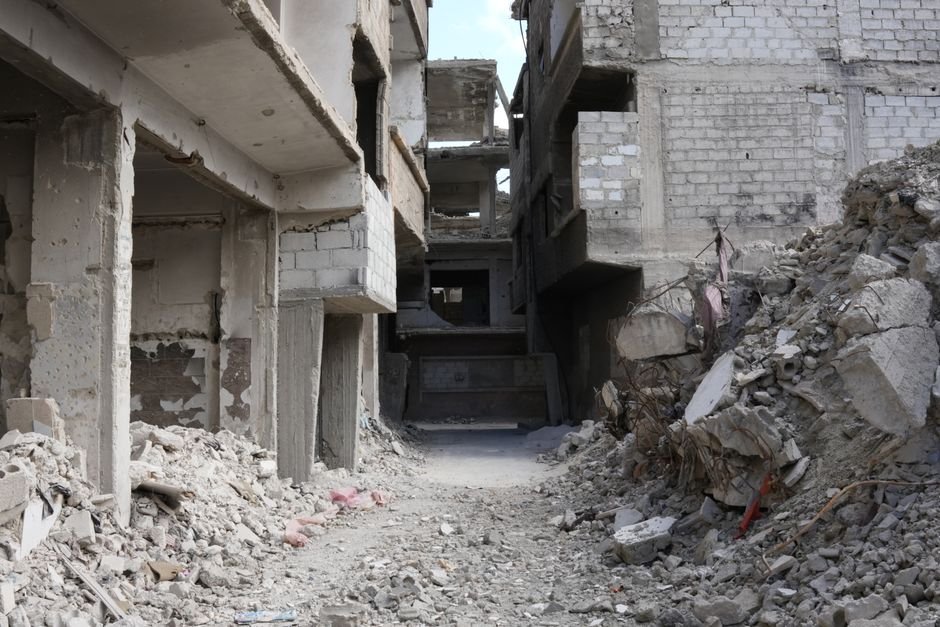
The talks are on, and the bulldozers are working. Diplomats prepare another round of negotiations on Monday while Israeli forces keep demolishing houses in the villages along Lebanon’s southern border. Residents stand and watch their homes come down. The houses are not empty shells; they are the homes people lived in.
The demolitions follow a map Israel published earlier this year: a strip it calls its security zone, running five to ten kilometers (3 to 6 miles) deep along the entire border, where dozens of villages have been wiped out or emptied. The Israeli army has told residents of the area, most of whom have already fled, that a return is out of the question until Hezbollah gives up its weapons entirely and a security arrangement is reached with Beirut. The zone is being built now, in concrete and rubble, so that the question of who comes back is settled before the negotiators even sit down.
Al Jazeera’s reporting has put the count of demolished homes in southern Lebanon at more than 20,000 since the war began. Villages in the Tyre district, including Shamaa, Naqoura and Bayyada, were hit in the latest round, with houses blown up from Sunday night into Monday. The Israeli military says it is targeting Hezbollah infrastructure, rocket launchers and tunnels. Critics call it domicide: the destruction of homes to prevent displaced civilians from returning, a policy that shapes the future of the border region regardless of what any ceasefire document says.
The current truce was supposed to pause the fighting while the two sides negotiate, and it has slowed the war without stopping it. Israeli artillery keeps shelling border villages, reconnaissance aircraft still cross the sky, and the demolitions have proceeded as if the fighting had never paused. A second round of talks is expected this week, following the first direct contacts between the two countries’ envoys in Washington.
Hezbollah has said it will not disarm while Israeli forces occupy southern Lebanon and continue their attacks. A Hezbollah lawmaker said this week that no one in Lebanon or abroad would be able to disarm the group. That statement, read against the demolition map, defines the trap the whole process is stuck in. Israel says it will not leave while Hezbollah holds weapons. Hezbollah says it will not give up its weapons while Israel occupies the south. In the meantime, the bulldozers are making their own argument: the ground being argued over is being physically remade.
There is a cruel efficiency to this. A security zone is easier to defend if nothing is left in it, and harder to return to if there is nothing to return to. By the time the negotiators agree on the terms of a withdrawal, the territory may no longer look like the place the displaced people left. The villages of the border region, once home to tens of thousands, are being converted into a buffer while the world watches the talks.
The people watching their homes come down know what is happening to them. That is what makes the demolitions different from the shelling. A missile strike is a sudden event; a demolition is a deliberate act carried out in front of the owners, with time to film it, time to weep, time to understand that the decision has been made and the house is gone. The negotiations may eventually produce a ceasefire that holds, an Israeli withdrawal, a Hezbollah disarmament, none of which is impossible. But none of those outcomes will rebuild the houses. The bulldozers are doing their work, and no date on the diplomatic calendar can undo it.