

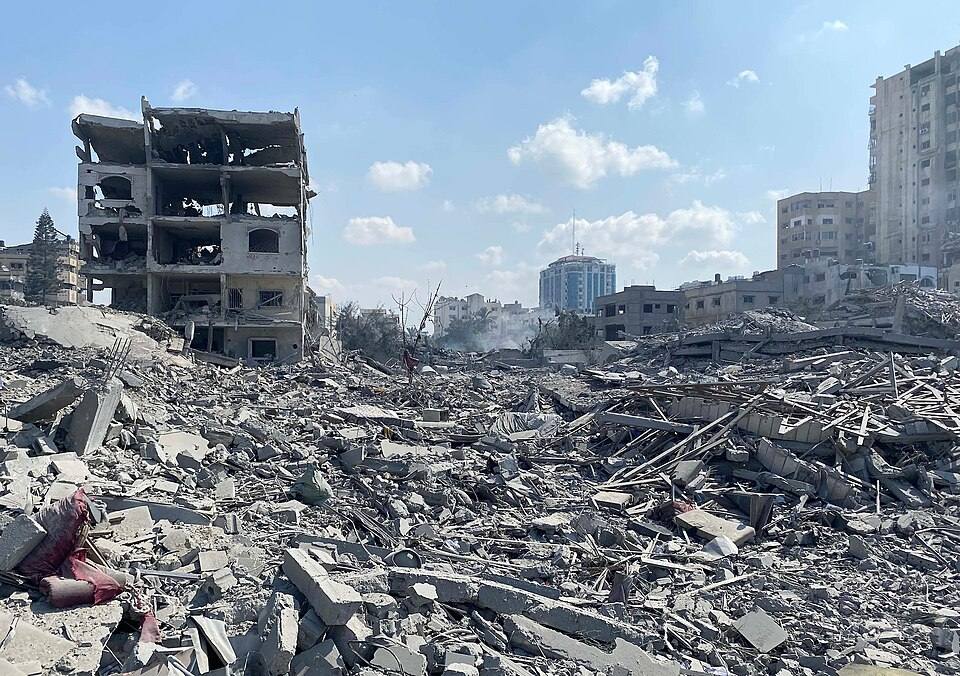
On paper, there are ceasefires. On the ground, the killing continues. Two reports this week show just how hollow those commitments have become, one from Gaza, where a child dies every day under a truce that was supposed to end the war, and one from Lebanon, where a new ceasefire lasted minutes before Israeli warplanes struck again.
A child a day in Gaza
UNICEF revealed on June 19 that 265 Palestinian children have been killed in Gaza since the ceasefire was announced in October 2025. That is an average of one child every single day for more than eight months.
“During a period supposedly defined by restraint and protection, a child has been killed, on average, every single day for more than eight months,” said UNICEF spokesperson James Elder in Geneva. “That is an absurd and devastating figure.”
The children, Elder said, were not killed in active combat zones. They were killed in their homes, at school, while playing football, while fishing. “They were shot, they were bombed, they were struck by quadcopters” operated by the Israeli military, he said.
The 265 child deaths are part of a broader toll: nearly 1,000 Palestinians killed and more than 3,100 injured in Gaza since the ceasefire began, according to the enclave’s health authorities. Elder pointed to the creeping expansion of Israel’s so-called “Yellow Line” and “Orange Line” occupation boundaries inside Gaza. “You sneeze near the Orange Line and you may well get shot,” he said.
He attributed the continued killings to “an utter lack of accountability,” with Israeli forces responsible for “the vast, vast majority, 90 percent plus.”
Lebanon: ceasefire, then bombs
On the Lebanese front, the pattern is even starker. On June 19, Israel and Hezbollah agreed to a new ceasefire, brokered by US and Qatari mediators, taking effect at 4 p.m. local time. Minutes later, Israeli warplanes struck at least 12 targets across southern Lebanon.
Video footage circulating online showed plumes of smoke rising from Nabatieh al-Fawqa, Doueir, and other towns. An Israeli airstrike hit Nabatieh al-Fawqa five minutes after the ceasefire began, according to an open-source intelligence account that posted the coordinates.
The strikes extended into the night. The Lebanese Ministry of Public Health reported that 18 people were killed and 33 wounded across multiple towns including Doueir (seven killed), Harouf, Sharqiya, and others. Rescue operations were hindered by the intensity of the bombardment.
A US official confirmed that Israel and Hezbollah had agreed to the ceasefire. The agreement was reportedly tied to the broader US-Iran framework deal signed electronically on June 17, under which the United States and Iran agreed to a 60-day negotiation period for a comprehensive peace. But the continued Israeli strikes, and Iran’s insistence that Washington must ensure Israel ends attacks on Lebanon, have put that framework under immediate strain.
What ceasefires mean when they don’t hold
The two fronts tell the same story. In Gaza, a ceasefire that was supposed to end hostilities has become a semi-permanent state of low-level violence in which 265 children have died with no one held accountable. In Lebanon, a ceasefire that was supposed to take effect was violated within minutes by the same party that signed it.
Together, they raise a question that goes beyond any single agreement: if a ceasefire can be broken on the same day it is announced, and if a truce can coexist with the daily killing of children, then what exactly is being agreed to?
The US-Iran framework deal gives the parties 60 days to negotiate a comprehensive settlement covering Iran’s nuclear program, regional proxies, and the Strait of Hormuz. But the provisions on Lebanon, and the complete absence of any enforcement mechanism for Gaza, suggest that the hardest negotiations are still ahead. No ceasefire means anything if both sides treat it as a suggestion.