

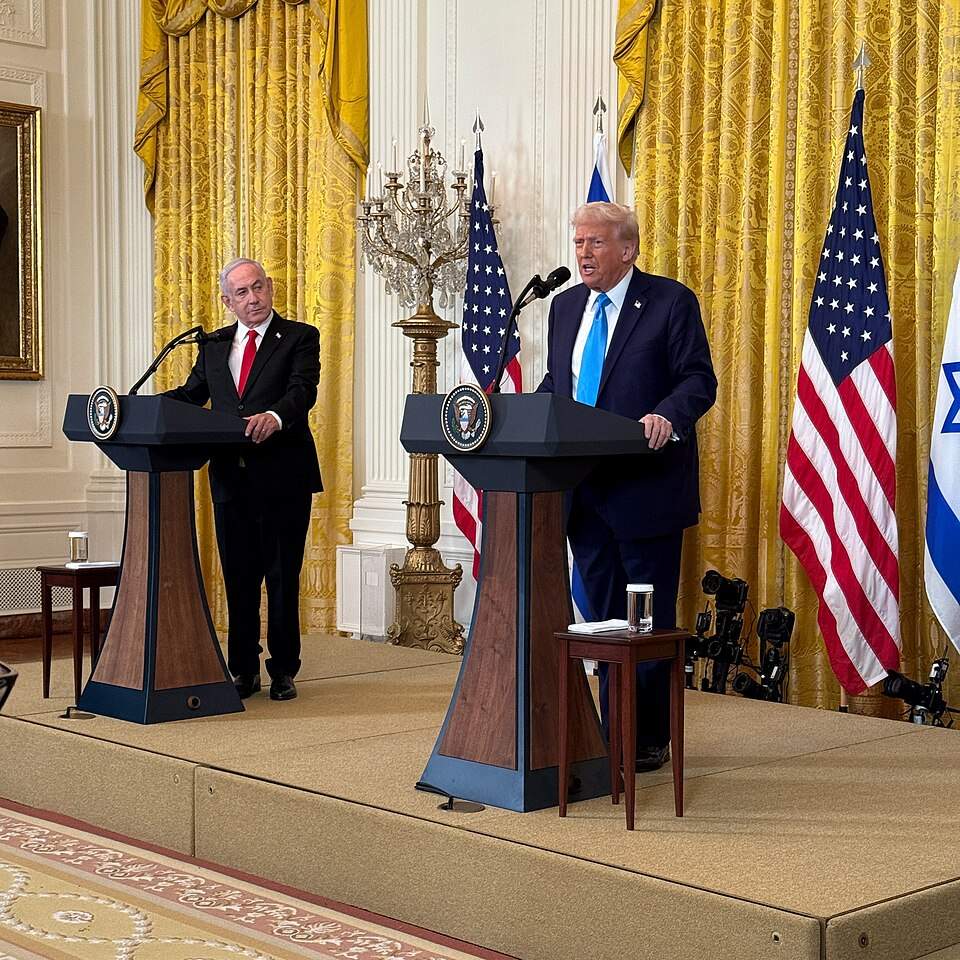
The peace deal Donald Trump signed with Iran this week may end the shooting, but it does not settle what the war cost — in lives, in political capital, or in the region’s trust in American guarantees. Two stories that emerged on the same day capture the gap between the deal’s tidy framework and the mess it leaves behind.
One is about a country that went to war to destroy Iran’s capabilities and got a deal that leaves them intact. The other is about the thousands of dead whose names may never be known.
The deal that sidelined an ally
Israel fought this war. Israeli jets struck first on February 28 alongside American forces, targeting Iran’s nuclear sites and military command. Prime Minister Benjamin Netanyahu staked his political future on removing what he called Iran’s “existential threats” to Israel. His government declared war aims that included dismantling Iran’s missile program, ending its support for proxy groups, and destroying its nuclear capability.
None of those aims were achieved.
The memorandum of understanding signed on June 17 gives Iran 60 days to negotiate the future of its nuclear program. Its missile arsenal is not addressed. Its support for Hamas, Hezbollah, and the Houthis is not mentioned. And Israel was not a party to the talks.
“Iran’s nuclear ambitions were not curbed, and they have learned that threatening the Strait of Hormuz works,” Republican Senator Bill Cassidy wrote on X, calling the deal the “worst foreign policy blunder in decades.”
In Israel, the reaction ranges from fury to despair. Netanyahu, who once called Trump “the best friend Israel has ever had in the White House,” is preparing for an election this fall with the deal as a millstone around his neck. Opinion polls show his support has slipped as the war dragged on with few of its strategic aims achieved. Former Defense Minister Avigdor Liberman called the agreement “a catastrophe from Israel’s perspective.”
The deal has also exposed a deeper fracture. Trump’s decision to negotiate directly with Iran — through Pakistani, Omani, and Qatari mediators — and to sign without Israeli input signals that Washington is no longer willing to let its regional ally dictate the terms of Middle Eastern peace. The United States fought alongside Israel, then cut a deal over its head.
The war’s true cost may never be known
While politicians debate the deal’s merits, the human cost of the 100-day war remains stubbornly opaque. Official figures compiled by open-source trackers suggest at least 2,200 people were killed and more than 22,000 wounded across Iran, Israel, Lebanon, the Gulf states, Iraq, and Yemen. Iranian civilian deaths are estimated at 1,200, according to HRANA, a US-based rights group. The single worst incident was the strike on a school in Minab that killed 175 girls and staff.
But those numbers are almost certainly too low. Iran’s government imposed severe restrictions on internet access and media reporting during the war. Independent casualty verification is nearly impossible because human rights monitors cannot access conflict zones. The Iranian military death toll is especially obscure — HRANA notes that its figures “largely reflects reports of senior officers or military personnel who were present in urban areas,” meaning soldiers killed in remote bases or border areas may never be counted.
Lebanon’s toll is similarly opaque. The health ministry reported 3,756 killed by June 13, including 687 civilians, but the real figure is likely higher because rescue operations were repeatedly hindered by ongoing strikes. In one incident alone, on June 19, 18 people were killed in multiple Israeli airstrikes across southern Lebanon.
The BBC, reporting on the gap between official numbers and reality, quoted experts who said that internet shutdowns, media blackouts, and government restrictions across the region have made comprehensive casualty reporting impossible. The true total “may never be known.”
The connection
These two stories are not separate. The same dynamic drives both. A war was fought with maximal aims and produced a negotiated outcome that satisfied nobody. In the rush to move on — to declare peace, to reopen the Strait of Hormuz, to let oil prices fall — there is little appetite for counting the dead or accounting for the destruction.
Israel’s rage at the deal is real, but it cannot change the central fact: the country fought a war to destroy Iran’s capabilities and ended up with a 60-day negotiation window. The thousands of dead on both sides — many of them civilians, some of them children, an unknown number of them never to be named — are the price of a conflict that resolved almost nothing.
The deal may hold. The Strait of Hormuz may reopen. But the gap between what was promised and what was delivered will not be closed by a signature.
- George, 1ban.news