

Iran is using the state funeral of Ayatollah Ali Khamenei as a stage to assert permanent control over the Strait of Hormuz. Ships are being turned away. The IRGC is broadcasting threats. And the country’s new leadership is making clear that the waterway will never return to the way it was before the war.
Funeral as a power display
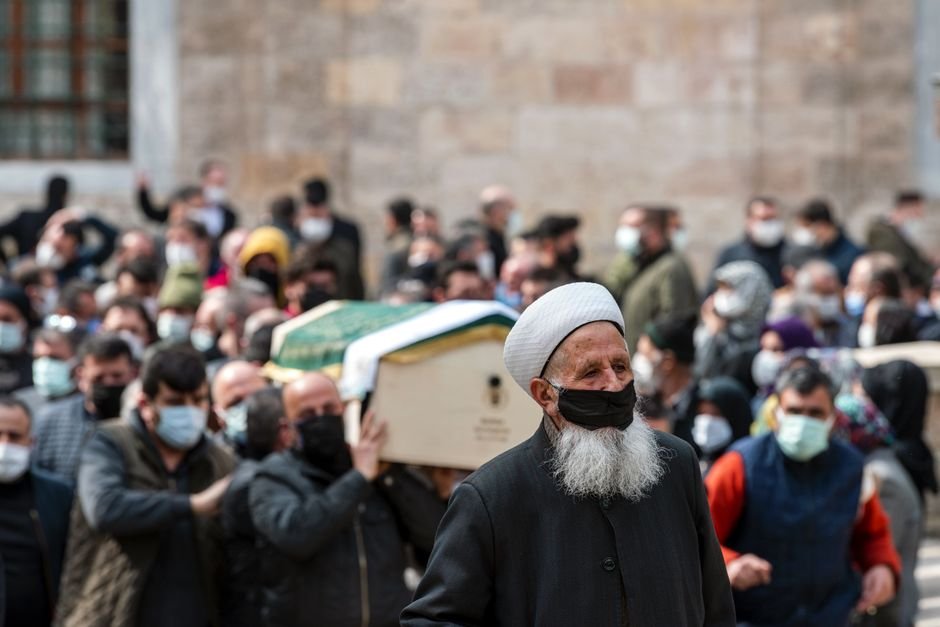
The funeral ceremonies for Iran’s slain supreme leader began on July 4 at the Grand Mosalla in Tehran, drawing enormous crowds that chanted “Death to America, Death to Israel.” The event is scheduled to last six days, with the body to be moved from Tehran to Qom and finally to Mashhad, where Khamenei will be buried at the Imam Reza Shrine on July 9.
The absence of Mojtaba Khamenei, the new Supreme Leader, has been conspicuous. He has not appeared in public since the February 28 attack that killed his father. But other senior figures are very much visible. IRGC commander-in-chief Ahmad Vahidi attended the funeral, and the Revolutionary Guards are running the entire event.
The timing is not accidental. The funeral falls during Muharram, the Islamic month of mourning, and the regime is using the religious occasion to project strength at a moment when its control over the country’s most strategic asset is being contested.
Who controls the Strait?
The Strait of Hormuz, through which about a fifth of the world’s seaborne oil passes, has been at the center of the US-Iran conflict since the war began in February. Iran effectively closed the waterway to enemies and their allies, then began imposing stricter controls after the ceasefire.
The situation has not eased. In recent days, the IRGC Navy has renewed warnings that merchant vessels must obtain Iranian permission to transit. Ships have been turning around after receiving radio broadcasts instructing them that passage is “only possible with Sepah Navy permission on designated route.”
“The container ship SELEN was turned back by the IRGC Navy due to its failure to comply with legal protocols and lack of permission to pass,” IRGC Navy commander Alireza Tangsiri said.
Martin Kelly of EOS Risk Group confirmed the pattern: “Ships are turning around again in the Strait of Hormuz following Iranian reiteration that only ships with Iranian permission may transit.”
The new rules
Iranian parliamentary speaker and chief negotiator Mohammad Bagher Ghalibaf has stated flatly that “the administration of the Strait of Hormuz will never go back to the way it was before the war.”
Under the ceasefire memorandum of understanding signed at the Palace of Versailles in June, Iran agreed to provide safe passage for commercial vessels without charge for 60 days. But the conditions are strict: ships must coordinate fully with Iranian authorities and use only designated routes. The IRGC has warned that any vessel using “unauthorized” routes bears full responsibility for the consequences.
Tehran has also established a new institutional mechanism, the Persian Gulf Strait Authority (PGSA), to regulate and oversee vessel traffic through the chokepoint. This gives Iran a permanent bureaucratic framework for control that will outlast any temporary ceasefire arrangement.
The economic stakes
Before the conflict, 120 to 140 vessels passed through the Strait of Hormuz daily. Traffic remains a fraction of that. The IMO has been coordinating the phased movement of thousands of vessels stranded in the Persian Gulf, but the process is slow and dangerous.
The impact on global oil markets is significant. Brent crude was already trading with a geopolitical risk premium before Khamenei’s death. The succession vacuum and the continued uncertainty around Strait of Hormuz access have pushed that premium higher. Iran sits on roughly 9 percent of the world’s proven oil reserves and has been producing an estimated 3.2 to 3.4 million barrels per day in 2026, much of it flowing to China under sanctions-evasion arrangements.
The US has issued sanctions waivers allowing Iran to export crude oil, providing the new leadership with some economic relief. But the broader question of who controls the Strait, and on what terms, remains unresolved.
What the Gulf states think
The Gulf Arab states are watching the funeral, and the Hormuz situation, with deep unease. Before the war, they relied on the US Navy to keep the Strait open. That assumption has been shattered.
“A lot of these countries were hoping that US military bases on their territory would provide them with security, not make them a target,” said Ali Vaez of the International Crisis Group. “The Gulf states are now questioning the credibility of the US security umbrella.”
Saudi Arabia is reportedly preparing a reconciliation summit with Iran and its Gulf neighbors. But the fundamental tension remains: the Gulf states depend on the Strait of Hormuz for their oil exports, and Iran is signaling that it intends to control access indefinitely.
A funeral and a warning
The Khamenei funeral is a moment of national mourning. It is also a political operation. The IRGC is demonstrating that it can manage a massive public event while simultaneously projecting force over one of the world’s most important waterways. The message to both domestic audiences and foreign powers is the same: this is a new Iran, and it will set its own terms.