

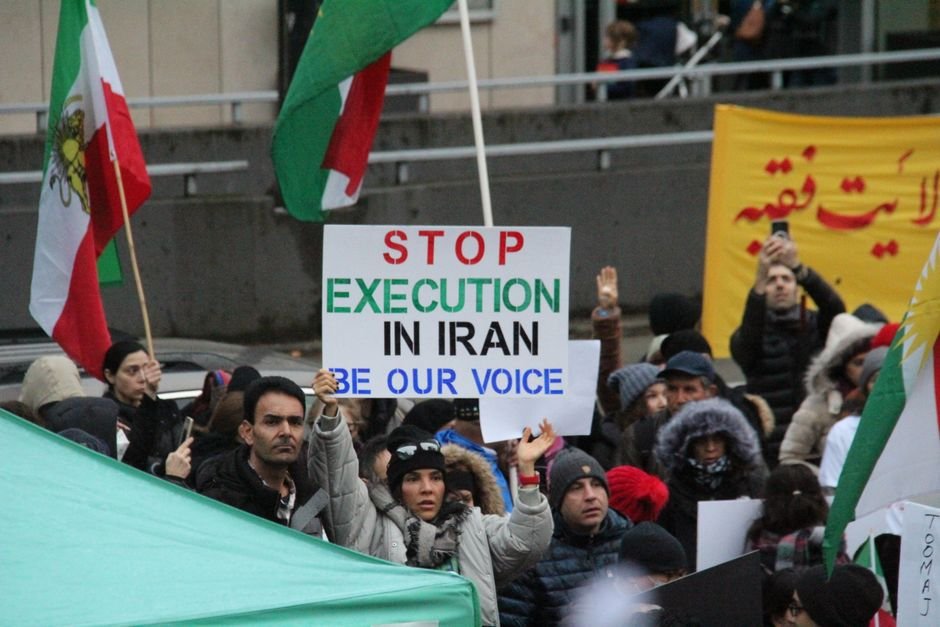
The EU, joined by 26 governments including France, Britain and Canada, published a joint statement on Wednesday condemning the executions of protesters in Iran in the strongest terms the signatories could find. The statement was released through Canada’s foreign ministry and announced by French Foreign Minister Jean-Noel Barrot.
The statement said the use of capital punishment to silence dissent, intimidate communities and punish individuals exercising their human rights can never be justified, and that the people of Iran must be free to exercise their rights to freedom of expression and peaceful assembly without fear. It called on Iran to end the death penalty immediately, release all those arbitrarily detained, and listen to the voice of its people as they demand change.
Barrot wrote on social media that seven months after the mass crimes committed against the Iranian people who rose up demanding justice and dignity, the regime continues to shed blood by multiplying executions, and that this unbearable and inhuman repression must stop.
The record behind the words
The numbers give the statement its weight. In 2025, Iran’s authorities put at least 1,639 people to death, according to the Norway-based group Iran Human Rights and the French anti-death-penalty group ECPM, the highest annual total since 1989. On August 5 the United Nations warned that the pace had become alarming: no fewer than 56 people executed since March on charges of threatening national security, and more than a hundred more facing the same fate. The UN’s human rights office said in July that dozens had been executed on security charges tied to the unrest.
The executions did not begin with the war, but the war has multiplied them. Since the US-Israeli offensive against Iran opened in late February, the pace of judicial killing has accelerated sharply. A large share of the dead had been convicted for joining the December demonstrations over prices and against the government, and the courts have been processing those cases through the war. Up to two hangings a day, by the count of the French reporting that accompanied the announcement.
What the statement does not do
Who is not on the list matters. The United States, which is fighting the war against Iran and whose strikes and sanctions have given Tehran’s security state its wartime powers, is absent from the signatories. The statement is a European and Commonwealth affair, plus a handful of others, and it lands while Washington’s aircraft are still in the air over Iranian targets. The allies who condemn the executions are not the power that could plausibly stop them.
Iran has executed more than 1,600 people in a single year while being condemned by the same governments, year after year, and the condemnations have changed nothing. The regime’s response to Wednesday’s statement can be predicted: it will be dismissed as Western interference, and the executions will continue.
Why the words still matter
But statements are not nothing. The joint format is the signal. A couple of dozen governments, most of them not in the habit of coordinating on Iran, agreed to a common text naming the executions as the reason, and they did it at a moment when the war makes every statement about Iran a statement about the war. The message to Tehran is that its allies in the region are not the only ones watching, and the message to the protesters, many of them awaiting trial, is that their cases are being counted abroad.
The signatories have no mechanism to enforce the call. There is no sanction attached, no deadline set, no consequence threatened. The statement is what the signatories could agree on, and it stops where their power stops. That is the truth of it, and it is a truth worth saying plainly: 1,639 executions, one year, a record since 1989, and the response of twenty-six governments and the European Union is a statement of words. The question is whether the words reach the people in the prisons before the courts reach them.
Sources: Franceinfo (AFP), Reuters, Global Affairs Canada, L’Orient Today