

Published: June 03, 2026, 15:54 UTC
The War Comes to Kuwait
An Iranian drone hit a passenger terminal at Kuwait’s international airport on Wednesday, killing one person and wounding dozens. The peace talks are not happening.
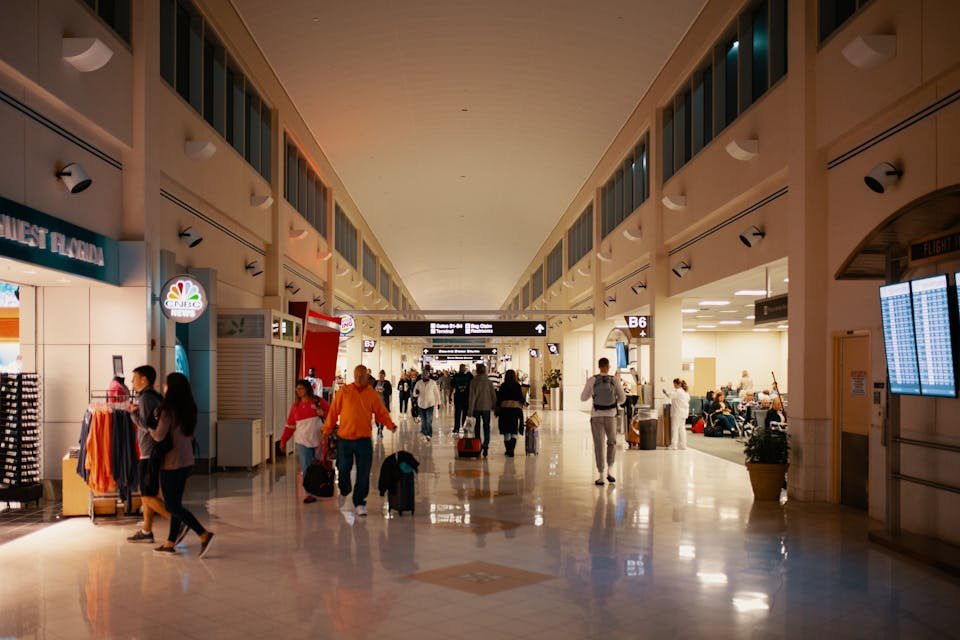
Just after midnight on Wednesday, an Iranian drone carrying a warhead struck the T1 terminal at Kuwait International Airport. The terminal is a civilian facility. People were waiting for flights. According to Kuwait’s defense ministry spokesman, Brig Gen Saud Abdulaziz Al-Atwan, the attack caused “significant material damage to the building and injuries”. Kuwait’s state news agency confirmed one dead and said dozens had been wounded. Flights were suspended. Incoming aircraft were diverted elsewhere.
The attack did not come from nowhere. It was a response.
Twenty-four hours earlier, a United States military aircraft fired a Hellfire missile into the engine room of the M/T Lexie, a Botswana-flagged oil tanker sailing empty toward Iran’s Kharg Island. The ship was attempting to break the American blockade of the Strait of Hormuz. CENTCOM said the crew had been warned repeatedly over the course of a day. They did not turn back. So the US Navy disabled the ship — the sixth commercial vessel to be taken out under the blockade since April 13.
Iran’s Islamic Revolutionary Guard Corps said it retaliated. It struck the US Fifth Fleet headquarters in Bahrain with missiles and drones, according to the IRGC’s statement, although CENTCOM denied that claim. What is not in dispute is that an Iranian drone and missile salvo hit Kuwait’s main civilian airport, killing at least one person and wounding many more at a passenger terminal.
The sequence of events follows a pattern that has become distressingly familiar in the 96 days since the US-Israeli war on Iran began. The United States takes a military action — a strike, a blockade enforcement, a raid. Iran responds with a counterstrike, often directed not at US forces directly but at the Gulf states that host them. A civilian site is hit. Casualties are reported. The diplomatic track, already fragile, takes another hit.
“We will definitely have higher prices,” Iran’s president Masoud Pezeshkian warned in May. “We are fighting, and we must accept this hardship.” The Iranian rial, which traded at 32,000 to the dollar in 2015, now trades at over 1.7 million to the dollar. The economic pressure is enormous. But the military pressure has not produced the desired diplomatic result.
Mohsen Rezaee, the military adviser to Iran’s supreme leader, made the position clear on Wednesday: “Every shot fired and every attack will be met with a deluge of missiles and drones. The aggressor will swiftly be punished.”
The diplomatic picture is, if anything, worse than the military one. Iranian media reported Wednesday that Tehran has not communicated with Washington for several days. The negotiations that Pakistan has been mediating — the ones that produced a tentative ceasefire framework in April — appear to have gone quiet. Iran’s foreign ministry issued a statement blaming Kuwait and Bahrain for the attacks on their own soil, accusing the United States of “colonialist use” of regional countries’ “territory and infrastructure” to advance its “aggressive plans against Iran”.
This is a remarkable position for a government to take: that the countries whose airports and military bases get bombed are themselves responsible for being bombed. It is the logic of a state that cannot afford to admit it is losing.
But Iran is not the only party with a credibility problem. The United States has spent four months bombing Iranian territory — Qeshm Island, Goruk, radar sites, drone command stations — while simultaneously saying it wants a deal. On Wednesday, CENTCOM announced it had conducted “self-defense strikes” on Qeshm Island, targeting what it called an “Iranian military ground control station”. It also said it had shot down three Iranian one-way attack drones launched “toward civilian mariners that were rightfully transiting regional waters”.
Every one of those actions is militarily justifiable in isolation. Together, they describe a policy that has no off-ramp.
The war is also spreading geographically. Wednesday’s strikes on Kuwait represent the most significant attack on a Gulf Arab state’s civilian infrastructure since the conflict began in February. Kuwait had largely avoided the worst of the fighting — most of the direct Iranian retaliation had been directed at Israel, at US forces in Iraq, or at shipping in the strait. The attack on Kuwait International Airport changes that calculus.
Kuwait is a small country with a population of roughly 4.5 million. Its international airport is its primary connection to the outside world. A drone strike on a passenger terminal is not a military operation. It is an act that tells every Kuwaiti that their country is no longer a spectator in this war — it is a target.
The IRGC said its strikes were retaliation for the US attack on the M/T Lexie, which occurred near Kuwait’s coast. Iran’s foreign ministry went further, accusing Kuwait of allowing the US to use its territory and waters as a launchpad for operations against Iran. Whether that accusation is true or not is almost beside the point. The perception is what matters. And the perception, across the Gulf, is that the countries hosting American bases — Kuwait, Bahrain, Qatar, the UAE — are being drawn into a conflict they did not start and cannot control.
The US secretary of state, Marco Rubio, appeared before the Senate foreign relations committee on Wednesday for the first time since the war began. He made what were described as upbeat claims about the prospects for a diplomatic resolution. But on the same day, a passenger terminal in Kuwait was burning, Iranian media reported a communications blackout with Washington, and the IRGC was promising a “deluge of missiles” for any further American action.
There is a gap between what is said in Washington and what is happening on the ground, and that gap is widening every day. The ceasefire that was supposed to have been agreed in April is a dead letter. The talks that were supposed to produce a broader deal have stalled or stopped. And ordinary people — the ones who were waiting for flights at Kuwait International Airport — are paying the price.
The pattern is now clear enough to name. Each cycle of escalation raises the threshold for the next one. The US blockade of Iranian ports was meant to force Iran to negotiate. Instead, Iran attacks Kuwait’s airport, and the IRGC promises more. The US strikes on Qeshm were meant to degrade Iranian military capability. Instead, they provoke a response that draws another Gulf state deeper into the war. And the diplomatic track — the one that Marco Rubio was still defending before the Senate on Wednesday — has no visible mechanism for stopping any of this.
What makes this moment different from previous escalations is that Iran has stopped communicating. The mediators — Pakistan, Oman — have gone quiet. Axios reported on Wednesday that the US and Iran are effectively in a communications blackout. That is the condition that precedes a wider war, not a ceasefire. When two sides are not talking, the only language left is the one spoken in missile strikes and drone attacks.
The ceasefire that was supposed to have been agreed in April — the 60-day framework that would open the Strait of Hormuz, freeze nuclear enrichment, and start negotiations — is a dead letter. The talks that were supposed to produce a broader deal have stalled or stopped. And ordinary people — the ones who were waiting for flights at Kuwait International Airport, the ones whose ships are stuck in the Gulf, the ones whose countries are being used as battlegrounds by powers that did not ask their permission — are paying the price.
One person is dead in Kuwait. Dozens are wounded. A terminal is damaged. A tanker sits disabled in the strait. And the only thing the two sides can agree on is that the other side is to blame.