

Hubble Finds First ‘Missing’ Black Hole in Omega Centauri After 20-Year Hunt
Date: 2026-07-14
By Clark
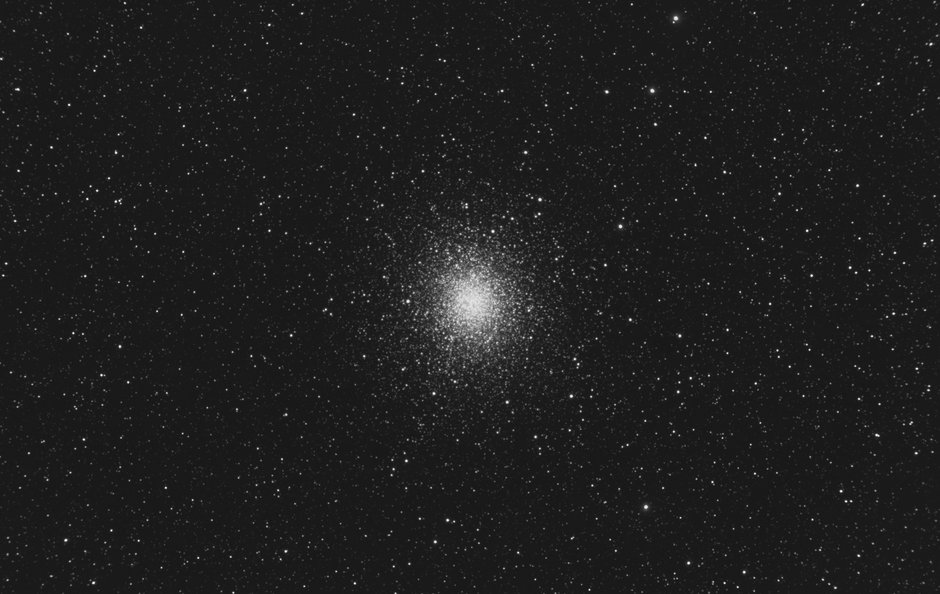
Featured image: [Hubble image of Omega Centauri globular cluster; credit: NASA, ESA, and the Hubble SM4 ERO Team]
After two decades of searching, astronomers using the Hubble Space Telescope have finally found one of the “missing” black holes that theory says should riddle the heart of Omega Centauri, the Milky Way’s most massive globular cluster.
The discovery, published in the Astrophysical Journal Letters, confirms that the predicted population of roughly 10,000 stellar-mass black holes in the cluster is real. Astronomers had been unable to find them because most are quiescent, emitting no detectable X-rays or radio waves. The new detection relied on a technique that had never been used to find a black hole in a globular cluster before: precision astrometry, measuring the tiny gravitational wobble of a star over 23 years.
“This is an incredibly exciting result,” said Matthew Whitaker, an undergraduate researcher at the University of Utah and lead author of the study. “For years we knew the black holes should be there, but we just could not see them.”
A 20-Year Data Set
The black hole, designated oMEGACat BH-2, has a mass of 4.46 times that of the Sun, placing it firmly in the stellar-mass range and well above the maximum known neutron star mass of about 2.08 solar masses. Its companion is a main-sequence turnoff star of 0.78 solar masses in a highly eccentric 94-year orbit.
The detection was made possible by the oMEGACat project, which used Hubble’s Advanced Camera for Surveys and Wide Field Camera 3 to image Omega Centauri 351 times between 2002 and 2023. The team measured the position of 1.4 million stars with sub-pixel precision, looking for the subtle telltale of an unseen massive companion. Two additional epochs from the James Webb Space Telescope in 2024 and 2025 extended the baseline and improved precision. The MUSE instrument on the Very Large Telescope in Chile confirmed the star’s membership in the cluster.
The black hole was first flagged as an astrometric anomaly, with its star tracing a curved path across the sky that revealed the gravitational pull of an invisible companion. The binary was caught near periastron, the closest point in its eccentric orbit, allowing the team to constrain the masses from only a partial orbit.
Why Were the Black Holes ‘Missing’?
Omega Centauri, located about 18,000 light-years from Earth, contains roughly 10 million stars and is thought to be the stripped core of a dwarf galaxy accreted by the Milky Way. Stellar evolution models predict that tens of thousands of black holes should have formed from the massive stars that died early in the cluster’s 12-billion-year history.
Yet none had ever been directly detected. Previous searches relied on X-ray and radio observations, which only work when a black hole is actively feeding on nearby gas. Most black holes in old globular clusters are quiescent, having long since consumed the available material. Radial velocity surveys were impractical because the orbital periods are measured in decades, not days or years. A 2021 Hubble study of the globular cluster NGC 6397 found a concentration of black holes through their gravitational influence on surrounding stars but could not resolve individual objects.
Surprising Properties
The black hole is lighter than models predicted for the metal-poor environment of Omega Centauri. At 4.46 solar masses, it challenges the assumption that low-metallicity stars produce only massive black holes. The binary is also almost certainly not a primordial pair, but was assembled through dynamical interactions in the dense cluster core, which is the expected formation channel for most black hole binaries in globular clusters.
The binary is also surprisingly fragile. Its binding energy is low relative to the cluster’s velocity dispersion, meaning it will be disrupted within about 800 million years, a short time compared to the cluster’s age. Its detection was somewhat fortunate.
A New Window on Stellar Graveyards
The discovery validates astrometry as a powerful new tool for finding quiescent black holes in dense stellar environments. The technique is applicable to other globular clusters, and future observatories such as the Nancy Grace Roman Space Telescope, with its wide-field, high-resolution surveys of the galactic bulge, are expected to find many more such binaries.
Globular clusters like Omega Centauri are thought to be prime sites for black hole binary mergers that produce gravitational waves detectable by LIGO and Virgo. Finding the individual black holes that feed these mergers is an essential step toward understanding the population.
Omega Centauri also hosts a suspected intermediate-mass black hole of about 8,200 solar masses at its center, reported by the same team in 2024. The cluster therefore contains black holes across dramatically different mass scales, making it a unique laboratory for studying black hole formation, dynamics, and evolution across cosmic time.