

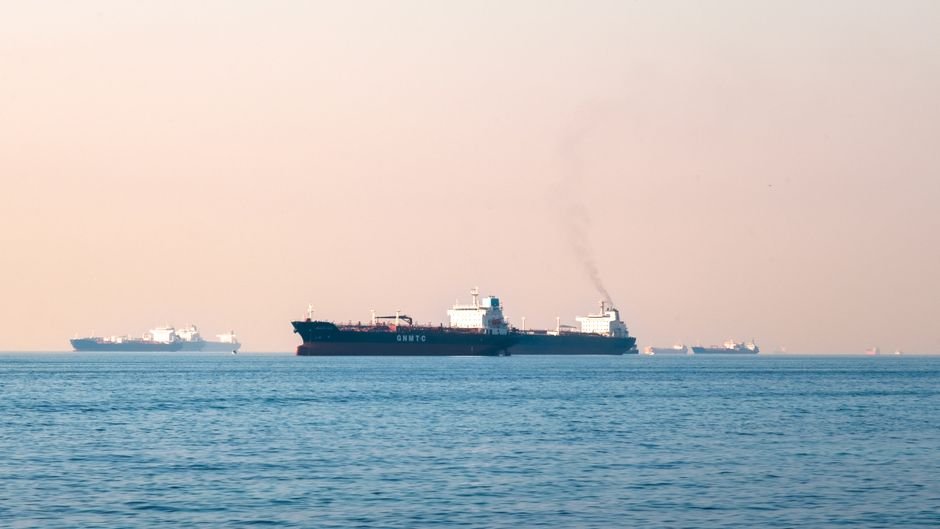
The Strait of Hormuz, the narrow waterway that carries about a fifth of the world’s oil, is close to closed. On Friday, Iran’s Revolutionary Guards said they struck two oil tankers trying to pass through under US military escort, and four more ships turned back rather than risk the run. The claim comes from Tehran alone, with no independent confirmation, but the shape of what is happening is not in dispute: since Washington and Tehran resumed fighting two weeks ago, the strait has become a shooting gallery.
Both sides are running blockades now. Iran attacks shipping on the southern route near Oman’s coast. The United States bombs vessels violating its own blockade of Iranian ships and ports. Each treats the other’s maritime traffic as a legitimate target, and the world’s tanker fleet is caught in the middle. The Guards said the two ships they hit were on an undeclared route under US aerial escort, that both were struck and brought to a halt, and that the four others quickly changed course and returned to their previous positions.
The oil market has noticed. Crude pushed past $90 a barrel on Thursday after US strikes in retaliation for an attack on American bases in Jordan, and energy prices have soared again since the fighting resumed. Gasoline and grocery prices remain high in the United States, where the war is now in its fifth month after being promised to last a few weeks.
The political pressure is building in Washington. Trump gathered his cabinet at Camp David this weekend to discuss the war and its fallout; the White House press secretary described the trip as a lot of fun and something different for the cabinet to experience together. The fun is not shared by the voters. A Reuters/Ipsos poll released this week found only one in three Americans support the war, its lowest level since the conflict began. A Senate war powers resolution asking the president to stop the fighting was narrowly rejected, 49 to 50. Trump told Fox News that all the country can do is keep winning until eventually something happens.
The war is also spreading on the map. Kuwait’s defense ministry said it shot down Iranian drones targeting vital facilities, with no casualties. In Lebanon, Israel carried out a massive detonation near the ancient Beaufort Castle against Hezbollah tunnels, an explosion felt across the south and one that Lebanese officials called a ceasefire violation. In Egypt, an unidentified drone hit two vessels at the Mediterranean port of Damietta, the first time Egypt has been touched by the war; Iran denied involvement. Iran itself is still selling oil, which its own officials say has funded its strikes across the region.
One measure of who profits: ExxonMobil’s profits doubled and Chevron’s more than quintupled compared with a year earlier. War-driven inflation is a political gift to the Democrats ahead of November’s midterms, a point the White House is aware of and cannot fix.
The strait that feeds the world is now a front line. The war that was supposed to be short has turned the world’s oil lifeline into a duel of blockades, with tankers as the pawns and the price at the pump as the bill. Every ship that turns back makes the next one more likely to try, and every strike makes the strait closer to closed. The question is no longer whether Hormuz can be shut. It is what happens to the world economy when it is.