

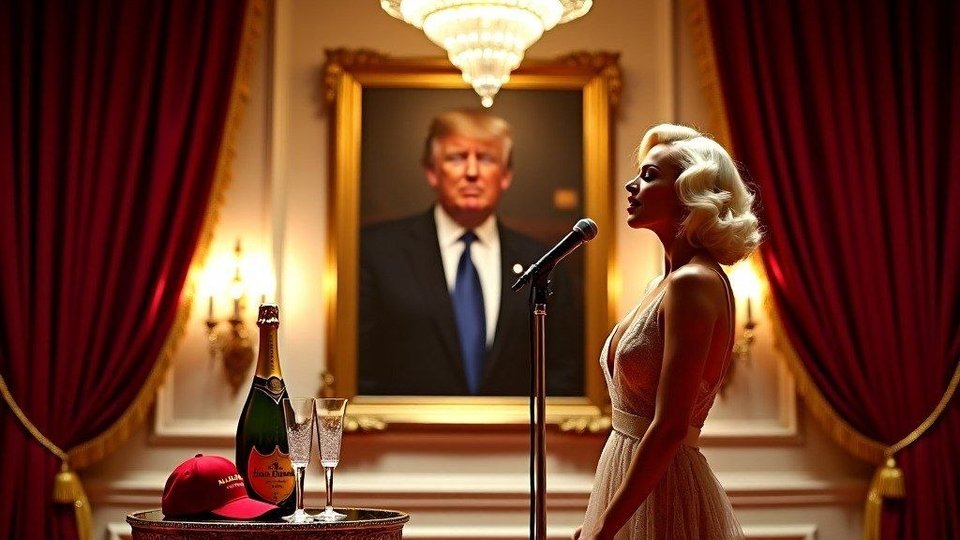
Happy Birthday, Mr. President
Donald Trump turns 80 today. The White House is hosting a UFC fight on the South Lawn to celebrate. A federal lawsuit is trying to stop it. That lawsuit is the least of his problems.
Eighty is an age that demands a reckoning with mortality, whether a man wants one or not. Trump spent the 2024 campaign mocking Joe Biden’s age. Now he is older than Biden was when he left office, and the body is sending signals that no amount of denial can silence.
The bruises on his hands have become a fixture of public appearances. Reporters ask about them. Doctors speculate. In January he addressed the questions directly — the naps, the bruising, the cognitive tests — but the answers did not settle anything. He became the oldest president ever sworn in at 79. He turns 80 as the oldest president ever to hold the office. The job has killed men younger than him. William Henry Harrison lasted a month. Franklin Roosevelt was dead at 63. The body does not negotiate.
The Iran war is in its fourth month. Trump said it would be over in weeks. It is not over.
On Saturday he announced the deal would be signed Sunday. Tehran said it would not. The pattern is by now familiar: Trump declares victory, the facts refuse to cooperate, and the war grinds on. He has canceled strikes and then un-canceled them. He has threatened Iran with annihilation and then offered talks. Two-thirds of Americans now say he has been ineffective in the negotiations. Senator Adam Schiff, a man not given to exaggeration, said this week that Trump is “telling falsehood after falsehood” about the state of the war.
The Strait of Hormuz remains closed. Oil prices remain elevated. The US military is still running escort operations through contested waters. Three months ago the phrase “peace deal” carried the force of promise. Today it sounds like a tic.
The economy is where the trouble touches real people, and real people vote.
A record 63% of Americans disapprove of how Trump is handling the economy, according to the latest YouGov poll. That is the worst number of his presidency on the issue that elected him. Inflation is at a three-year high. Gas prices are still punishing working families. Groceries cost more than they did when he took the oath.
The New York Times reported this week that blue-collar white voters — the demographic that carried Trump to the White House twice — are “seriously doubting” him on the economy for the first time. During the 2018 midterms, this group supported his economic policy by a margin of more than 30 points. That margin has collapsed. The people who believed him when he said he would fix it are no longer sure he can.
The party is crumbling around him, and he may be the last to notice.
Independent voters, the swing bloc that decides American elections, have abandoned him. An Economist/YouGov poll conducted in late May found independents at -50 net approval, an all-time low for that series and a 46-point drop since January 2025. Seventy percent of Americans disapprove of his handling of the cost of living. The middle is not just gone. It has fled.
Republicans in Congress are starting to act like they know it. Senate Republicans postponed a vote on his $1.8 billion immigration enforcement fund in May — a rare public rebuke. An ousted GOP congressman warned of “Trump disappointment syndrome” spreading through the electorate. Non-MAGA Republicans, as Brookings put it, “are drifting from Trump” and their disillusionment could decide the midterms.
The midterms themselves are approaching like a wall. The party fears losing the House. Trump has talked about not holding the elections at all — a remark that drew condemnation from both sides but also revealed something about how he sees the problem.
And the 2028 jockeying has already begun. Ted Cruz, once a loyal soldier, is breaking with Trump on down-ballot endorsements. The Republican Party is positioning for a future without the man who remade it in his image, and they are doing it while he still sits in the Oval Office. That is the kind of signal a politician cannot miss. That he appears to be missing it is its own kind of message.
The monuments are getting his attention, even if the war is not.
The National Park Service is spending at least $67 million from park entrance fees on Trump’s Washington beautification projects: nearly $60 million to repair nine ornamental fountains, another $7 million to renovate the Lincoln Memorial Reflecting Pool. The contract for the reflecting pool was awarded without competitive bidding to a Virginia firm that charged a 20% profit margin — double the typical federal rate — adding at least $850,000 to the cost.
The Park Service has a $23 billion backlog of deferred maintenance. Bathrooms, campgrounds, roads, visitor centers — all waiting. But nine fountains in Washington, visible from the White House windows, come first.
There is also a bill in Congress to carve Trump’s face onto Mount Rushmore. It has not passed.
The insider trading question will not go away.
The BBC published an investigation this year showing that traders have been placing multimillion-dollar bets just before Trump’s market-moving announcements. The most flagrant example: $580 million in oil futures were sold short 15 minutes before Trump posted about postponing strikes on Iran, causing oil prices to fall. Someone — or some group of people — knew what was coming and acted on it.
Trump has made 3,642 stock trades in companies he has promoted while in office. When asked about the insider trading reports, his response was: “I’m not happy about it, but it is what it is.”
That is not a denial. It is not an investigation. It is a shrug from a man who has spent a lifetime testing the line between influence and corruption and has never been sure where the line is.
And then there is Epstein.
Trump’s name appears more than 5,300 times in the files released over the past year — mentions in news clippings, witness interviews, FBI reports, and third-party material. He is referenced more than 1,000 times in the 3 million documents that dropped in January, after he initially resisted their release. His daughter Ivanka and son-in-law Jared Kushner also appear in the Epstein orbit, their social and business connections documented in the record.
None of this establishes criminal liability. That is what his lawyers will say, and they will be telling the truth as far as it goes. But the truth has a way of not mattering once the smell is in the air.
Epstein is the kind of story that does not end. It does not settle. It sits in the background, waiting for the next document dump, the next witness, the next report. Trump has survived many things. He survived the Access Hollywood tape. He survived two impeachments. He survived a criminal conviction on 34 felony counts — a conviction that still stands as of mid-2026, despite appeals, because a judge sentenced him to unconditional discharge, which is the legal system’s way of saying “we found him guilty but we are not going to punish him.”
He survived all of that. The Epstein files may be different. Not because the evidence is damning — it is not, at least not yet — but because the weight of association, the sheer volume of references, the unshakeable sense that Trump moved through the same circles as a man who ran a sex trafficking operation for decades, is the kind of thing that follows a president into the history books and stays there.
It may be the thing that finally breaks him. Not politically. Not legally. But historically.
Happy birthday, Mr. President. The cake is on the South Lawn. The lawsuit is at the courthouse. The war is in its fourth month. The polls are in freefall. The party is looking for an exit. The body is sending signals. And the files keep coming.