

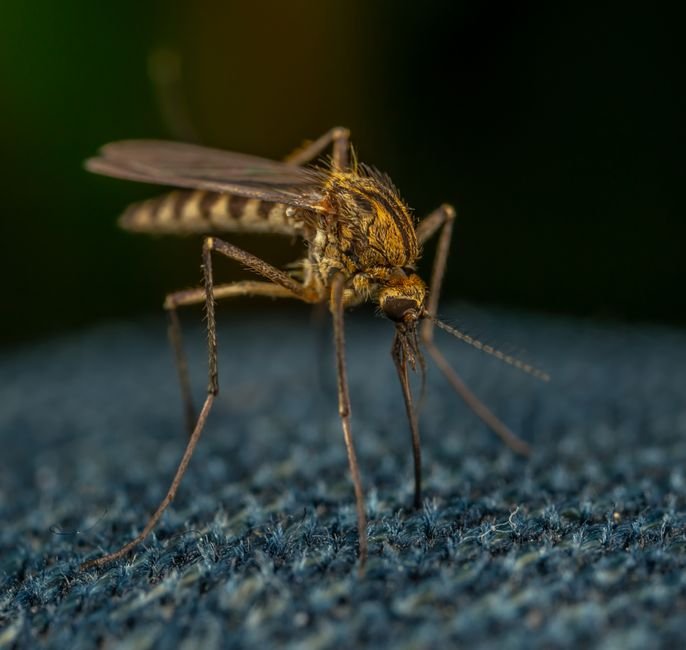
Google’s Verily life sciences division is seeking EPA approval to release 32 million lab-bred male mosquitoes in California and Florida to suppress the Aedes aegypti populations that transmit dengue, Zika, and chikungunya. The science behind the proposal has already been demonstrated at scale. Whether the regulatory system can move as fast as the mosquitoes breed is the open question.
The technique, known as the Incompatible Insect Technique (IIT), uses a naturally occurring bacterium called Wolbachia. Wolbachia is found in roughly 60% of insect species, butterflies, bees, beetles, but not in Aedes aegypti. Scientists inject the bacterium into mosquito eggs, and the resulting males, when released into the wild, mate with females that lack the same Wolbachia strain. The reproductive mismatch means no viable offspring.
Male mosquitoes do not bite or transmit disease. The approach is species-specific, only Aedes aegypti is affected, and leaves no chemical residue. It is as close as pest control gets to a surgical strike.
What Australian trials proved
Professor Nigel Beebe of the University of Queensland led a Verily-backed field trial in far north Queensland starting in 2018. Over 20 weeks, the team released approximately 3 million Wolbachia-carrying males across three treatment towns. The results, published in the Proceedings of the National Academy of Sciences in 2021, showed measurable population decline within four weeks and approximately 95% suppression of Aedes aegypti in one town 12 months later. Suppression carried into the following season in two of three treatment sites.
Verily contributed machine-learning systems that solved a critical bottleneck: separating male from female mosquitoes during production, since releasing biting females would undermine the entire program.
The Queensland trial demonstrated that the biology works. What Google is now asking is whether the regulatory system can authorize an operation 10 times larger, 16 million mosquitoes per year across two states.
The regulatory path
The Wolbachia approach is not unregulated territory. The EPA has classified Wolbachia-infected mosquitoes as biological pesticides under the Federal Insecticide, Fungicide, and Rodenticide Act (FIFRA). An experimental use permit for Wolbachia mosquitoes was first issued in 2015 to the University of Kentucky for testing in Fresno County, California, and was expanded in 2016 to include sites in Orange County, California, and Monroe County, Florida.
That earlier permit established a precedent. The EPA determined that the releases presented “minimal risks to non-target organisms and the environment.” But the scale of Google’s proposal, 32 million insects over two years, is an order of magnitude larger than any previous US trial, and the EPA’s public comment period on the application closed on June 5, 2026.
The agency has not yet announced a decision. If approved, the permit would require coordination with the California Department of Pesticide Regulation and the Florida Department of Agriculture and Consumer Services, both of which have authority over field releases within their states.
The broader toolkit
The Wolbachia approach (IIT) is one of several emerging technologies for mosquito control. Radiation-based Sterile Insect Technique (SIT) uses gamma rays to sterilize males. Genetically modified mosquitoes, developed by companies like Oxitec, carry a lethal gene that prevents female offspring from surviving.
Each faces a different regulatory track. GM mosquitoes require EPA Experimental Use Permits plus USDA review. SIT for agricultural pests has been used for decades with minimal regulation, but applying it to human disease vectors brings new scrutiny. Wolbachia IIT, because the bacterium is classified as a pesticide, falls under EPA jurisdiction but avoids the public opposition that genetic modification sometimes attracts.
A 2019 Nature paper demonstrated that combining IIT and SIT, irradiating Wolbachia-infected males, can eliminate the risk of accidental female release, since any inadvertently released Wolbachia-infected females are rendered sterile by the radiation. The combined approach achieved near-elimination of Aedes albopictus on two Chinese islands. Google’s application does not propose the combined approach.
Community engagement as infrastructure
The Queensland trial’s most important finding may have been non-technical. The project required two years of community engagement, coordination with six universities and local councils, and approval from multiple regulatory layers. Beebe described collaboration as “perhaps the most important lesson.”
The challenge for the US rollout is that the communities Google proposes to release in, densely populated urban and suburban areas of California and Florida, are different from the agricultural isolation of far north Queensland. Public concerns about mosquito releases, even of non-biting males, are real and will need to be addressed at the local level, not just the federal one.
As Aedes aegypti expands its range and conventional insecticides lose effectiveness due to resistance, the biological approach has become increasingly attractive. The question is whether the US can match the technical readiness of the science with regulatory and community readiness to deploy it.