

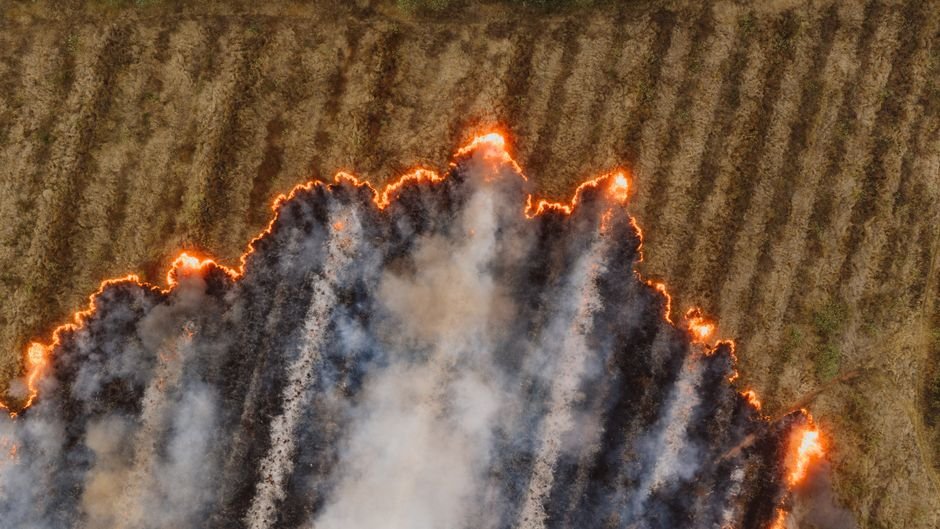
The northeastern United States faced a double dose of dangerous weather on Saturday as flash flood warnings struck areas already choking under wildfire smoke drifting south from Canada.
New York City and the surrounding Tri-State area spent the morning under unhealthy air quality alerts as smoke from more than 150 active wildfires in Ontario blanketed the region. By afternoon, severe thunderstorms swept through, bringing flooding downpours, damaging winds, and the risk of isolated tornadoes.
The combination is unusual even by the standards of a summer that has already featured extreme heat across the region. Nearly a third of Americans have been under some level of air-quality alert in recent days, according to Reuters, from the Great Lakes down to Washington, D.C.
New Jersey, New York City, and southern Westchester went under flood watches ahead of the storms. The National Weather Service warned that thunderstorms could produce rapid flooding in low-lying areas already saturated by previous rains. The greatest risk for severe weather was expected between 4 p.m. and 9 p.m. Saturday.
The air quality was bad enough that New York health officials urged residents to wear N95 masks outdoors and keep windows closed, the same advice issued during the peak of the 2023 Canadian wildfire season. City libraries distributed free masks across all five boroughs. The New York State Department of Environmental Conservation issued an air quality health advisory for fine particulate matter covering the New York City metro, Long Island, and western and central New York regions.
“We are seeing unhealthy levels of fine particulate matter across a broad area,” the advisory said. The elderly, children, pregnant women, and people with heart or lung conditions were told to stay indoors.
The two weather events are connected by more than bad luck. Wildfire smoke can suppress daytime temperatures and affect storm formation, while the same weather systems that flush smoke out of the region can trigger severe thunderstorms. On Saturday, the cleanout arrived in the form of violent storms.
The broader context is a summer of extremes across North America. Canada’s wildfire season, running April through October, has produced persistent smoke plumes that drift into the United States whenever wind patterns shift. While total wildfire activity across Canada is below the seasonal average this year, Ontario has seen concentrated outbreaks that send smoke directly over major population centers.
Meanwhile, the warming climate is making both wildfires and flash floods more common and more intense. The twin disasters hitting the northeast on a single Saturday are not a freak occurrence anymore. They are the new normal.