

Doctors routinely tell older patients to exercise for better sleep. It is intuitive advice: physical activity burns energy, reduces stress, and improves cardiovascular fitness, all of which should translate into deeper, more restorative rest. But a new study from Taiwan suggests the relationship is not quite that simple.
The study, published July 25 in the Asia Pacific Journal of Public Health, tested whether an eight-week multicomponent group exercise program could improve both physical performance and sleep quality in community-dwelling older adults. The answer was mixed. Physical strength and mobility improved meaningfully. Sleep quality, measured by the Chinese version of the Pittsburgh Sleep Quality Index (CPSQI), also improved on paper. But it never crossed the threshold into the good-sleep range, and participants continued to report nighttime disturbances from nocturia and joint pain. The finding is a null result, but it is a revealing one.
What They Found
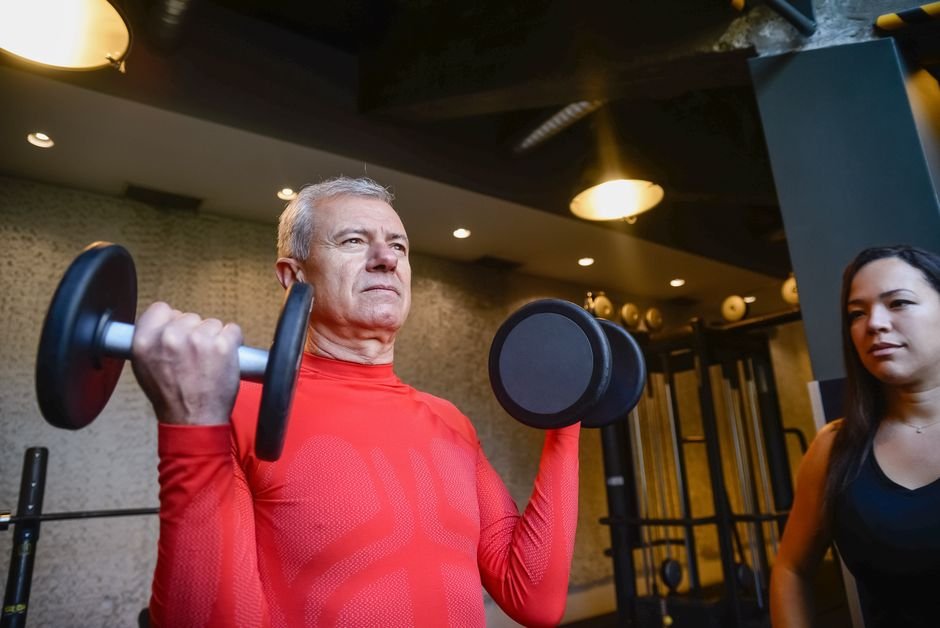
Researchers recruited 80 older adults (median age 77, 84 percent women) from four community care sites in central Taiwan and assigned them to an exercise group or a control group that continued usual activities. The exercise program met once weekly for 100-minute sessions combining warm-up stretching, 45 minutes of aerobic training (whole-body vibration plus treadmill or stationary bicycle), 35 minutes of resistance work on isokinetic devices with smart progressive-overload panels, and a cooldown. Intensity was self-monitored at a moderate level of perceived exertion.
The physical results were clear. Within the exercise group, gait speed improved from 3.55 to 4.00 seconds (p = .001), 30-second arm curl repetitions rose from 22 to 25 (p < .001), grip strength increased from 23 to 26 kilograms (p = .001), and heart rate recovery after exercise improved by 31 percent, from 14 to 19 beats per minute (p = .036). Between-group comparisons at the end of the trial confirmed that exercisers outperformed controls on arm curls (p = .002), grip strength (p = .020), and tandem stand balance (p = .027).
Sleep was a more complicated story. The exercise group’s median CPSQI score dropped from 7 to 5.5 (p = .009), and this was significantly better than the control group’s median of 7 (p = .042). But the CPSQI uses a cutoff of 5 to distinguish good sleepers from poor sleepers. Both groups remained above that line. The exercisers were still, on average, poor sleepers. When participants were asked about their persistent sleep difficulties, they pointed to nocturia (frequent nighttime urination) and joint pain as the primary culprits, factors that no amount of treadmill time could directly address.
Several physical measures also failed to show significant improvement: balance (beyond the tandem stand), chair stand performance, and the 2.44-meter timed walk remained unchanged, likely because the participants already had high baseline function in these domains, creating a ceiling effect.
Why It Matters
The results raise a practical question for public health programs aimed at older populations. If moderate exercise improves muscle strength and cardiovascular recovery but leaves sleep quality in the poor range, then relying on exercise alone as a sleep intervention may be insufficient for many older adults.
Poor sleep in later life is not merely an inconvenience. It is linked to higher risks of falls, cognitive decline, cardiovascular disease, and mortality. The prevalence of sleep complaints among older adults in community settings is high, and the causes are often multifactorial: medication side effects, nocturia from age-related bladder changes, chronic pain from osteoarthritis, and circadian rhythm shifts. An exercise program that addresses only the physical activity component of this complex system may move the needle on strength without moving it on sleep.
The study’s design is worth noting. At 100 minutes per week, the exercise dose was modest by some standards, though typical for community-based programs. Longer or more frequent sessions might produce larger sleep effects, the authors note. And the participants were predominantly women, which limits generalizability to older men.
The results also underscore a measurement issue. The CPSQI is a subjective, self-reported instrument. It captures how people feel about their sleep, not necessarily how they sleep. Objective measures such as actigraphy or polysomnography might detect improvements that subjective questionnaires miss, or conversely, confirm that sleep quality genuinely remained poor despite the physical gains.
Limits
This was a quasi-experimental design, not a randomized controlled trial, so unmeasured differences between groups could have influenced the results. The sample was relatively small (80 participants) and drawn from a single region of Taiwan. The eight-week intervention was relatively short for producing robust changes in sleep, which often requires longer habituation. And the sleep assessment relied entirely on self-report, which can be influenced by mood, expectations, and memory.
Bottom Line
Exercise remains one of the most widely recommended nonpharmacologic interventions for sleep problems in older adults, and this study does not contradict that guidance. Physical function improved, and sleep quality did trend in the right direction. But the fact that it stayed in the poor-sleep zone after eight weeks of supervised, professionally designed exercise sessions suggests that for many older adults, sleep requires more than a workout. Addressing nocturia, joint pain, and other age-related sleep disruptors may be just as important as getting them moving.
Source
Tseng YL, Chen KM, Wu MH, Liu J, Liang YC, Moyle W. The Effects of a Multicomponent Group Exercise Program on Physical Performance and Sleep Quality in Older Adults in Taiwan. Asia Pac J Public Health. Published online July 25, 2026. doi:10.1177/10105395261469631. PMID: 42500854. ClinicalTrials.gov NCT07598123.