

Update to our June 25 report on Europe’s extreme heat wave. The following developments have emerged since the morning article.
The heat wave gripping Western Europe intensified sharply on June 24, with the United Kingdom recording its hottest June day in history, 36.1 °C (97 °F) in Gosport, Hampshire, beating the previous June record of 35.6 °C set in 1976. Temperatures reached 36 °C at Wisley in Surrey and 35.9 °C at Wiggonholt in West Sussex. Wales recorded its hottest day of the year at 33.3 °C in Cardiff. Forecasts suggest the heat could climb further to 38 °C on Friday, with “feels-like” temperatures exceeding 40 °C in parts of England and tropical nights above 20 °C.
The Met Office issued a red extreme heat warning for parts of southern and central England and south Wales, only the second red warning since the system was introduced in 2021. Chief forecaster Matthew Lehnert noted that high humidity makes the heat “much more potent.”
The heat dome
The driver is a stalled heat dome, a powerful upper-level ridge pulling scorching air north from North Africa and parking it over Western Europe. Between June 20 and 23, Spain and Portugal pushed toward 44 °C, with 42.7 °C recorded at Pinhão in Portugal and Andújar in Spain. France recorded 40-44 °C across 49 of 96 mainland departments, its hottest day since 1947. Because the system is stationary, heat has accumulated rather than dispersing, each day starts warmer than the last, and nights offer little relief.
Infrastructure buckling
The impacts are cascading across multiple systems simultaneously.
Power: The Golfech nuclear reactor in southern France remains shut down after the Garonne River reached 28 °C, exceeding regulatory discharge limits. A heat-related power outage left roughly 68,000 homes without electricity in western France. The UK’s five gas plants that reduced output by 2.5 GW remain constrained. France’s grid operator RTE says the country can still meet demand, but the July 2025 heat wave forced 7 GW of nuclear offline, a warning of how narrow the margin has become.
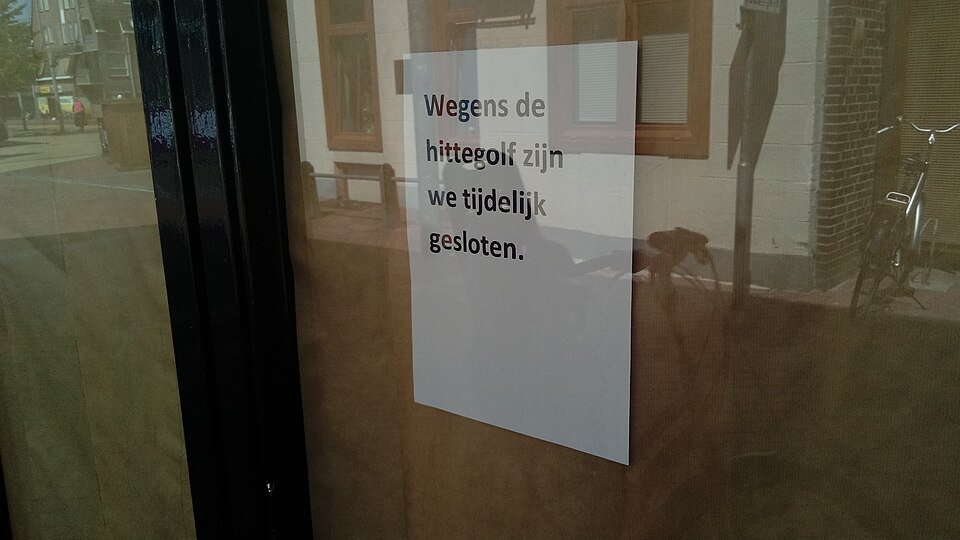
Schools: More than 800 schools in England announced closures or early dismissals. The Department for Education said hot weather can “usually be managed safely” but left decisions to individual schools.
Transport: Major rail operators, South Western Railway, Thameslink, Northern, and Avanti West Coast, advised passengers to make only essential journeys. Network Rail issued the same guidance for Thursday and Friday within the red warning zone. London’s Tube and rail services face potential disruption. On the M25 at Godstone, Surrey, passengers stranded after a crash were treated for heat-related illnesses.
Climate context
Met Office chief scientist Stephen Belcher said of the UK reading: “To see temperatures like this in the UK in June is sobering.” Between 2015 and 2024, the number of days exceeding 30 °C in the UK more than trebled compared with the 1961-1990 average. Europe is the fastest-warming continent, heating at roughly twice the global average.
Emma Howard-Boyd of the UK’s National Heat Commission said the country is “not prepared”, the school and transport closures demonstrate the need to retrofit infrastructure with extreme heat in mind. EDF estimates it will need to spend roughly 600 million euros per year for 15 years to climate-proof its nuclear and hydropower operations.
The heat dome is expected to persist through the weekend, with the hottest day possibly still ahead.
Sources: BBC News, Met Office, MIT Technology Review, CNBC, Mappr/Weather Atlas