

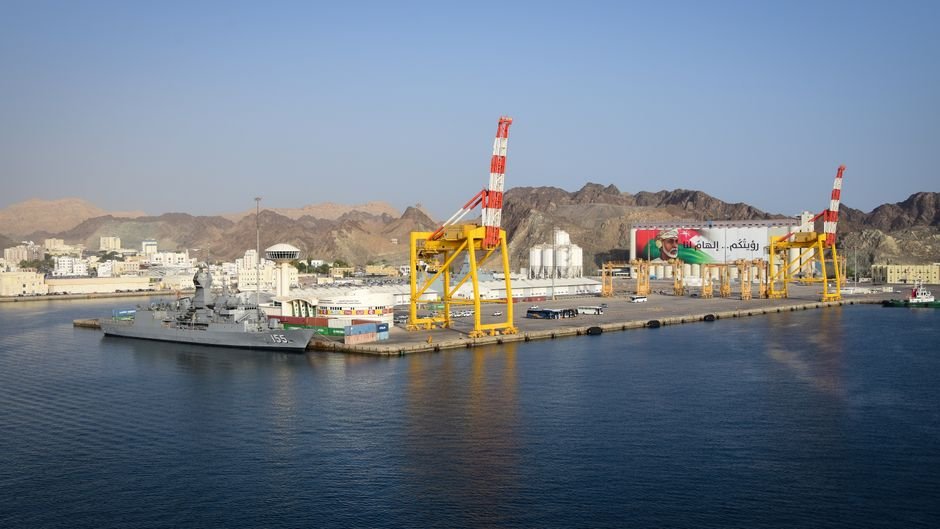
The European Union has ordered a 24-hour delay on the release of certain satellite imagery from its Copernicus Earth observation program over the Gulf of Oman, acceding to a U.S. request tied to the ongoing conflict with Iran.
The decision, signed July 13 by Council President Kaja Kallas and confirmed in a July 20 Council document, marks an exception to Copernicus’ normally free and open data policy. It covers a specific area defined by five sets of latitude and longitude coordinates encompassing shipping routes to and from the Strait of Hormuz.
Security Concerns
U.S. authorities submitted the request through a diplomatic demarche on May 26, citing concerns that the satellites’ output could pose a security risk. The request was processed through the EU’s Space Threat Response Architecture, a framework allowing the Council to issue security instructions affecting EU space systems. The EU’s Political and Security Committee backed the proposed restriction on June 10.
The Council said the delay was necessary to prevent Copernicus products from being used by any third state or non-state actor in a manner that could threaten the interests of the EU, its member states, or their allies in the region.
A European Commission spokesperson characterized the measure as routine. “This is a technical measure to protect against possible security risks,” the spokesperson said. “It is a common measure, also being taken by many other satellite operators.”
A Shift for European Positioning
The restriction complicates recent efforts by European Earth observation companies to position Europe as a counterpoint to the United States by providing unrestricted access to satellite imagery. In March, shortly after direct military conflict between the U.S. and Iran began, Planet imposed a 96-hour delay on new imagery of the region, later escalating to indefinite withholding. Vantor, formerly Maxar, imposed similar restrictions.
In May, European Earth observation firms told SpaceNews they were receiving new business from global energy traders, insurers, shipping firms, and news organizations that had depended on U.S. commercial imagery to monitor the Strait of Hormuz. “The good news is that in Europe we have Copernicus, which kept operating with no restrictions,” Antoine Rostand, president and co-founder of French environmental intelligence company Kayrros, said at the time.
The July 13 decision changes that picture. The published document does not specify when the delay took effect, how long it will remain in force, or when it will be reviewed.