

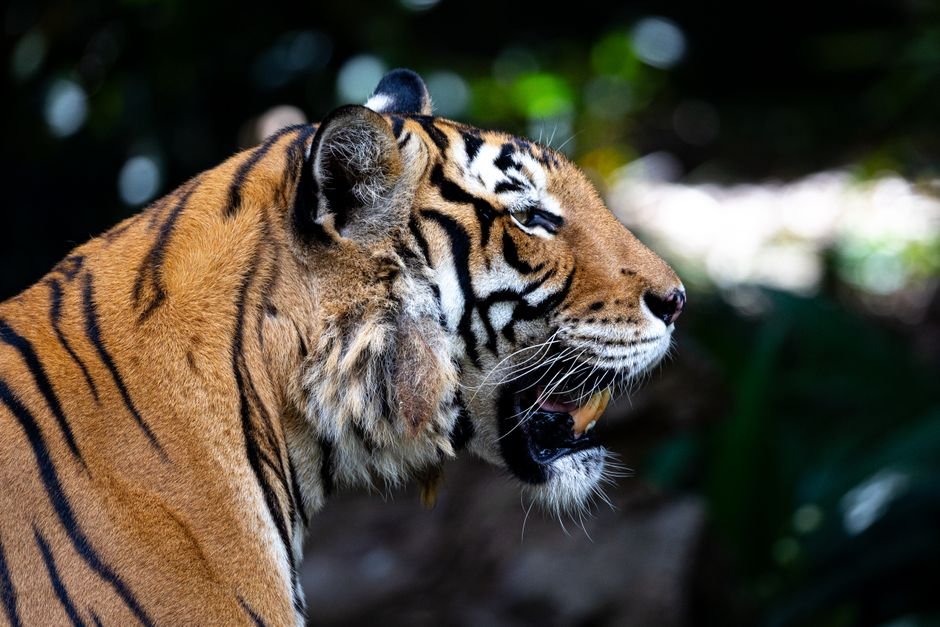
Colombia’s new president is 48 years old, a lawyer by training, a political novice by experience, and he calls himself The Tiger. Abelardo de la Espriella took the oath Friday in Cali, in the country’s volatile southwest, under heavy security, and delivered his first speech before an audience of soldiers. His message, repeated in the days since, is a promise of force: bomb the narco-terrorist camps, destroy the coca plants, and eliminate any bandit who refuses to surrender. He has warned that those who do not submit will be eliminated, and that no one will be able to say they were not warned.
The Tiger’s path to the presidency runs through the courtroom, not the campaign trail. Espriella built a fortune as a defense lawyer whose clients included drug-trafficking paramilitaries, footballers and fraudsters. He entered politics late, campaigned on a platform of order and security, and won in June with the endorsement of Donald Trump, who predicted a much better relationship with Colombia under its new leader. He holds dual American nationality, something that draws attention in a country with a long memory of US intervention, and he has turned the military salute into his signature gesture.
His program reads like a list of everything his predecessor, Gustavo Petro, did not do. Where Petro opened peace talks with armed groups, Espriella rules out negotiation and promises a crackdown. Where Petro clashed with Washington and criticized Israel, Espriella seeks a strategic alliance with both. He has promised ten mega-prisons, an ultraliberal economic agenda with deep budget cuts, and a return to conservative social values centered on family and Catholicism. The country he inherits is the world’s leading producer of cocaine, with more than 330,000 hectares under coca cultivation, and he has said the eradication will begin with the plants themselves, the source of the violence he has pledged to end.
The ceremony itself broke every precedent. The oath was administered not by the usual officials in Bogota but by the president of the Senate, in the theater of a private university in Cali, after Congress voted to move the inauguration to the west. The vice president who took office beside him, Jose Manuel Restrepo, brought his own weight to the ticket. The setting was chosen deliberately: Cali sits close to the territories where the armed groups he has vowed to crush operate, and the ceremony sent the message that the new government will go to the fight rather than wait for it to come to the capital.
The French coverage of his arrival, and the English-language reporting that followed, agree on the essentials but differ on the interpretation. Some see a strongman with a plan; others see a novice with a temper, protected behind bulletproof glass, whose confrontational style could deepen the divisions of an already polarized country. The guests at his inauguration told their own story: the president of Argentina, conservative leaders from across the region, and the head of world football were all in Cali, a gathering that looked less like a national ceremony than a meeting of the hemisphere’s right.
The real test is not the rhetoric but the war he has promised. Colombia’s armed groups have survived half a century of campaigns against them, outlasting governments of every stripe, and they know the terrain far better than any newly sworn-in lawyer. The United States has pledged a billion dollars in support, and Washington has described the new era in relations in terms that match Espriella’s own. Whether The Tiger’s war breaks the drug economy or simply feeds it, whether the promise of force ends the violence or adds to it, is the question his presidency will answer. The speech is over. The bombing of the coca fields, if it comes, has not yet begun.