

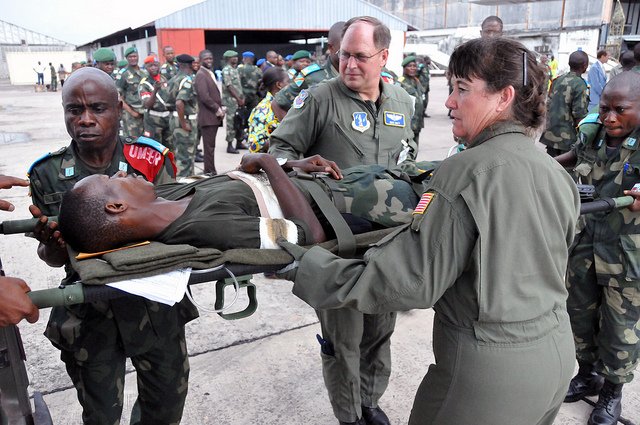
The Bundibugyo ebolavirus outbreak in the Democratic Republic of the Congo and Uganda, declared a Public Health Emergency of International Concern on May 17, has now reached 1,118 confirmed cases and 291 fatalities in the DRC, with 20 additional cases and 2 deaths in Uganda, making it the third-largest Ebola outbreak ever recorded. Next week, a randomized clinical trial will begin testing two treatments against a virus for which no proven therapy exists.
The trial uses the PARTNERS adaptive platform protocol, originally developed for the 2022 Sudan ebolavirus outbreak in Uganda and the 2024 Marburg outbreak in Rwanda. It will enroll approximately 1,000 participants across four arms: MBP-134 alone (a pan-ebolavirus monoclonal antibody cocktail from Mapp Biopharmaceutical), remdesivir alone (the Gilead Sciences antiviral), the two drugs in combination, and supportive care alone as the control.
What MBP-134 is
MBP-134 is a two-antibody cocktail, ADI-15878AF and ADI-23774AF, both isolated from a human survivor of the 2013-2016 West Africa Ebola outbreak (Zaire ebolavirus). They target distinct, non-overlapping epitopes on the ebolavirus glycoprotein and have been engineered for enhanced immune effector function. In non-human primates, a single dose of MBP-134 protected against all three ebolaviruses known to cause human disease, Zaire, Sudan, and Bundibugyo, even when given seven days after infection, when animals were already viremic and showing clinical signs. Thomas Geisbert of the University of Texas Medical Branch, a virologist who has studied Ebola countermeasures for decades, described MBP-134 as having “by far the strongest preclinical data for any of the treatments or therapies” against the Bundibugyo species.
MBP-134 was used under compassionate access during the 2022 Sudan ebolavirus outbreak in Uganda, though that outbreak ended before efficacy could be assessed. It remains unapproved by the FDA. The doses for this trial are supplied by the U.S. government through BARDA (the Biomedical Advanced Research and Development Authority), which funded the research and owns the doses MappBio produced.
Why remdesivir is back
Remdesivir was among the drugs that disappointed in the PALM trial during the 2018-2020 Zaire ebolavirus outbreak in the DRC, failing to show a survival benefit. However, it is more potent against Bundibugyo ebolavirus in vitro than against Zaire ebolavirus. The trial will test whether it performs differently against this distinct species.
The logistics
The trial is being conducted by a consortium including the DRC’s National Institute of Biomedical Research (INRB), the Alliance for International Medical Action (ALIMA), and the University of Oxford, with Peter Horby and Amanda Rojek, who led the UK Recovery trial for COVID-19, among the investigators. ALIMA, Doctors Without Borders (MSF), and Samaritan’s Purse will enroll participants in treatment units across northeastern DRC, an area complicated by political instability, displaced populations, and food shortages.
The protocol has ethics board approval in the DRC and is awaiting regulatory approval. Vasee Moorthy, acting lead of the WHO R&D Blueprint group, told STAT that investigators expect roughly 1,000 participants will need to be enrolled before an answer on safety and efficacy can be reached. The higher enrollment target reflects the fact that Bundibugyo ebolavirus has a lower apparent case fatality rate than Zaire ebolavirus, making a survival benefit harder to detect.
What is not in the trial
Maftivimab (Regeneron), a component of the approved Inmazeb cocktail for Zaire ebolavirus, was also prioritized by the WHO Technical Advisory Group but is not included in the initial trial arms. A follow-up WHO meeting has been planned to discuss adding it. Separately, a parallel post-exposure prophylaxis trial (EBO-PEP BUNDI) using Gilead’s oral obeldesivir is being planned, sponsored by ANRS.
Disclosure: Based on reporting from STAT News, Science/AAAS, WHO documents, and published preclinical data from USAMRIID/Cell Host and Microbe (2019).
Source: Branswell, H. Clinical trial set to test two drugs for fast-growing Ebola outbreak. STAT News (2026). Link