

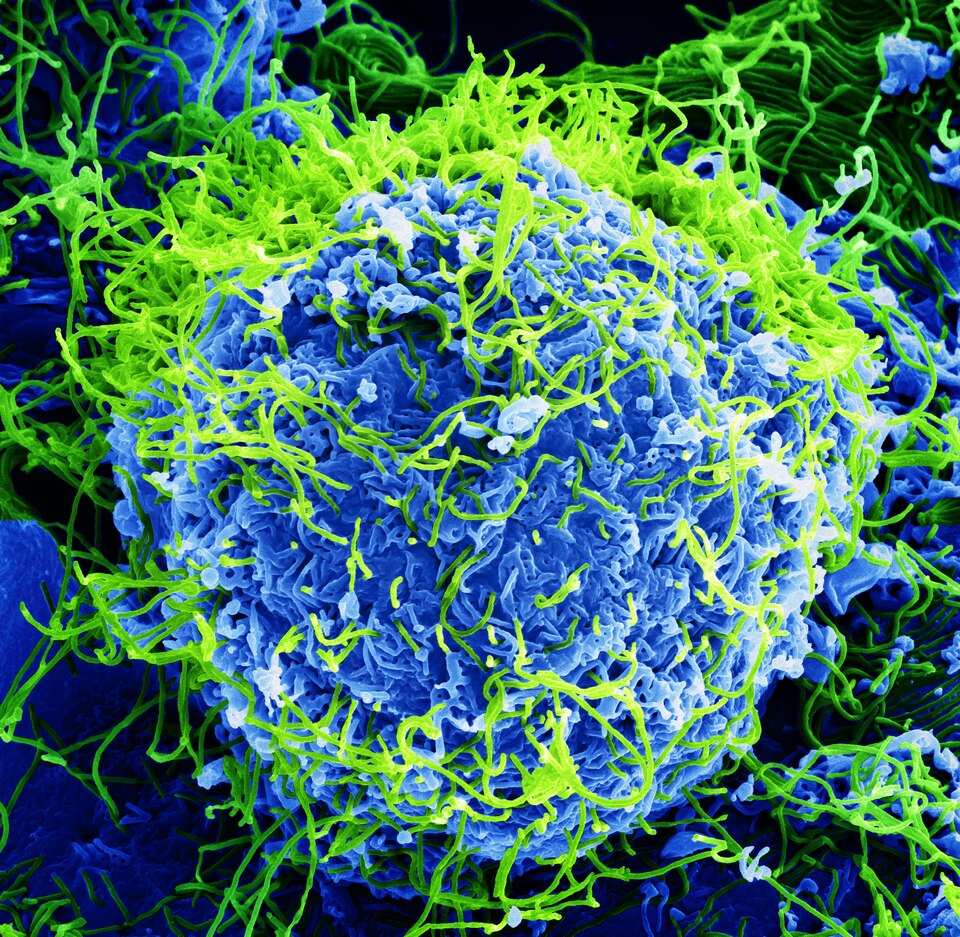
You can read the entire published scientific literature on the Bundibugyo virus in an afternoon. That is not hyperbole. Before the current outbreak began in late April 2026, the virus had surfaced only twice in human history: in a 2007 outbreak in western Uganda that infected 149 people and killed 37, and in a 2012 outbreak in the Democratic Republic of Congo that sickened roughly 77 and killed 29. The total number of confirmed cases from both prior outbreaks combined barely reached 200.
The current outbreak has already surpassed all prior records. As of mid-June, the DRC has reported 782 confirmed cases and 181 deaths in Ituri, North Kivu, and South Kivu provinces, with an additional 19 confirmed cases and 2 deaths in neighboring Uganda. The case fatality rate among confirmed cases stands at approximately 23% — lower than the 25-51% seen in previous Bundibugyo outbreaks and far lower than the 50-70% typical of the Zaire ebolavirus, the species responsible for most Ebola epidemics.
Lower mortality sounds like good news. In practice, it may make the outbreak harder to contain.
Bundibugyo virus (BDBV) is one of four ebolaviruses that cause disease in humans. Genetically, it differs from Zaire ebolavirus by more than 30% of its nucleotide sequence. In non-human primates, Bundibugyo kills in 9 to 17 days — slower than the Zaire virus, which can kill in 5 to 8 days — and roughly 25% of infected animals survive even at standard challenge doses, whereas Zaire is almost universally lethal. Clinically, the diseases are indistinguishable: fever, vomiting, diarrhea, bleeding, and multi-organ failure.
“Sudan virus disease looks like Ebola virus disease looks like Bundibugyo virus disease, to the best of my knowledge,” said Dr. Armand Sprecher of Doctors Without Borders / Medecins Sans Frontieres.
The lower lethality has a dark side. Milder symptoms may cause patients to delay seeking care, keeping them in their communities longer and spreading the virus to more people. It may also mean that Bundibugyo is inherently more transmissible than Zaire — though researchers caution that the behavioral confound is hard to disentangle from the biological one.
The outbreak was declared a Public Health Emergency of International Concern by the World Health Organization on May 17, 2026. The Africa CDC followed the next day.
A Scientific Vacuum
Because the virus has appeared so rarely, almost nothing is known about its basic biology. No licensed vaccine exists. No approved therapeutic exists. The licensed Zaire ebolavirus vaccine (Ervebo, based on recombinant vesicular stomatitis virus) is unlikely to protect against Bundibugyo. The two approved monoclonal antibody cocktails for Zaire (mAb114 and REGN-EB3) are similarly untested against BDBV.
Even basic diagnostics were compromised at the start of the outbreak. Standard PCR tests for Zaire ebolavirus do not detect Bundibugyo. Confirmation of the index case — a healthcare worker whose symptoms began on April 25 — took until May 13, a four-week detection gap that allowed the virus to establish a foothold.
“What makes this outbreak different from the previous Zaire Ebola outbreaks is that we don’t know enough about this virus,” said Dr. Salim Abdool Karim, chair of the Africa CDC’s Ebola advisory panel. “That is the hazard.”
What Scientists Hope to Learn
The current outbreak, the third-largest Ebola outbreak of any species ever recorded, is a tragedy. But it is also a scientific window that may not open again for decades.
Researchers have a long list of questions they hope to answer. Does Bundibugyo persist in immune-privileged tissues — semen, eyes, brain — after recovery, as the Zaire virus does? Zaire ebolavirus RNA can be detected in semen for more than 500 days after infection, causing sexual transmission. There is no data at all on Bundibugyo persistence. This outbreak will provide the first cohort of survivors long enough to study.
The natural reservoir of all ebolaviruses remains unknown. Bats are the leading suspect, but no definitive host species has been identified for any filovirus. Bundibugyo’s outbreaks cluster in a specific border region between Uganda and the DRC, raising the possibility that its ecological niche is more constrained than Zaire’s — and thus potentially easier to identify.
Initial genomic sequencing confirms that this is a new spillover event, not a chain of transmission from prior outbreaks. The sequences are distinct from those obtained in 2007 and 2012, meaning the virus has been circulating in its animal reservoir for years or decades without being detected.
Then there is the question of immune protection. The fact that some non-human primates survive Bundibugyo infection while none survive Zaire provides a unique window into what immune responses protect against ebolaviruses. A 2021 study in the journal mBio found that survival correlated with early activation of adaptive immunity and reduced signaling by myeloid-derived suppressor cells — a finding that could inform vaccine design for all ebolaviruses.
Lessons From Berlin
The fragility of these research opportunities was illustrated by a single case: an American healthcare worker, Dr. Peter Stafford, who was evacuated from the outbreak zone and treated at Charite University Hospital in Berlin. His blood sample was circulated to all German BSL-4 laboratories for viral characterization. The virus could not be cultured, possibly because of experimental antibody treatment he received before evacuation.
Dr. Leif Erik Sander, who treated Stafford, said the inability to grow the virus meant researchers lost a rare opportunity for direct characterization of a circulating strain.
What to Call It
There is also a debate about the name. In 2023, the International Committee on Taxonomy of Viruses renamed the species to remove “Ebola” from the formal name — it is now simply “Bundibugyo virus.” The WHO toggles between “Bundibugyo virus disease” and “Ebola disease caused by Bundibugyo virus.”
Dr. Jens Kuhn, a virologist who spent years at the NIH’s Integrated Research Facility studying filoviruses, argues the distinction matters.
“I don’t think it’s helpful to call this an Ebola outbreak,” he told Science. “Ebola is very much associated with stigma, and Bundibugyo is not yet.”
Sources: (1) Kupferschmidt K. Big Ebola outbreak puts spotlight on little-known virus. Science. 2026;372(6547):1101. DOI: 10.1126/science.zf50rfz. (2) Zomahoun DL, Boyd MA, Honein MA, et al. Notes from the Field: Outbreak of Ebola Disease Caused by Bundibugyo Virus — DRC and Uganda, May 2026. MMWR. 2026;75(22):293-294. (3) CDC/WHO situation reports as of 13-14 June 2026.