

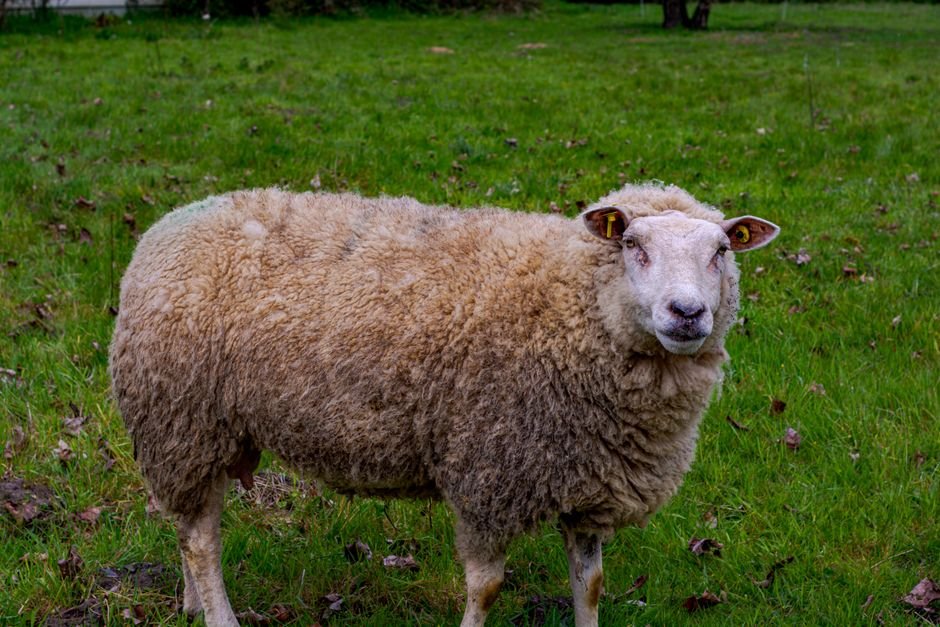
On July 5, 1996, a lamb was born at the Roslin Institute in Scotland that would change biology forever. She was not remarkable in appearance, a white-faced Finn Dorset with a placid temperament. But she was the first mammal ever cloned from an adult somatic cell, a feat that had been dismissed as biologically impossible by many scientists.
Her name was Dolly, and 30 years later, her legacy extends far beyond cloning.
“When we saw her on the ultrasound, we knew we’d done it. It was absolutely bonkers,” Bruce Whitelaw, former director of the Roslin Institute, recalled in a Nature editorial marking the anniversary. “We weren’t ready for that.”
The media frenzy that followed the public announcement in February 1997 was unprecedented for a scientific breakthrough. “By Monday the car park at the Roslin Institute was full of vans with dishes,” said embryologist William Ritchie. “People had flown in from America in 24 hours to get the story.” The White House called for a ban on human cloning within days.
But Dolly’s true significance, most researchers now agree, was not cloning itself, it was the proof that an adult cell could be reprogrammed to an embryonic state.
The stem cell revolution
“Dolly’s creation demonstrated that an adult cell can be reprogrammed to an embryonic state, which opened up the possibility of creating stem cells from adult cells,” the Nature editorial notes.
That demonstration directly inspired Shinya Yamanaka, who in 2006, a decade after Dolly, announced the creation of induced pluripotent stem cells (iPSCs), for which he won the Nobel Prize in 2012. iPSCs, which turn adult skin or blood cells into embryo-like stem cells without using eggs or embryos, have now become the dominant stem cell type in research worldwide. The first iPSC-based therapies received conditional approval in Japan in 2026.
“Dolly changed how the public looked at genetics, biology and reproductive technologies, and we’ve never gone back,” Whitelaw told History.com. “As a society, we owe an awful lot to Dolly creating awareness and sparking ethical debates.”
Cloning today
Reproductive cloning by somatic cell nuclear transfer (SCNT), the technique that produced Dolly, is now routine in several species, though it remains inefficient. In agriculture, gene-edited hornless cattle and disease-resistant livestock are being multiplied through cloning. In veterinary sports, cloned polo ponies can fetch up to $800,000 in Argentina. ViaGen Pets in Texas offers pet cloning at $50,000 for a dog, $30,000 for a cat, and $85,000 for a horse, and celebrity clients including Barbra Streisand and Paris Hilton have taken them up on it.
In conservation, scientists have cloned the black-footed ferret and the banteng, and de-extinction projects targeting the woolly mammoth and the thylacine are underway at companies like Colossal Biosciences. In 2018, the first primates, macaque monkeys Zhong Zhong and Hua Hua, were cloned using SCNT, a feat that took two decades after Dolly because of the particular difficulty of nuclear transfer in primates.
Yet human reproductive cloning has not happened, and there is broad ethical consensus that it should not. The success rate remains too low and the risk of abnormalities too high. Even Ian Wilmut, the lead scientist on the Dolly team, said in 2007 that the technique might never be efficient enough for humans.
Unfinished business
The Nature editorial marking the anniversary strikes a cautionary note. While the science has moved at extraordinary speed, society has not kept pace in developing frameworks to manage emerging reproductive technologies. Recent news about heritable gene editing in human embryos, the editorial argues, shows that “not enough has been done” to prepare the public or evaluate the ethics of new capabilities.
“As a society, the process of awareness and debate that Dolly started needs to continue,” the editorial concludes. “Otherwise confusion gives way to fear, and that helps nobody.”
Dolly herself, who was euthanized in 2003 at age six after developing lung tumors (caused by a common sheep virus, not premature aging), is preserved at the National Museum of Scotland in Edinburgh. “Thirty years on, Dolly remains an icon of modern science whose story captures the public’s imagination,” said Andrew Kitchener, the museum’s principal curator of vertebrates. “She was a first, and people like to see a first.”
Sources
- Nature Editorial: “From cloning to gene-editing: the enduring legacy of Dolly the sheep.” Nature 655, 282 (2026). DOI: 10.1038/d41586-026-02096-1. https://www.nature.com/articles/d41586-026-02096-1
- Metro: “Dolly the sheep at 30: The clone that changed science (and celebrity petdom)” (July 5, 2026). https://metro.co.uk/2026/07/05/dolly-sheep-30-clone-changed-science-celebrity-petdom-28406693
- National Museums Scotland: “Celebrations for Dolly the sheep’s 30th birthday” (June 28, 2026). https://media.nms.ac.uk/news/celebrations-for-dolly-the-sheeps-30th-birthday