

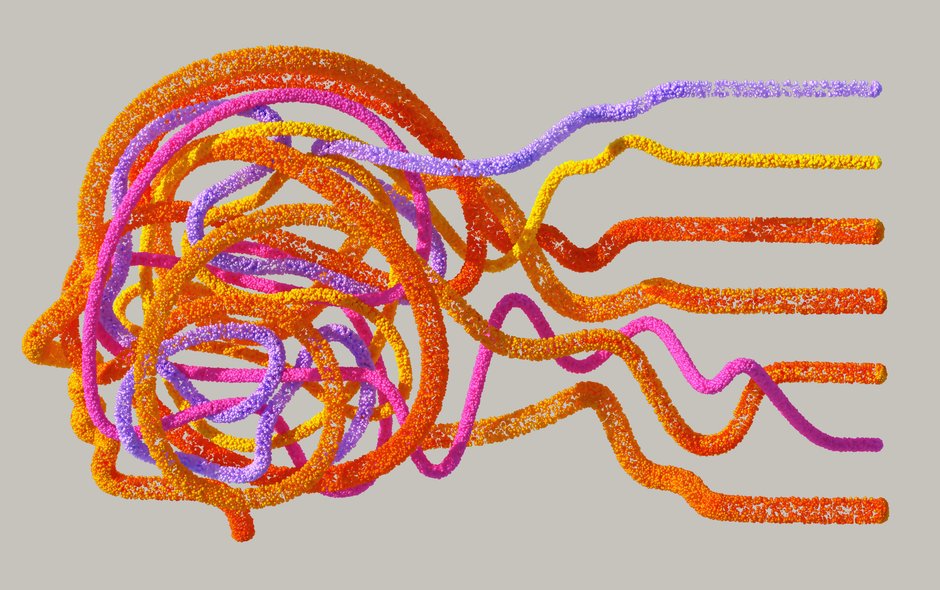
The human brain is not a uniform sheet of identical circuits. It is molecularly, anatomically, and physiologically heterogeneous, different regions have different receptor densities, different cell types, and different connectivities. This variability has traditionally been treated as noise, something to average over when building models of large-scale brain dynamics.
A new study published in PNAS suggests that this heterogeneity is not noise at all. It is an organizing principle.
A model that respects biological reality
The team built a biophysically grounded large-scale cortical model capable of generating distinct brain states, from awake-like to sleep-like dynamics. Unlike previous models that treated all cortical regions as identical, this one incorporated spatially structured heterogeneity derived from real biological data: maps of cholinergic muscarinic receptor (CHRM) expression, drawn from both transcriptomic (Allen Human Brain Atlas) and PET imaging data.
These CHRM maps were implemented as region-specific modulators of neuronal adaptation and excitability. The model was constrained by empirical human structural connectivity, meaning the wiring between regions reflected actual anatomical data.
Heterogeneity improves performance
The results were counterintuitive. Adding structured biological heterogeneity did not degrade network performance, it enhanced it. The spatially organized CHRM maps increased global network synchronization and significantly improved information flow between cortical regions, as measured by transfer entropy (a proxy for effective connectivity).
Crucially, these effects were specific to the spatial pattern of heterogeneity, not merely its existence. Null models that preserved the variance of the CHRM maps but randomized their spatial distribution failed to reproduce the effects. The brain’s particular arrangement of molecular diversity, which receptors are dense where, matters.
A window into sleep and wake
The model can also generate localized sleep-like slow waves within an otherwise awake-like regime, a phenomenon observed in real brains during sleep deprivation and early-stage sleep. The team showed that the emergence of these local slow waves depends on both the regional level of neuronal adaptation and the underlying structural connectivity. In other words, heterogeneity explains not only how the brain synchronizes globally, but how it can be simultaneously awake in some regions and asleep-like in others.
What it means
The findings challenge a long-standing simplification in computational neuroscience. Many large-scale brain models treat cortical regions as functionally equivalent nodes, differing only in their connectivity. This study shows that the internal properties of each region, its receptor makeup, its excitability, its molecular fingerprint, fundamentally shape how the network behaves.
The cholinergic system, in particular, has been the target of drugs for Alzheimer’s disease, Parkinson’s, and other cognitive disorders. Understanding how CHRM distribution shapes whole-brain dynamics could inform why certain brain regions are more vulnerable to cholinergic depletion in disease, and why the same drug can have different effects depending on where receptors are concentrated.
Limitations and next steps
The model is a mean-field approximation, it simulates populations of neurons rather than individual cells. While this is standard for large-scale modeling, it cannot capture single-neuron or microcircuit-level effects. The study used male mice for behavioral validation; sex differences in cholinergic receptor distribution have been reported and were not addressed.
The team notes that the same framework could be extended to other neuromodulatory systems, noradrenergic, serotonergic, dopaminergic, each with its own spatial heterogeneity. The question of how multiple receptor systems interact to shape brain dynamics is the next frontier.
Sources
1. Dalla Porta, L., Fousek, J., Destexhe, A., & Sanchez-Vives, M. V. (2026). Spatially structured heterogeneity shapes large-scale cortical dynamics in a model of the human cortex. Proceedings of the National Academy of Sciences, 123(28), e2532072123. https://doi.org/10.1073/pnas.2532072123