

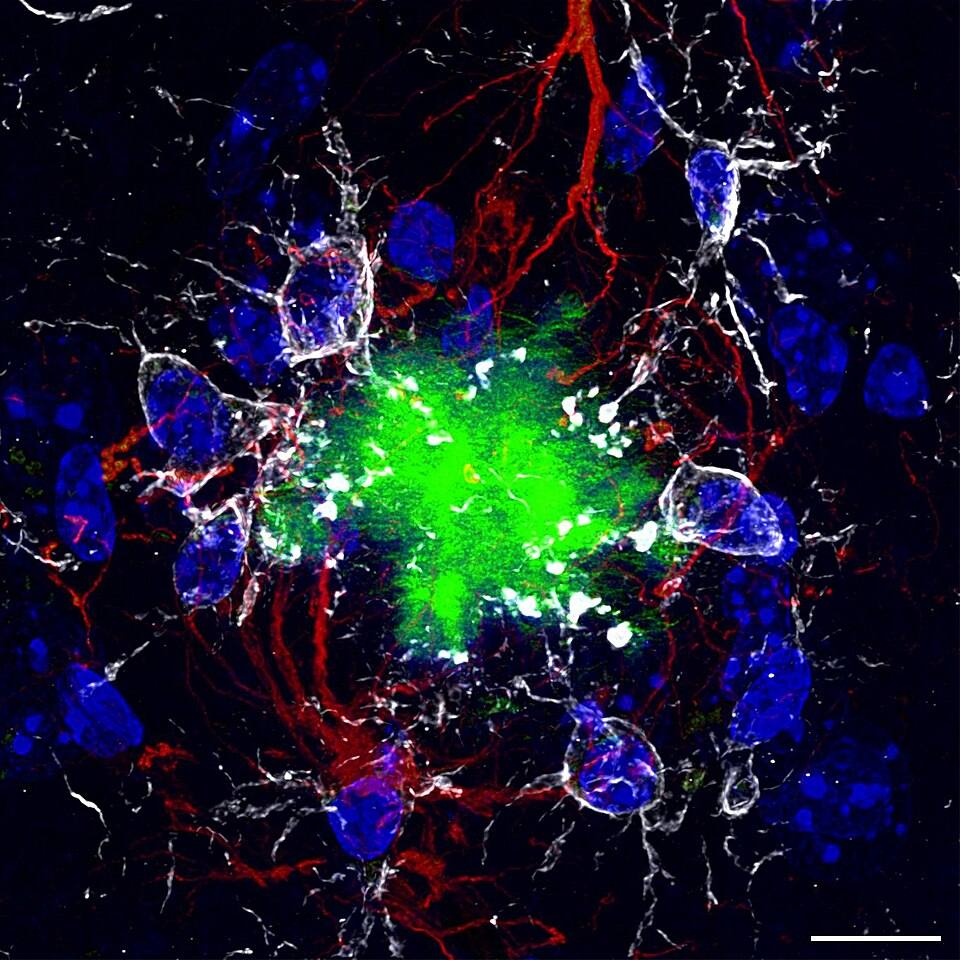
A drug already in human safety trials for Parkinson’s disease and ALS has shown a surprising new ability in mice: it restores the brain’s natural waste-disposal system, clearing toxic amyloid plaques and improving memory. The finding, published in ACS Chemical Neuroscience by researchers at Monash University and the University of Melbourne, opens a potential fast track to Alzheimer’s clinical trials for a compound that is already known to be safe in humans.
The drug, called Cu(ATSM) — copper diacetyl bis(4-methyl-3-thiosemicarbazone) — is a small molecule that carries copper across the blood-brain barrier and delivers it directly to the cells that line the brain’s blood vessels. These cells, called brain microvascular endothelial cells, are the custodians of the brain’s waste-clearance system. They sit at the interface between blood and brain tissue, studded with molecular pumps known as P-glycoprotein (P-gp) that actively push toxic molecules — including amyloid-beta, the protein that forms Alzheimer’s plaques — out of the brain and into the bloodstream for disposal.
In Alzheimer’s disease, P-gp levels are severely reduced. The pumps vanish from the blood-brain barrier, allowing amyloid-beta to accumulate. Restoring them has been a longstanding therapeutic goal, but most attempts have required complex gene therapies or experimental molecules with unknown safety profiles.
Cu(ATSM) approaches the problem from a different angle. The researchers, led by Dr. Jae Pyun and Professor Joseph Nicolazzo at the Monash Institute of Pharmaceutical Sciences (MIPS), treated APP/PS1 transgenic mice — a standard model of familial Alzheimer’s disease — with 30 mg/kg of Cu(ATSM) daily for 56 days. The mice were 10 months old at the start of treatment, an age at which amyloid pathology is already established.
The results were striking. The drug restored P-gp abundance in brain microvessels by 24.1%, bringing it back to levels seen in healthy control animals. Copper concentration in microvessel fractions increased by 229.8%, confirming that the compound was reaching its intended target. Cortical levels of amyloid-beta 42 — the most toxic form of the protein — dropped by 42.1%.
The cognitive effects were measurable but selective. In the Barnes maze, a test of long-term spatial learning and memory, treated mice improved by 43.8% compared to untreated controls (p = 0.0087). However, two other cognitive tests — the Y-maze (short-term spatial memory) and novel object recognition — showed no significant improvement, suggesting the benefit may be domain-specific rather than global.
The drug did not appear to accelerate amyloid clearance from brain to blood as directly as the researchers expected. A separate experiment using injected radioactive amyloid-beta found only a nonsignificant 11.9% trend toward faster brain clearance. The authors suggest that additional mechanisms may be at work, potentially involving immune-mediated clearance by microglial cells.
Cu(ATSM) has an unusual advantage over most experimental Alzheimer’s drugs: it already has human safety data. The compound has been in clinical trials for Parkinson’s disease and amyotrophic lateral sclerosis (ALS), where it is being evaluated for its ability to correct copper dyshomeostasis in degenerating neurons. While those trials are investigating a different mechanism — Cu(ATSM) as a copper delivery agent to restore mitochondrial function, rather than as a blood-brain barrier repair agent — the safety data accumulated so far could accelerate the transition to Alzheimer’s trials.
“The compound is not a new chemical entity. It has been through Phase 1 safety testing in other neurodegenerative conditions,” the researchers noted. “That is an unusually short path to the clinic for an Alzheimer’s candidate that targets a fundamentally new mechanism.”
Still, the caveats are substantial. This was a mouse study in a transgenic model of familial Alzheimer’s disease, which accounts for less than 5% of human cases. Sporadic Alzheimer’s, which makes up the vast majority, may involve different pathological mechanisms. The history of Alzheimer’s drug development is littered with compounds that cleared plaques in mice but failed in human trials. Only one dose (30 mg/kg/day) was tested, leaving no dose-response data. And the cognitive benefits were partial: the drug improved performance on one of three memory tests, and the mechanism of amyloid removal remains incompletely understood.
The study also did not address tau pathology, the other hallmark of Alzheimer’s disease. Cu(ATSM)’s effect on tau tangles, if any, remains unknown. And copper handling in the brain is a delicate balance — copper dyshomeostasis itself has been implicated in neurodegeneration, meaning that long-term copper supplementation will require careful safety monitoring.
The researchers are now working on mechanism-mapping studies to clarify how Cu(ATSM) triggers P-gp restoration and whether the effect can be replicated in other animal models. If those studies succeed, the path to human trials — even if accelerated by existing safety data — would still take years.
Source: Pyun J, Noor A, Runwal P, Mawal C, Fuller OK, Egan CL, Febbraio MA, Donnelly PS, Short JL, Bush AI, Nicolazzo JA. Cu(ATSM) Restores Blood-Brain Barrier Abundance of P-Glycoprotein and Improves Cognitive Function in the APP/PS1 Mouse Model of Alzheimer’s Disease. ACS Chem. Neurosci. 2026;17(12):2389-2405. DOI: 10.1021/acschemneuro.6c00252.