

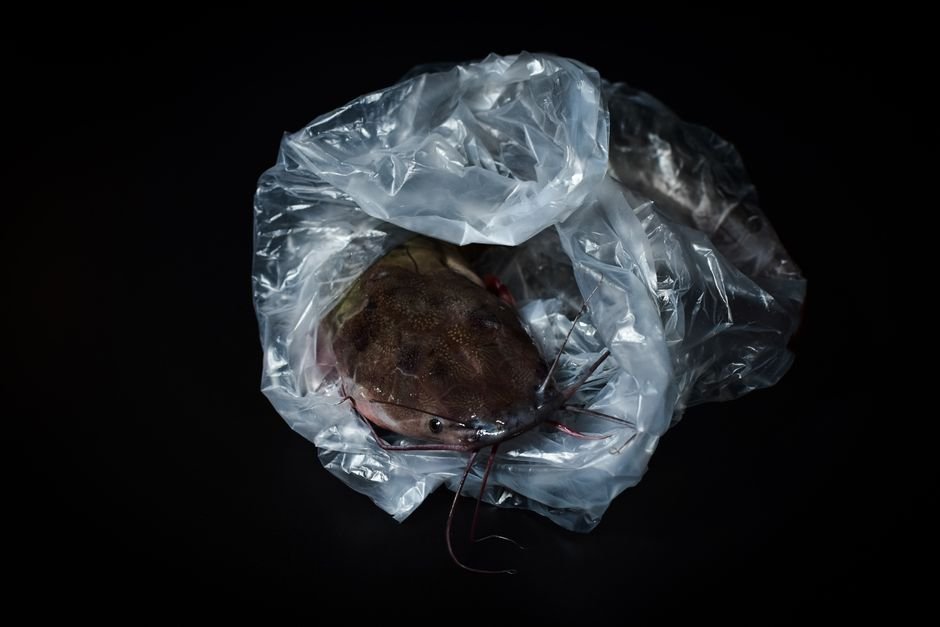
In Lake Memphremagog, which straddles the Vermont-Quebec border, a third of the brown bullhead catfish carry malignant melanomas. The tumours are black, invasive, and frequently metastatic. And they are not independent cancers. Whole-genome sequencing has now confirmed that every tumour in every fish shares a single clonal origin, making this only the fourth naturally occurring transmissible cancer ever documented.
The finding, published this week in Nature, expands the known host range of transmissible cancers from mammals and bivalves to a freshwater fish species. More importantly, it raises a question that has troubled cancer biologists for decades: if cancers can evolve to become contagious in at least four lineages, how many others are doing the same thing undetected?
What makes a cancer contagious
The three previously known transmissible cancers are well-studied. Canine transmissible venereal tumour (CTVT) spreads between dogs during mating and has been circulating for thousands of years. Tasmanian devil facial tumour disease (DFTD) spreads through biting during social interactions and has caused population declines of more than 90% in some areas. Disseminated neoplasia in several bivalve species (clams, mussels, cockles) spreads through seawater, with cancer cells drifting between animals like larvae.
What unites them is the defining feature of a transmissible cancer: the tumour cells themselves are the infectious agent. Unlike virally induced cancers (such as HPV-linked cervical cancer or Marek’s disease in chickens), a transmissible cancer spreads when living cancer cells physically transfer from one host to another and establish a new tumour. The cells must evade the new host’s immune system, which normally recognizes and destroys foreign tissue.
Proving that a cancer is transmissible requires genomic evidence that cannot be explained by shared environmental exposure or genetic predisposition. The tumours must be more closely related to each other than to the animals they inhabit.
The catfish case
Between 2014 and 2017, researchers sampled brown bullhead catfish (Ameiurus nebulosus) from Lake Memphremagog and found that 23 to 37 percent had malignant melanomas. Lesions ranged from flat pigmented areas to raised black tumours invading muscle and metastasizing to internal organs. The same tumours appeared in fish sampled in 2019 and 2023, suggesting the condition was stable over time.
The genomic analysis, led by Emily Curd and Samuel Hart at the University of Washington and the University of Vermont, compared tumour DNA with healthy tissue DNA from 84 catfish. The results were unambiguous. The tumours shared 245,189 nuclear genetic variants that were absent from the host fish’s healthy tissue, a pattern that cannot arise by chance or by independent mutation. By comparison, in a set of 463 human melanomas from The Cancer Genome Atlas, 94% of mutations were unique to a single cancer and only 0.008% were shared by ten or more cancers. In the catfish, 59% of tumour variants were shared by 14 or more of the 16 fish sampled.
Mitochondrial genomes told the same story: all tumours formed a single monophyletic clade, distinct from the mitochondria of their hosts and from reference fish populations in Vermont, New Hampshire, and Maine. The researchers found no evidence of a virus or microbial pathogen that could be causing the tumours.
How does a fish get a contagious cancer
The transmission mechanism is not yet established. Brown bullheads are scaleless, bottom-dwelling fish that aggregate during spawning, when physical contact could transfer tumour cells. Spawning hormones also suppress the immune system, potentially allowing foreign cells to establish. Alternatively, cancer cells shed into the sediment might be taken up by other fish through their skin or gills, a mechanism similar to the seawater transmission seen in bivalves.
The cancer lineage likely predates 2015 and may have originated outside Lake Memphremagog. Phylogenetic evidence links the tumour cells to reference fish from New Hampshire and Maine, not to the local Vermont population. Historical records describe a “black tumour” outbreak in Massachusetts brown bullheads in the early 1900s, which could represent the same lineage.
A blind spot in cancer biology
The discovery forces a reassessment of how common transmissible cancers might be. The four known cases were found because they produced visible tumours at a high incidence in accessible species (domestic dogs, an endangered marsupial, commercially important shellfish, and a well-studied freshwater fish). If a transmissible cancer produces low-grade, internal, or cryptic tumours, or if it occurs in a species that is not under regular surveillance, it would not be detected.
The authors note that several fish species with melanistic lesions of unknown cause, including coral trout and smallmouth bass, warrant testing for clonality. The suspicion is that the number of naturally occurring transmissible cancers is not four, but some larger number that has simply not been looked for.
For Lake Memphremagog’s catfish population, the long-term impact is unknown. The Tasmanian devil tumour caused a 90% population crash; the canine tumour usually regresses after a period of growth; the bivalve tumours have not led to extinctions. The difference depends on how lethal the cancer is and how efficiently it transmits. Those parameters have not yet been measured for the bullhead melanoma.
What the discovery makes clear is that cancer, normally thought of as a disease of the individual, can evolve into a disease of the population. And the boundary between the two is thinner than we thought.
Reference: Curd, E.E., Hart, S.F.M. et al. Nature (2026). DOI: 10.1038/s41586-026-10828-6